
← Back
04/16/2012 • 4 views

Ancient skeleton discovered with a metal prosthetic limb
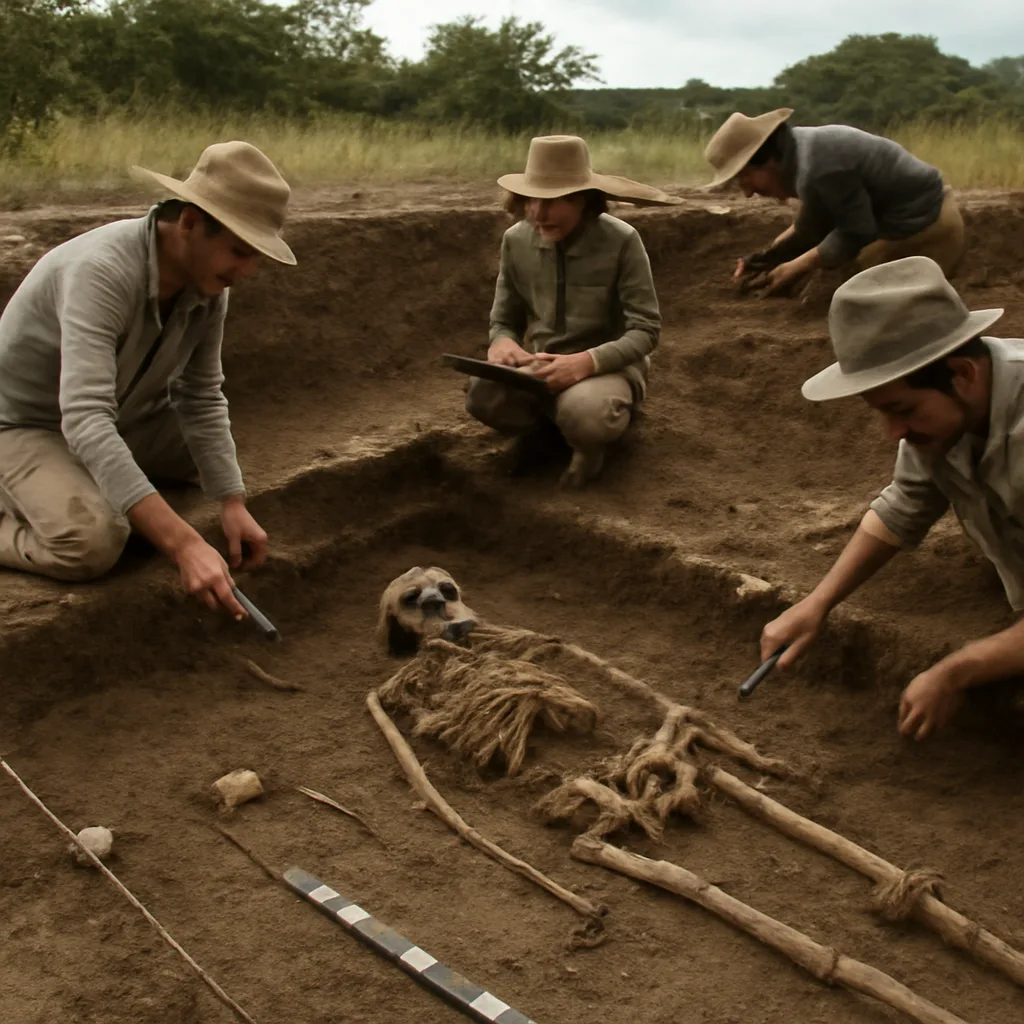
Excavation trench showing skeletal remains partially exposed in situ with a corroded metal component near one limb; archaeologists’ tools and stratigraphic layers visible.

Archaeologists uncovered a human skeleton fitted with a metal prosthetic limb during excavations; the find provides rare evidence of prosthetic use and medical care in antiquity, though its exact age and cultural context are subject to ongoing analysis.


During an excavation reported on April 16, 2012, archaeologists revealed a human skeleton that had been fitted with a metal prosthetic limb. The discovery drew attention because direct physical evidence of prosthetic devices attached to human remains is uncommon in the archaeological record, and the find offers insights into mobility aids, medical practice, and social responses to disability in past societies.

Context and discovery
The skeleton was recovered in a controlled archaeological dig (details of the site and excavation team vary by report). Initial examination indicated that a metal component—interpreted as a prosthetic attachment—was associated with one of the limbs. Such associations can take several forms in burial contexts: a prosthetic could be found in direct articulation with skeletal elements, placed beside the body as a grave good, or incorporated into burial wrappings. Determining whether the device was used in life or introduced postmortem requires careful osteological and materials analysis.

Dating and cultural attribution
Reports from 2012 did not provide a single universally accepted date or cultural attribution for the individual; different finds of prosthetic limbs span varied periods and regions. Accurate dating depends on direct methods such as radiocarbon dating of associated organic remains, stratigraphic context, and typological comparison of the metalwork. Without publication of full scientific analyses and peer-reviewed dating results, the precise age and cultural setting remain subject to further study.

Interpretation and significance
If the metal device was attached and used during the individual’s life, the find would indicate that people in the relevant culture had developed functional mobility aids and the surgical, craft, or prosthetic technology to fit them. Osteological indicators—such as remodeling of bone at amputation sites, wear patterns from a device, and changes in joint use—help establish whether an individual used a prosthetic long-term.

Archaeologists and physical anthropologists approach such finds cautiously. Evidence of prosthetic technology has appeared in other contexts (for example, ancient wooden toes or cosmetic replacements), but clear cases of integrated, functional metal prosthetics are rare. Each instance can broaden understanding of care for disabled individuals, craftsmanship, and medical knowledge in the past, while also raising questions about social status and the roles of disabled people in their communities.

Scientific follow-up
Proper assessment requires multidisciplinary study: osteological analysis to detect healing and use-related changes; metallurgical examination to identify alloy composition, fabrication techniques, and preservation history; and contextual archaeological reporting to situate the burial within local mortuary practice. Peer-reviewed publication is essential for confirming interpretations and placing the find in regional and chronological frameworks.

Caveats and reporting
Early media coverage of prosthetic-related discoveries can sometimes overstate conclusions pending scientific verification. It is important to distinguish between items intentionally used in life (functional prostheses) and objects included in burials symbolically or placed later. Until full scientific reports are available, claims about the device’s precise function, date, and cultural implications should be treated as provisional.

Conclusion
The 2012 report of a skeleton associated with a metal prosthetic limb highlights a rare and potentially informative archaeological discovery. With detailed osteological, metallurgical, and contextual analyses, such finds can illuminate ancient approaches to disability, medical practice, and technological capability. Full scholarly publication and dating will be necessary to confirm the device’s use in life and to situate the individual within a specific historical and cultural context.

Share this

Email Share on X Facebook Reddit

Did this surprise you?