
09/11/1989 • 5 views
Soviet Forces Withdraw from Eastern Europe, Marking a Turning Point in the Cold War
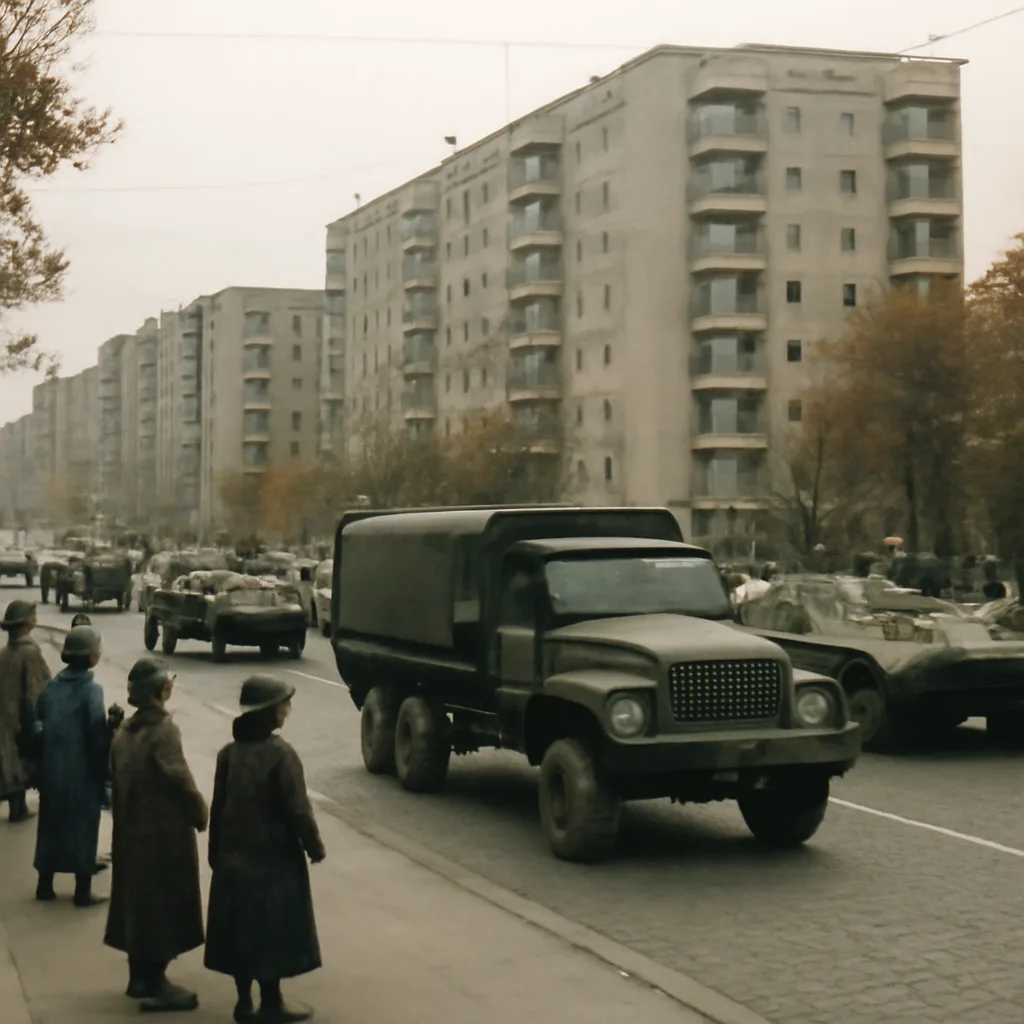
In September 1989 Soviet military units began leaving Eastern European countries, a major step in the unraveling of Soviet control that accelerated political change across the region and contributed to the end of the Cold War.
Background: After World War II the Soviet Union established military garrisons and formal alliances across Central and Eastern Europe. Soviet troops were stationed in East Germany, Poland, Czechoslovakia, Hungary, Romania and Bulgaria at varying levels and times, both to deter NATO and to buttress pro-Soviet governments. For decades these forces underpinned Moscow’s ability to intervene politically and militarily when its leadership judged that allied regimes were at risk.
Changing Soviet policy: In the mid-1980s Mikhail Gorbachev, as Soviet general secretary, initiated policies of glasnost (openness) and perestroika (restructuring) and signaled a reduced willingness to use military force to maintain Moscow’s postwar arrangements. Gorbachev’s rejection of the Brezhnev Doctrine — the idea that the USSR could intervene militarily to preserve communist rule in its satellite states — removed the ideological justification for automatic intervention. Economic strains in the USSR and a desire to improve relations with the West also encouraged a pullback from costly foreign commitments.
Events in 1989: The year 1989 saw rapid political shifts across Eastern Europe. Independent movements and reform-minded leaders gained ground in Poland and Hungary; civic protests and elections produced changes in Czechoslovakia and elsewhere. Hungary took early practical steps: beginning in the late 1980s it reduced border fortifications and negotiated limits on Soviet troop presence, and in the summer of 1989 it opened its border with Austria — an act that facilitated East Germans’ travel to the West and symbolized loosening controls.
Soviet withdrawals were not uniform or instantaneous. In September 1989 and the months that followed, Moscow began ordering the return of some units and announced plans to reduce troop levels. These actions reflected both directives from the Kremlin and bilateral agreements with host governments. In East Germany, long-term Soviet forces remained until German reunification was completed and arrangements were made for their final departure in 1994; other countries saw more rapid drawdowns. The presence of Soviet troops receded as new, often non-Communist governments consolidated power and negotiated the terms of stationing or withdrawal.
Consequences: The reduction and removal of Soviet forces altered the security landscape of Europe. It removed the immediate threat of Soviet military intervention, gave political space for domestic reforms, and accelerated the dissolution of Soviet-dominated institutions. The weakening of direct military control facilitated multiparty elections and the disintegration of communist parties’ monopoly on power in many countries.
The troop withdrawals were one element among diplomatic, economic and popular forces that produced the end of the Cold War. They occurred alongside arms control agreements between the superpowers, the opening of political systems across Eastern Europe, and growing public mobilization. While the timeline and specific arrangements varied by country, the broader pattern was clear: Soviet military disengagement from Eastern Europe in 1989 and the early 1990s helped make possible the transition to independent governance and the reorientation of the region toward Western institutions.
Historical note on dates and scope: Accounts differ on precise dates and the sequencing of specific unit withdrawals because decisions were implemented through a mix of public announcements, confidential agreements and phased troop movements. Withdrawal processes extended into the early 1990s for some countries. This summary reflects the broadly agreed historical interpretation that Soviet military withdrawal from Eastern Europe in 1989 was a pivotal factor in ending the Cold War era order on the continent.