
← Back
07/26/1975 • 5 views

India declares Emergency, curtailing civil liberties
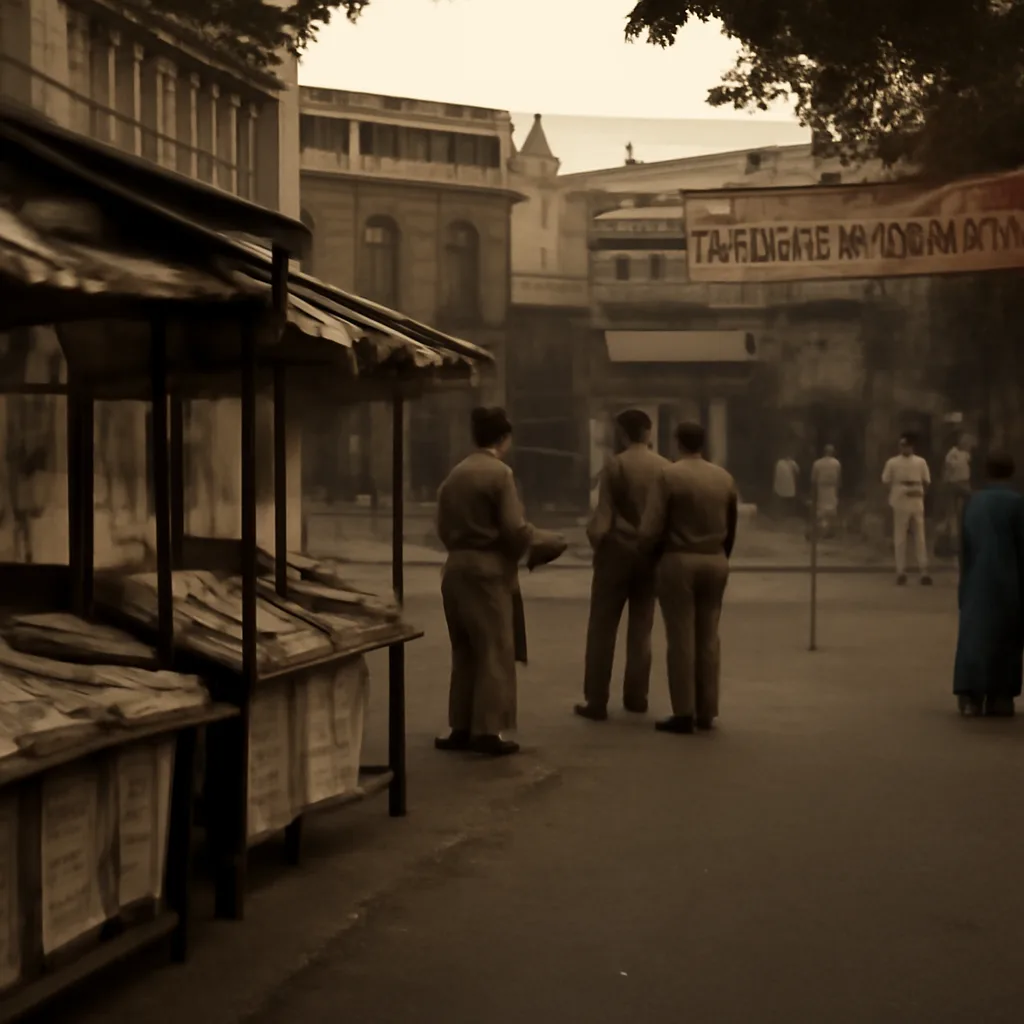
Crowded street in mid-1970s Indian city with covered newspaper stall and uniformed police presence, evoking a tense, controlled public atmosphere.

On 26 July 1975 Prime Minister Indira Gandhi advised President Fakhruddin Ali Ahmed to proclaim a state of Emergency across India, suspending many civil liberties and imposing press censorship; the move triggered mass arrests of opposition leaders and long-term political consequences.


On 26 July 1975 the Government of India proclaimed a national Emergency under Article 352 of the Constitution, citing “internal disturbance” after a divisive legal and political crisis. The proclamation, signed by President Fakhruddin Ali Ahmed on the advice of Prime Minister Indira Gandhi, suspended certain constitutional rights and authorized the central government to assume wide-ranging powers over state governments and personal freedoms.

Legal basis and immediate measures
The Emergency was declared using Article 352, which permits extraordinary measures in situations of war, external aggression or internal disturbance. The central government invoked the clause to justify curbs on civil liberties. Within days, the administration introduced press censorship, restricted public assembly, and expanded preventive detention powers under laws such as the Maintenance of Internal Security Act (MISA). Thousands of opposition politicians, activists, and journalists were detained without trial.

Political context
The proclamation followed months of mounting political pressure on Prime Minister Indira Gandhi. In June 1975, the Allahabad High Court had found her guilty of electoral malpractices in the 1971 parliamentary election and invalidated her election, a decision that threatened her continued tenure. Nationwide strikes, protests led by the opposition and a highly charged public atmosphere preceded the Emergency. The government framed the Emergency as necessary to restore order and pursue economic and administrative reforms without obstruction.

Civil society and press
Censorship was rapidly imposed: newspapers required prior approval for publication, and editors and journalists faced persecution for critical reporting. Opposition newspapers were shut down or curtailed, and radio broadcasts were monitored. Civil society groups, student organizations and trade unions experienced severe restrictions; many leaders were arrested, public meetings banned, and political campaigning effectively halted.

Administrative and social programs
The government launched or accelerated programs it presented as measures for social welfare and order. Notably, the administration mounted a campaign for population control, including forced or coerced sterilizations in some areas, often targeting the poor—an element of the Emergency that later became one of the most contentious and widely criticized aspects of that period. Infrastructure and slum-clearance projects proceeded with fewer legal hurdles in some cities, but critics argue many measures displayed authoritarian excess and disregard for individual rights.

Duration and parliamentary oversight
The Emergency initially required parliamentary approval to continue beyond the constitutionally prescribed short period; Parliament repeatedly ratified the proclamation, extending it through ordinances and legislative measures. The regime amended constitutional provisions to limit judicial review and to reinforce its authority. Political opponents and civil liberties advocates contended these steps eroded democratic checks and balances.

Opposition, resistance and aftermath
Despite repression, opposition leaders and activists organized resistance from underground and from outside detention. The Emergency period ended after general elections in March 1977, when the ruling party suffered a decisive defeat and the Janata coalition formed the government. Subsequent inquiries, debates and court rulings examined abuses during the Emergency; scholars and participants continue to debate the causes, necessity and consequences of the measures taken.

Historical significance
The 1975–1977 Emergency is widely regarded as a pivotal episode in India’s democratic history. It prompted enduring legal and political reforms aimed at safeguarding civil liberties, and it reshaped party politics and public attitudes toward executive power. Historians note the period’s complex legacy: some officials defended emergency measures as necessary for stability and development, while many critics view them as an overreach that inflicted lasting damage on democratic institutions.

Sources and caution
This summary synthesizes widely documented facts about the Emergency period. Specific numbers for detentions, censures and administrative actions vary among contemporary reports and later studies; contentious elements—such as the scale of coercion in population control—are subject to differing estimates and interpretations in scholarly literature.

Share this

Email Share on X Facebook Reddit

Did this surprise you?