
← Back
06/22/1900 • 5 views

London's First Electric Underground Line Opens, June 22, 1900
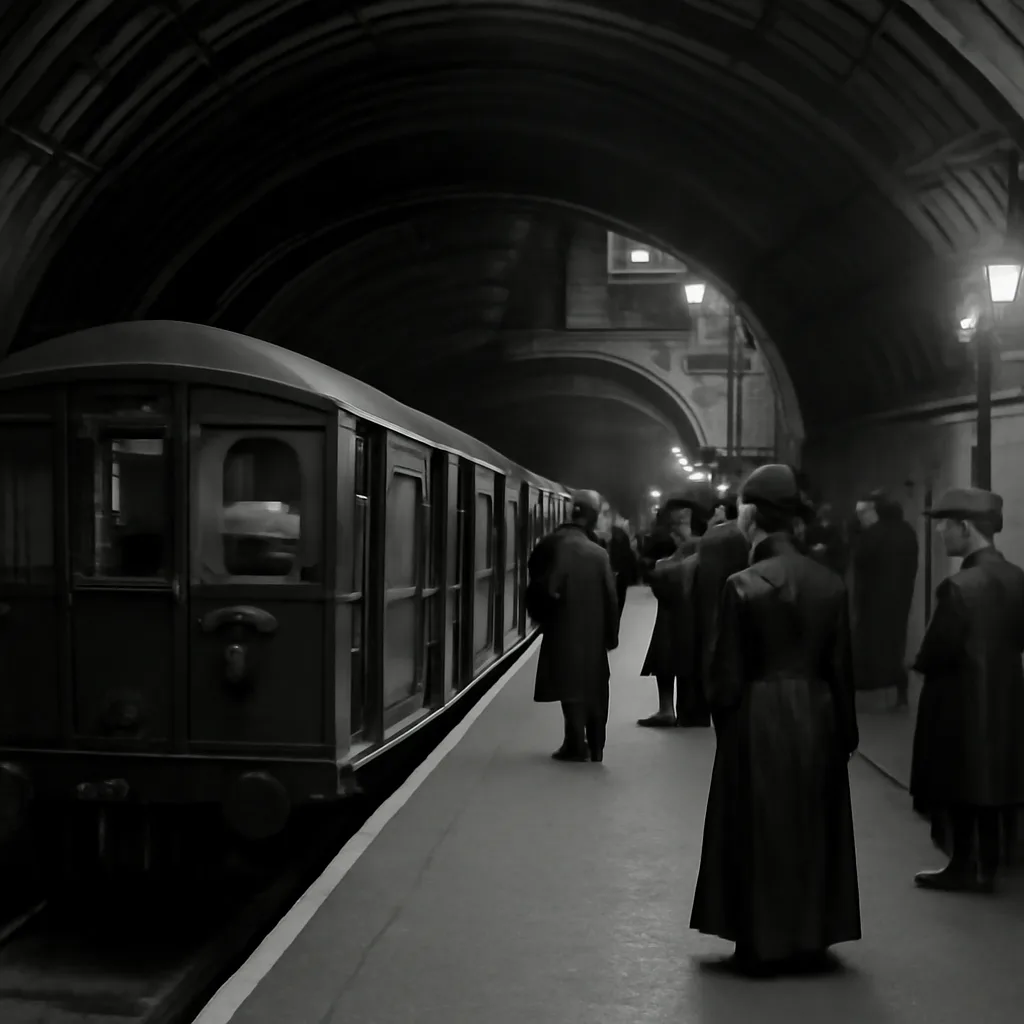
Early 20th-century deep-level Underground tunnel and platform with a small-profile electric train and period station fittings, seen from a slight distance; no identifiable faces.

On 22 June 1900 London inaugurated its first electric deep-level underground railway—the City & South London Railway—marking a shift from steam to electric traction on the Underground and shaping the future of urban transit.


On 22 June 1900 the City & South London Railway (C&SLR) opened its deep-level electric line between Stockwell and King William Street (near the Bank of England), presenting the first successful commercial electric underground railway in London. Engineered as a tube railway with circular tunnels bored deep beneath the streets, the line used electric multiple-unit trains rather than the steam locomotives that had powered earlier sub-surface lines. This technological choice addressed ventilation and smoke problems that had limited expansion of underground service in central London.

The C&SLR had been planned and promoted during the 1890s by engineers and financiers responding to growing demand for rapid cross-city travel. Construction employed tunnelling shields and cast-iron tunnel rings typical of deep-bore practice of the period. Stations were reached by lifts and, at some later stops, spiral staircases; the narrow tunnels constrained car dimensions, producing the smaller-profile “tube” stock that would become characteristic of many London Underground lines.

Electric traction on the line relied on a central conductor rail and onboard electric motors. The adoption of electricity was both a technical innovation and a practical necessity: steam locomotion had proven intolerable in long, deep tunnels because of smoke and poor air quality. Early electric equipment on the C&SLR reflected the state of the art around 1900—relatively simple control systems and motors compared with later developments—but it demonstrated reliability sufficient for commercial passenger operation.

Operationally, the new line improved journey times for commuters travelling from south London into the financial district, and it helped validate the economic case for further electrically driven tube lines. The C&SLR also influenced subsequent projects by showing that deep-bore tunnelling combined with electric traction could be built and run successfully beneath a dense urban environment.

The original route and stations evolved in later years: extensions, reconfigurations and eventual incorporation into the wider Underground network altered the line’s footprint. King William Street station was replaced after some years because of alignment and capacity issues, and the C&SLR’s tunnels and infrastructure were progressively integrated into what became the Northern line. Nevertheless, the 22 June 1900 opening remains a milestone in London transport history because it marked the practical transition from steam to electric operation in deep-level urban railways.

While some historians note incremental precedents for electrified urban railways elsewhere, the C&SLR is widely credited as the first successful deep-level electric underground railway in London and among the earliest of its type worldwide. Its opening reflected broader technological and social changes at the turn of the 20th century: advances in electric traction, new tunnelling techniques, and expanding urban populations demanding faster, cleaner mass transit. The legacy of that June day endures in London’s continued reliance on electric trains through deep-level tunnels as a core element of the city’s transport system.

Share this

Email Share on X Facebook Reddit

Did this surprise you?