
← Back
02/05/1974 • 7 views

Landmark 1974 Lawsuit Marks First Documented U.S. Case Over Nonconsensual Human Experimentation
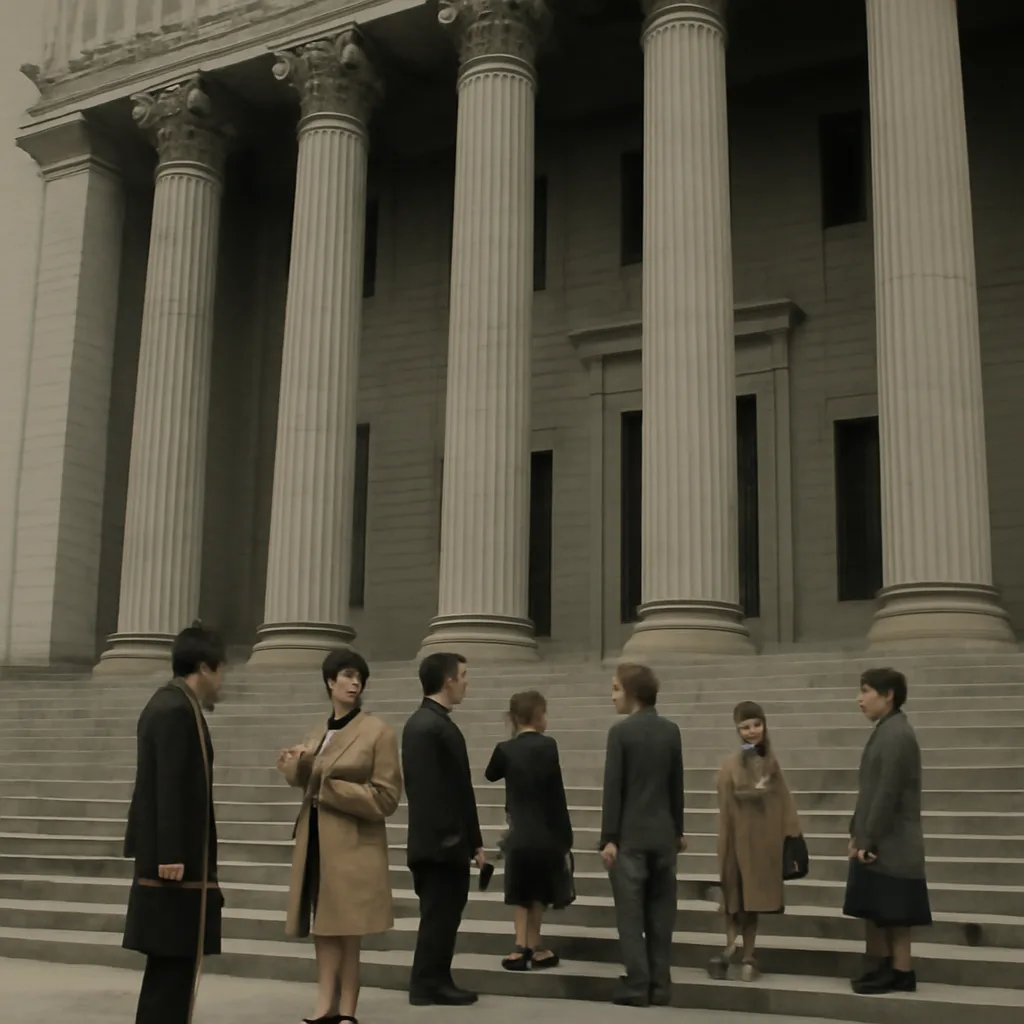
Archival-style scene of a 1970s federal courthouse exterior and a group of formally dressed plaintiffs and lawyers gathered on the courthouse steps holding legal folders; period-appropriate 1970s suits and coats visible, no identifiable faces.

On February 5, 1974, a federal suit filed in New York accused the U.S. government of conducting nonconsensual radiation experiments on servicemen and civilians—one of the earliest documented legal challenges in the United States explicitly alleging human experimentation without informed consent.


On February 5, 1974, attorneys filed a federal lawsuit in the Southern District of New York that alleged the U.S. government had conducted secretive radiation experiments on military personnel and civilians without their informed consent. The suit named the Secretary of Defense and other federal officials and sought damages and public disclosure of records. Plaintiffs described tests in which servicemen were exposed to radioactive materials and radiation sources as part of Cold War–era research programs.

Context
The filing came amid growing public concern about government secrecy and scientific ethics following revelations in the late 1960s and early 1970s about human-subject research abuses. Investigative reporting, congressional hearings, and litigation had begun to expose a range of programs—some open, others classified—that tested chemical agents, biological agents, and ionizing radiation on unwitting or poorly informed subjects. The 1974 suit is widely cited as one of the earliest formal legal actions in the United States explicitly framed as challenging ‘‘human experimentation’’ by government institutions.

Allegations and scope
Plaintiffs alleged that tests included deliberate exposure to radioactive isotopes, placement of radioactive materials in or on subjects, and irradiation of food, beverages, or environments to study uptake and biological effects. The complaint asserted that servicemen were not informed of risks or given meaningful opportunity to consent and that records had been withheld under claims of national security. The suit sought compensatory damages for physical and psychological harms and demanded disclosure of documentation about the programs.

Legal and public impact
Legally, the 1974 filing helped to foreground questions about informed consent, governmental responsibility, and access to records for research conducted in the name of national security. The case joined a broader wave of litigation and oversight that culminated in congressional investigations in the mid-to-late 1970s, including hearings that led to policy changes governing human-subject research. These hearings contributed to the development and reinforcement of informed-consent standards, institutional review boards (IRBs), and other protections intended to prevent nonconsensual experimentation.

Limitations and contested claims
Historical records show that multiple related suits and complaints were brought around this period; some targeted specific experiments (for example, Department of Defense tests or Department of Energy–linked activities) while others sought broader findings about government conduct. Naming a single ‘‘first’’ lawsuit depends on criteria: some earlier claims addressed related harms without using the specific legal framing of ‘‘human experimentation,’’ and classified programs complicate timelines. Scholars and journalists note that the 1974 New York filing is among the earliest high-profile federal suits to press the issue explicitly in court, but it is part of a cluster of legal and investigative actions in the era.

Aftermath
The publicity and litigation of the 1970s contributed to institutional and legal reforms. Federal agencies increasingly adopted formal consent procedures, and national attention to research ethics expanded—most notably through strengthened IRB oversight, revisions to research regulations, and greater attention by Congress and the press to historical abuses. Subsequent decades produced additional lawsuits and government reviews (including official inquiries in the 1990s and 2000s) that identified specific experiments and led to apologies, records releases, and, in some cases, compensation.

Why it matters
The February 5, 1974 lawsuit is historically significant because it crystallized legal claims about nonconsensual government research at a moment when U.S. institutions were re-evaluating the ethics of human-subject research. Whether or not it is the absolute ‘‘first’’ depends on definitional and archival nuances, but the case played a clear role in the chain of events that brought greater transparency, oversight, and legal scrutiny to government-sponsored experimentation on humans.

Share this

Email Share on X Facebook Reddit

Did this surprise you?