
← Back
02/05/1954 • 6 views

First U.S. Televised Murder Trial Begins in 1954
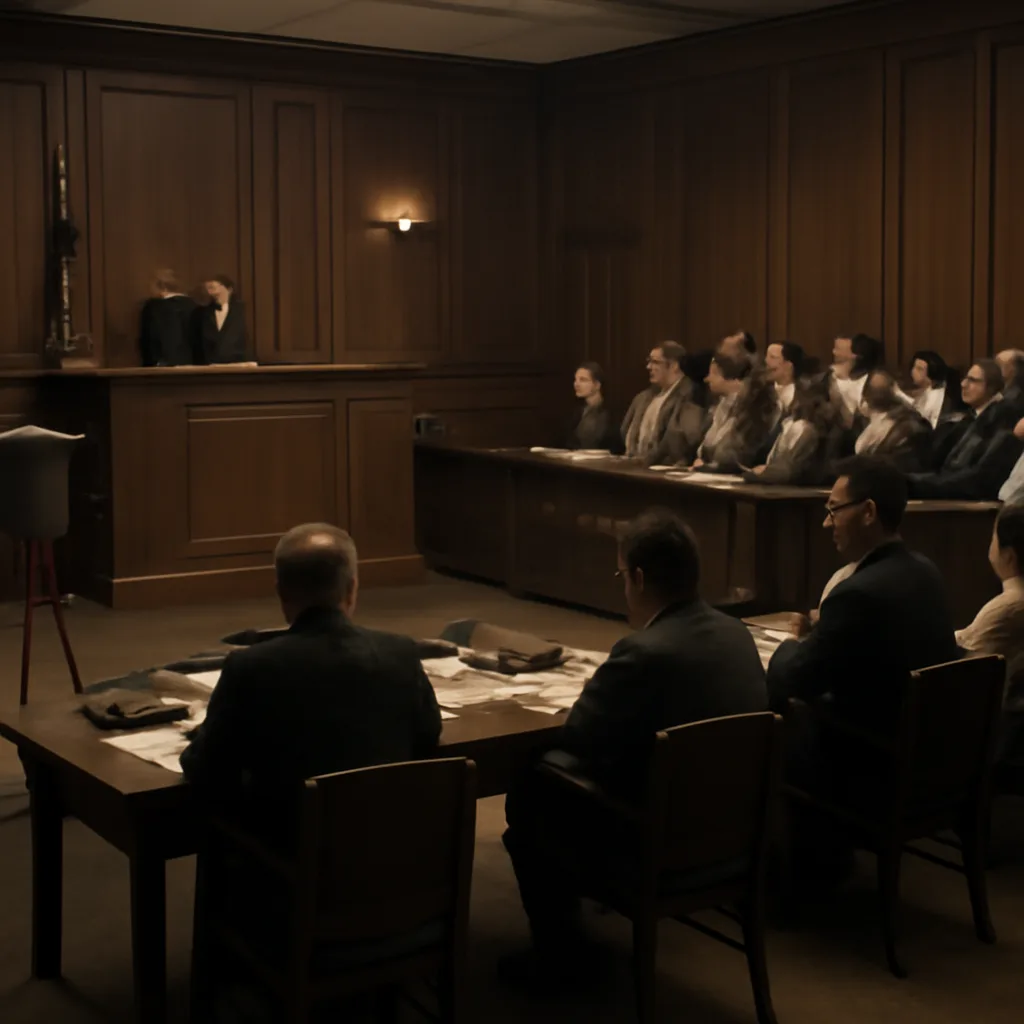
A 1950s courtroom interior with wooden benches, judge's bench, lawyers at tables, and a bulky television camera positioned in a corner; people wear mid‑century professional clothing.

On February 5, 1954, a U.S. courtroom permitted television cameras for the first time in a murder trial, marking a contentious shift in how high‑profile criminal proceedings would be presented to the public.


On February 5, 1954, a landmark moment in American legal and media history occurred when television cameras were allowed to film parts of a murder trial, inaugurating the controversial practice of televising criminal proceedings. The decision to admit cameras reflected growing public interest in courtroom drama, advances in broadcast technology, and evolving attitudes about transparency and access to public institutions.

The trial was held amid a mid‑20th century media landscape in which television was rapidly becoming a dominant source of information and entertainment for American households. Prior to the 1950s, courtroom access for news organizations was typically limited to print journalists; radio carried some trials, but the visual immediacy of television represented a new dimension. Court officials, lawyers, and judges grappled with legal and ethical questions: Would cameras disrupt courtroom decorum? Could televising evidence or witness testimony prejudice jurors or influence witness behavior? Advocates argued that television promoted public oversight and civic education, while critics warned of sensationalism and the substitution of spectacle for sober adjudication.

The decision to admit cameras in 1954 did not spring from a single uniform national rule. Rules governing electronic coverage of trials were set by individual states and federal courts, and practices varied widely. Some jurisdictions experimented cautiously, imposing restrictions on camera placement, limiting footage to proceedings rather than jurors, and barring close‑ups or photographs that might identify witnesses or jurors. These early broadcasts were often partial and tightly controlled, reflecting judicial concern about balancing the First Amendment interests of the press with the Sixth Amendment rights of defendants to a fair trial.

The cultural impact of televising a murder trial proved immediate. For viewers, seeing courtroom procedures and witness testimony visually reinforced news coverage and shaped public perceptions of the criminal justice system. For legal professionals, the broadcasts prompted new codes of conduct and procedural adjustments. Over ensuing decades, the debate over cameras in courtrooms continued, producing a patchwork of rules: some courts embraced transparent broadcasting, others maintained strict prohibitions, and appellate courts occasionally weighed in on constitutional limits.

Historians and legal scholars note that the 1954 broadcasts were an early step in a long trajectory that led to more extensive media access in later decades, including the live televised trials and gavel‑to‑gavel coverage seen in the 1980s and 1990s. The experiment also highlighted enduring tensions: the public’s right to know versus potential risks to fair trial rights, and the media’s capacity to inform versus its propensity to sensationalize.

While specific procedural details and the extent of footage from the February 5, 1954 proceedings vary in contemporary accounts, the event is widely recognized as the first notable instance of a murder trial being televised in the United States. It set precedents that courts, legislators, and broadcasters would revisit repeatedly as technology and public expectations evolved.

Today, policies on camera coverage remain contested and jurisdiction‑dependent, but the 1954 breakthrough stands as a formative moment in the intertwining histories of American law and mass media.

Share this

Email Share on X Facebook Reddit

Did this surprise you?