
05/05/1962 • 10 views
First Public Demonstration of Space Food, May 5, 1962
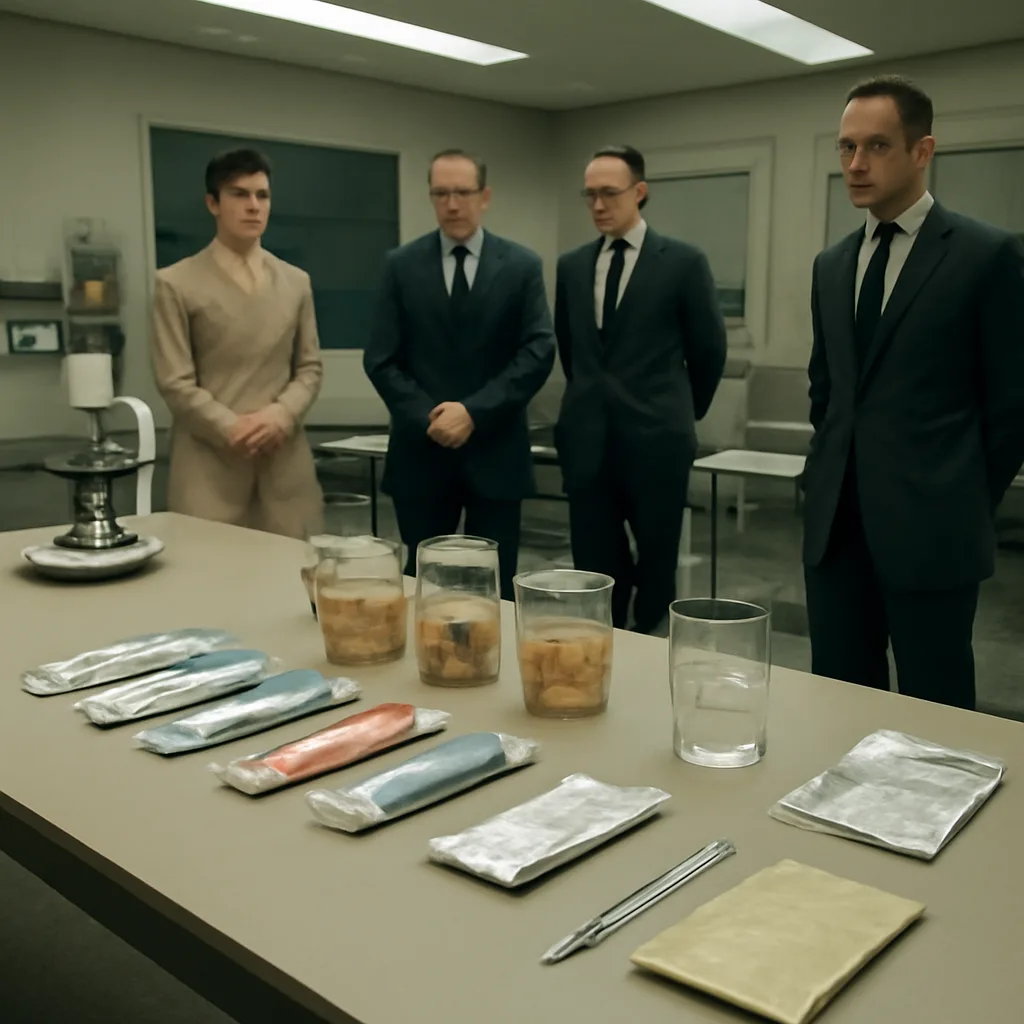
On May 5, 1962, NASA held a public demonstration showcasing foods developed for astronauts, illustrating early efforts to adapt meals for the constraints of spaceflight and publicize the agency's progress in human spaceflight support.
Background
By 1962, the United States had completed several suborbital and orbital attempts to put humans into space under Project Mercury. Designers confronted practical issues: foods had to be noncrumbly to avoid floating debris, properly packaged to prevent contamination of equipment, thermally stable, and nutritionally adequate for mission durations. Work on space food drew on military rations, industrial food-processing techniques, and research from nutritionists and flight surgeons at NASA and its contractors.
The Demonstration
The May 5 event was organized to show reporters, government officials, and other observers the types of food being developed for astronauts. Items on display included bite-sized cubes, semi-liquids in squeezable tubes, freeze-dried meals to be reconstituted with water, and thermostabilized pouches. Packaging emphasized resealability, single-serving portions, and materials that minimized crumbs and volatile off-gassing. Demonstrators explained how foods would be ingested in microgravity—often by pressing paste or liquid from tubes or by holding a sealed container—and how preparation steps like rehydration with onboard water would work.
Significance
The public demonstration served multiple purposes. Technically, it communicated progress toward solving practical life-support challenges of manned spaceflight. Publicly, it helped normalize the idea of sustained human presence in space by focusing on an everyday necessity—eating—and by showing NASA’s attention to crew comfort and safety. The demonstration also supported broader publicity efforts during a period of intense public interest and geopolitical competition in space exploration.
Legacy and Developments
The May 1962 demonstration represented an early stage in a continuing evolution. Over subsequent decades, space food systems advanced from tubes and bite-sized cubes to more varied menus, thermal-rehydratable pouches, and eventually oven-heated and refrigerated options aboard space stations. The practical lessons and technologies showcased in 1962 informed later food packaging, preservation methods, and nutritional planning used on Gemini, Apollo, Shuttle, Mir, and International Space Station missions.
Historical notes and sources
Contemporary coverage and later historical accounts place the demonstration in the context of Project Mercury’s human-support research. Detailed archival records, NASA histories, and surviving press reports document the types of food forms and packaging emphasized in early demonstrations. Where specific attributions or direct quotes are absent from archival summaries, historians draw on NASA technical reports and period journalism to reconstruct the demonstrations and their role in public outreach.
This account summarizes the publicly documented demonstration of space food on May 5, 1962, and situates it within the broader timeline of human spaceflight life-support development.