
03/09/1896 • 6 views
Village Bans Mirrors After Reports of Collective Hallucinations
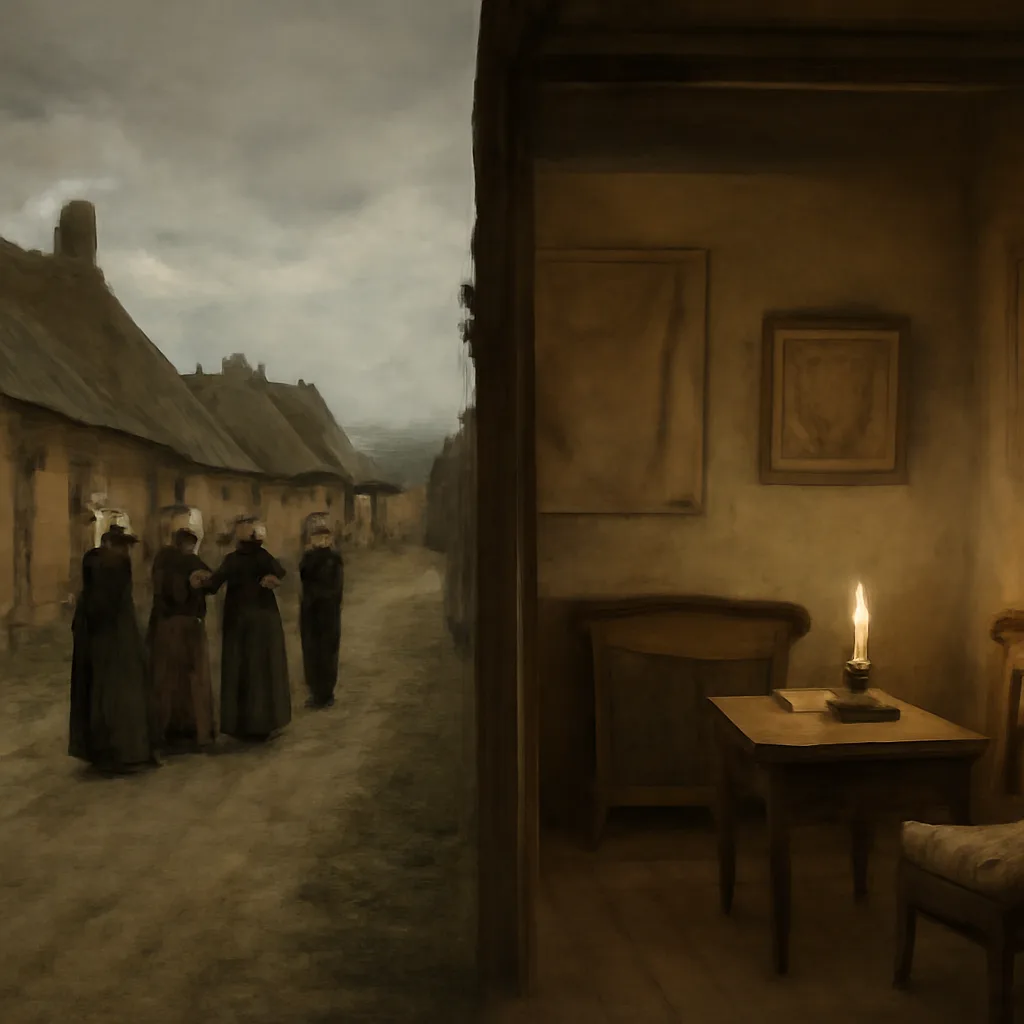
In March 1896 a rural community reportedly prohibited mirrors after multiple residents claimed seeing disturbing visions. Contemporary reports mix eyewitness accounts, local official actions and press speculation; many details remain uncertain or disputed.
Contemporary accounts vary in scope and detail. Some regional newspapers described dozens of cases, often relying on interviews with local residents, clergy or magistrates; others treated the story as a curiosity and questioned its accuracy. Press coverage in 1896 tended to mix factual reporting with sensational language common to the era’s journalism, and later historians caution that the number and nature of the reported experiences are difficult to verify precisely.
Possible explanations offered at the time and by later commentators fall into three broad categories. First, social and psychological factors: communities facing economic hardship, disease, or social stress have at times reported collective experiences that reflect anxiety and a search for meaning. Mass suggestion, rumor, and expectation can amplify isolated incidents into wider moral panics. Second, environmental or medical causes: poor lighting, reflective surfaces that distort features, fatigue, fever, or neurological illness can produce visual anomalies that witnesses interpret as supernatural. Third, cultural framing: belief systems and local religious practices shape how unusual experiences are narrated and responded to—mirrors have long carried symbolic meanings in many cultures, associated variously with vanity, the soul, or the gateway to other realms.
The village’s decision to ban mirrors was reported as a precautionary or corrective measure rather than as the outcome of formal legal proceedings. Local leaders reportedly urged families to cover or remove mirrors in communal spaces and schools; in some accounts shopkeepers were asked to stop selling new mirrors until the situation calmed. These measures fit patterns seen elsewhere in history, where authorities have used modest regulatory steps to allay public alarm and restore social order.
Scholars who have examined late nineteenth-century local press and municipal records emphasize caution. Surviving primary sources are fragmentary: some original newspapers survive on microfilm or in archives, while municipal minutes or police reports from the village are incomplete or absent. Where primary documentation exists, it often reflects the perspectives of a few prominent interlocutors (clergy, magistrates, journalists) rather than a systematic survey of residents’ experiences. As a result, historians note that the episode is better understood as a cluster of reported incidents shaped by contemporary reportage and communal dynamics, rather than a single, well-documented medical or supernatural event.
The episode illustrates several broader themes of the period: the interplay between popular belief and emerging medical and social sciences; the role of print media in amplifying local incidents into regional stories; and the variety of pragmatic responses—social, ecclesiastical and administrative—that communities deployed in moments of uncertainty. Whether seen as a moral panic, a public-health precaution, or a series of misperceptions, the village’s mirror ban highlights how ordinary material objects can become focal points for collective concern.
Because surviving evidence is incomplete and sometimes contradictory, definitive claims about the number of people affected, the exact words exchanged in meetings, or the precise legal status of the ban are not supportable. Contemporary newspaper coverage and later commentary provide useful context but should be read critically. Researchers interested in the episode are advised to consult surviving local newspapers from March 1896, parish records, and regional archival holdings for the most reliable primary evidence available.