
03/09/1997 • 6 views
Player Ejected After Eating Nachos During 1997 College Game
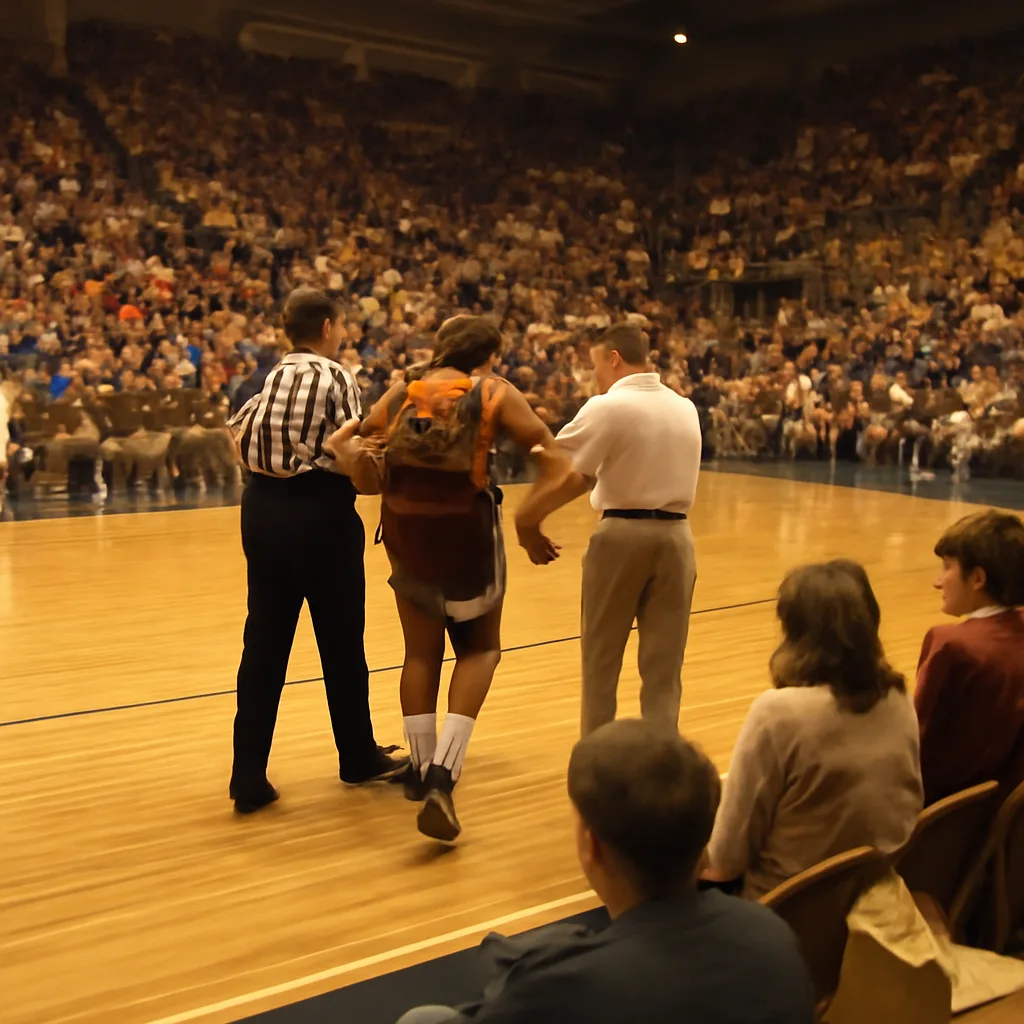
On March 9, 1997, a college basketball player was removed from a game after attempting to eat nachos on the court; the incident drew attention for its unusual nature and raised questions about sideline conduct and game management.
Reports from the time indicate the ejection stemmed from violations of game conduct and bench decorum rules rather than any physical altercation. NCAA and conference regulations prohibit actions that delay the game, create a spectacle, or involve unauthorized persons or items on the playing surface. Referees and game administrators routinely enforce these standards to maintain orderly competition and player safety.
Contemporary newspaper coverage framed the incident as an oddity rather than a major scandal. Local and regional outlets reported on the ejection with a mix of bemusement and scrutiny, noting that although the act was unconventional, the referee crew treated it as an enforceable breach of conduct. There is no reliable evidence that the ejection led to significant disciplinary measures beyond removal from that contest, nor that it had lasting consequences for officiating policy.
Eyewitness descriptions from fans and beat reporters emphasize the surreal visual of a player with concession food on the floor, contributing to the story’s memorability. Over time the episode has been recalled in sportswriting and oral histories as an example of unusual bench behavior rather than as a pivotal moment in college basketball governance.
Because coverage at the time varied in detail and later retellings sometimes amplified the anecdote, specifics such as the player’s name, team affiliation, and whether the nachos were purchased that day or brought from the bench are not consistently reported across sources. Where primary sources conflict or omit details, this summary refrains from asserting unverified facts.
The incident stands as a reminder of the interplay between spectators, concessions, and game operations in arenas, and how atypical conduct can force immediate enforcement decisions by officials. While memorable for its oddity, it did not precipitate documented long-term changes to rules; instead, it remains a quirky footnote in the record of basketball game management and sideline conduct.