Old Theories, New Headlines: Renewed Debate Over Edgar Allan Poe’s Mysterious Death
On January 19, 1849, Edgar Allan Poe was found delirious in Baltimore and died days later; recent press cycles have revisited competing explanations for his death, from alcohol-related collapse to medical causes and political kidnapping, none of which is conclusively proven.
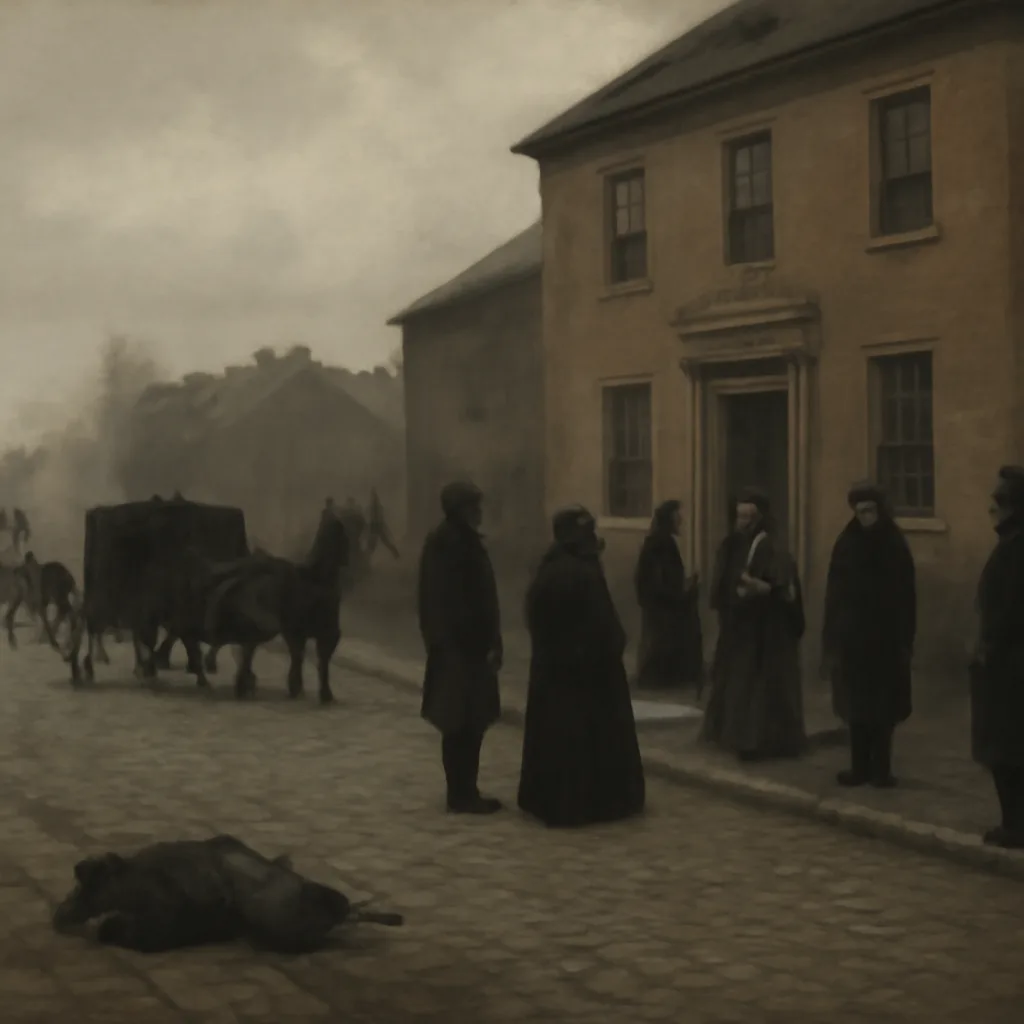
On January 19, 1849, Edgar Allan Poe was discovered in Baltimore in a state described by contemporaries as delirious, wearing clothes that were not his own. He died on October 7, 1849, a few days later, after brief hospital care. The circumstances of his final days have long invited speculation, and periodic media attention routinely revives a set of competing theories—medical, criminal, and circumstantial—without producing definitive proof.
Contemporary accounts and later research present a fragmented record. The official immediate explanation at the time was vague; Poe was described as in a “state of brain fever” and unable to give a coherent history. Medical knowledge and recordkeeping in mid-19th-century America were limited: there was no comprehensive autopsy, surviving medical notes are sparse, and eyewitness recollections conflict. That lack of reliable primary documentation has allowed numerous hypotheses to persist.
Alcohol-related collapse remains one widely cited theory. Poe had a documented history of heavy drinking at various times in his life, and several mid-19th-century sources attributed his condition to intoxication. However, Poe’s drinking patterns were uneven—periods of heavy use were followed by abstinence—and some historians caution against using alcohol as a catchall explanation, noting inconsistencies in witness testimony and the absence of medical confirmation.
Another frequently discussed possibility is a medical cause unrelated to alcohol, such as delirium tremens, metabolic disorder, or infectious disease. Symptoms reported by witnesses—agitation, confusion, and fluctuating consciousness—can correspond to several conditions common in that era, including infections such as typhus or pneumonia, or neurological events such as a stroke. Because no definitive postmortem examination exists in the historical record, scholars cannot categorically rule in or out specific diagnoses.
A more sensational explanation is the practice known as “cooping,” a form of electoral fraud in which individuals were forcibly detained, drugged or intoxicated, given different clothing, and taken to vote multiple times. Poe was found on an election day in Baltimore, which has made cooping an appealing hypothesis for some historians and journalists. Evidence for cooping as Poe’s fate is circumstantial: the timing and the clothing discrepancy are suggestive, but there is no direct documentation tying Poe to a specific cooping incident. Some contemporaries suggested he was a victim of foul play, while others rejected that account.
Other theories proposed over the years include poisoning, rabies, and chronic medical conditions exacerbated by stress and travel. Biographical narratives, family lore, and periodic scholarly reexaminations have kept these possibilities alive. Importantly, no single later discovery—be it a newly surfaced letter or an archival hospital record—has produced incontrovertible evidence to settle the question.
Modern historians assessing Poe’s death emphasize the limits of the primary sources and urge caution in drawing firm conclusions. The combination of incomplete medical documentation, conflicting witness testimony, and the cultural appetite for dramatic explanations has produced a landscape of plausible but unproven scenarios. Recent press cycles that resurface one or another theory often reflect renewed interest or newly highlighted archival fragments, but they rarely change the underlying evidentiary constraints.
For readers and researchers, the enduring mystery of Poe’s death is a reminder of how historical uncertainty can persist when records are thin and circumstances complex. While the debate generates compelling narratives that intersect with Poe’s life and work, scholars continue to underscore that the available evidence supports multiple plausible causes rather than a single, verifiable answer. As a result, portrayals of Poe’s death should make clear where the record is demonstrable and where interpretation or speculation begins.