
08/31/1962 • 5 views
Catastrophic 1962 Iran earthquake kills thousands in Buin Zahra region
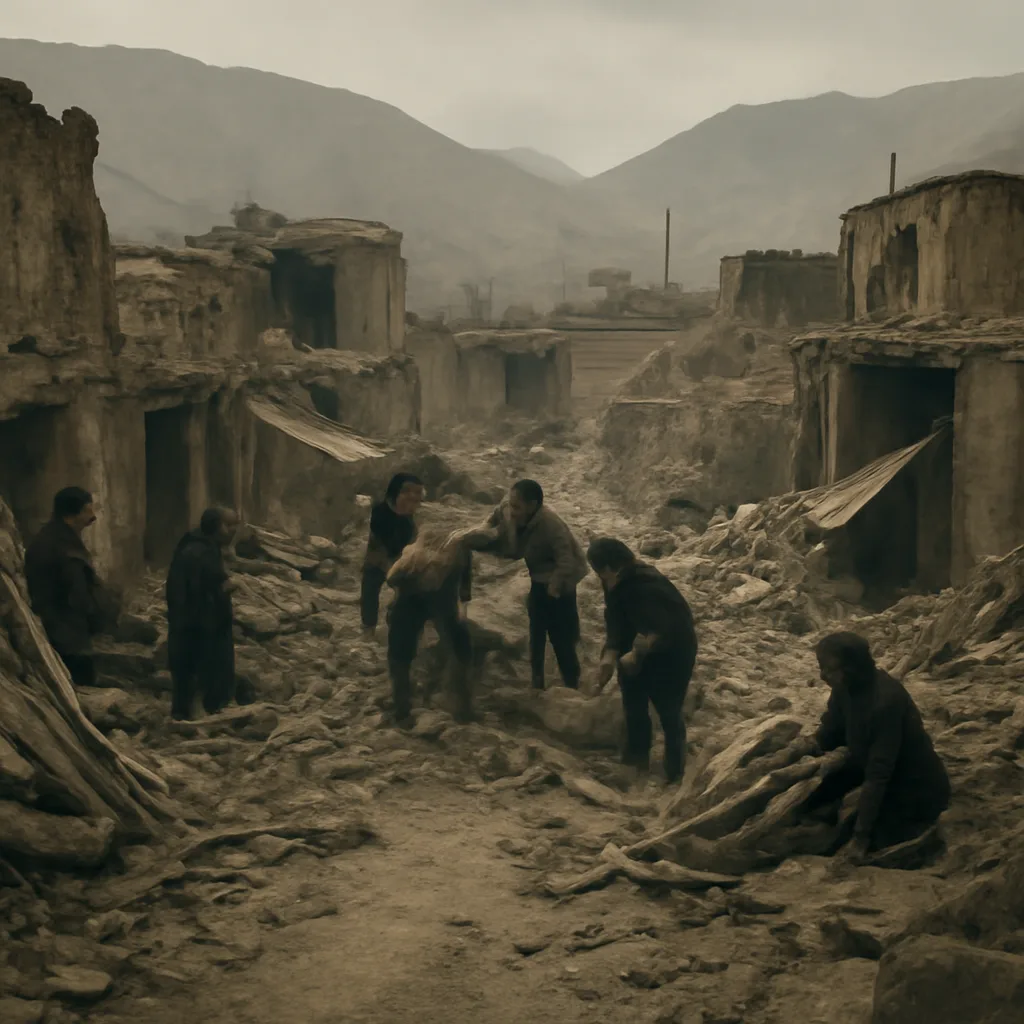
On August 31, 1962, a powerful earthquake struck northwestern Iran near Buin Zahra, devastating villages and killing an estimated several thousand people; the disaster prompted national relief efforts amid limited international assistance.
Damage and casualties
Eyewitness and governmental accounts from 1962 reported that whole villages were flattened, with adobe and masonry structures — common building types in rural Iran at the time — collapsing and trapping inhabitants. Estimates of the death toll vary between sources, but contemporaneous news agencies and later historical summaries commonly cite “several thousand” fatalities and many more injured and displaced. The variability in figures reflects the challenges of rapid accounting in remote areas and differences between provisional and later revised tallies.
Humanitarian response
The Iranian government mobilized military units and civil defense teams to assist with search, rescue, and recovery. Local communities and volunteers played a central role in immediate relief, providing shelter, food and care to survivors. International response was more limited than in later decades; some foreign aid and technical assistance were provided, but global disaster response mechanisms were less developed in 1962 than they are today.
Seismological context
The quake occurred in a tectonically active zone where the Arabian Plate interacts with the Eurasian Plate, producing frequent earthquakes across Iran. The earthquake underscored longstanding vulnerabilities: many rural buildings used unreinforced masonry and adobe, which perform poorly in strong shaking. Studies of Iran’s seismic history identify the 1962 Buin Zahra event as significant for its human toll and for prompting technical and policy discussions about earthquake-resistant construction.
Aftermath and legacy
In the months after the disaster, reconstruction focused on shelter and basic services, but full rebuilding in affected rural areas took years. The 1962 earthquake contributed to evolving awareness within Iran of the need for improved building practices and urban planning in seismic zones. Later, more catastrophic quakes in Iran—most notably the 1968 Dasht-e Bayaz and the 1990 Manjil–Rudbar earthquakes—would further shape national policies on seismic risk mitigation and construction codes.
Sources and uncertainties
Details about exact casualty figures and the full geographic extent of damage vary across contemporaneous press reports, government statements and later academic summaries. Because record-keeping and reporting in 1962 were uneven, particularly in remote districts, precise numbers remain uncertain; historians and seismologists typically treat historical casualty estimates from this period as approximate.
Overall, the August 31, 1962 earthquake remains an important event in Iran’s modern seismic history, illustrating the deadly combination of strong tectonic forces and vulnerable building stock in rural communities.