
← Back
11/28/1977 • 5 views

Major Earthquake Strikes Iran in November 1977, Causing Widespread Destruction
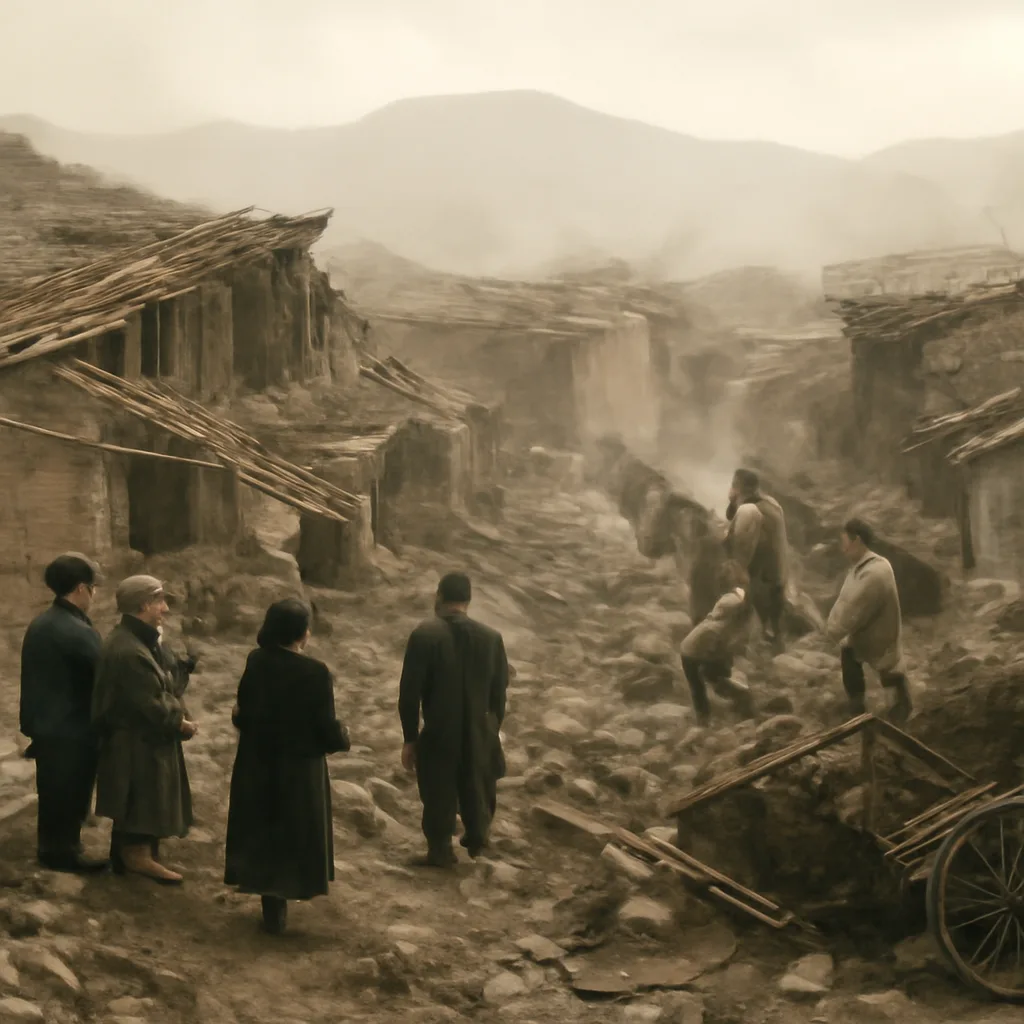
Ruined masonry buildings and collapsed homes in a rural western Iran village after a major 1977 earthquake; people gather amid rubble and dust.

On November 28, 1977, a powerful earthquake struck western Iran, leveling towns and causing thousands of fatalities and widespread damage across the affected region.


On November 28, 1977, western Iran was struck by a destructive earthquake that caused extensive loss of life and widespread structural damage. Contemporary reports and later summaries identify the event as one of several deadly seismic episodes in Iran during the 20th century, a country situated on complex, active fault systems where large earthquakes are relatively frequent.

Seismic context
Iran lies across the collision zone between the Arabian and Eurasian tectonic plates. The resulting network of strike-slip and thrust faults has produced repeated, often deadly earthquakes. Historical and instrumental records show that the Zagros mountains and the broader western Iran region have been vulnerable to significant seismic events; the November 1977 earthquake is part of that pattern of recurrent large shocks.

Impact and casualties
Sources from the period report that the quake struck at a time when many villages and towns in the affected area had structures not designed to withstand strong ground shaking. Contemporary press accounts and later compilations indicate casualty figures in the thousands, with widespread injuries and many buildings—residential, religious, and commercial—damaged or destroyed. Exact death tolls and damage estimates vary among reports; in the absence of a single definitive post-event accounting, available figures should be regarded as approximate.

Humanitarian and governmental response
Following the disaster, local and national authorities mobilized emergency response efforts to search for survivors, treat the injured, and provide shelter to those who lost homes. Given the scale of destruction reported in contemporary sources, relief needs included medical care, temporary housing, food, and water. International aid responses to earthquakes in Iran during this era were influenced by the geopolitical context of the late 1970s; records of international assistance for this specific event are limited in some accounts, and domestic agencies bore primary responsibility for immediate relief operations.

Aftermath and reconstruction
In the weeks and months after the earthquake, reconstruction work focused on clearing debris, restoring basic services, and rebuilding housing. The event reinforced long-standing concerns about building practices in seismic zones of Iran. Over subsequent decades, Iranian engineers and policymakers have periodically updated seismic codes and retrofitting programs in response to lessons learned from earthquakes like the one in November 1977, though implementation has varied by region and resource availability.

Historical significance
The November 1977 quake is one among several significant 20th-century Iranian earthquakes that underline the country’s seismic vulnerability. While exact casualty and damage figures differ across contemporary and later sources, the overall historical record makes clear that the event was deadly and destructive for the communities affected. It contributed to ongoing awareness of the need for earthquake-resistant construction and disaster preparedness in Iran.

Notes on sources and uncertainty
Contemporary press reports, seismological bulletins, and later summaries document the November 1977 earthquake and its severe local impacts. Specific numbers for fatalities and damage vary between accounts; where precise, consistent official tallies are not available in accessible records, descriptions here rely on multiple contemporaneous and retrospective sources and therefore present a general, corroborated picture rather than a single definitive statistical accounting.

Share this

Email Share on X Facebook Reddit

Did this surprise you?