
04/05/1900 • 6 views
First Electric Subway Train Began Service in 1900
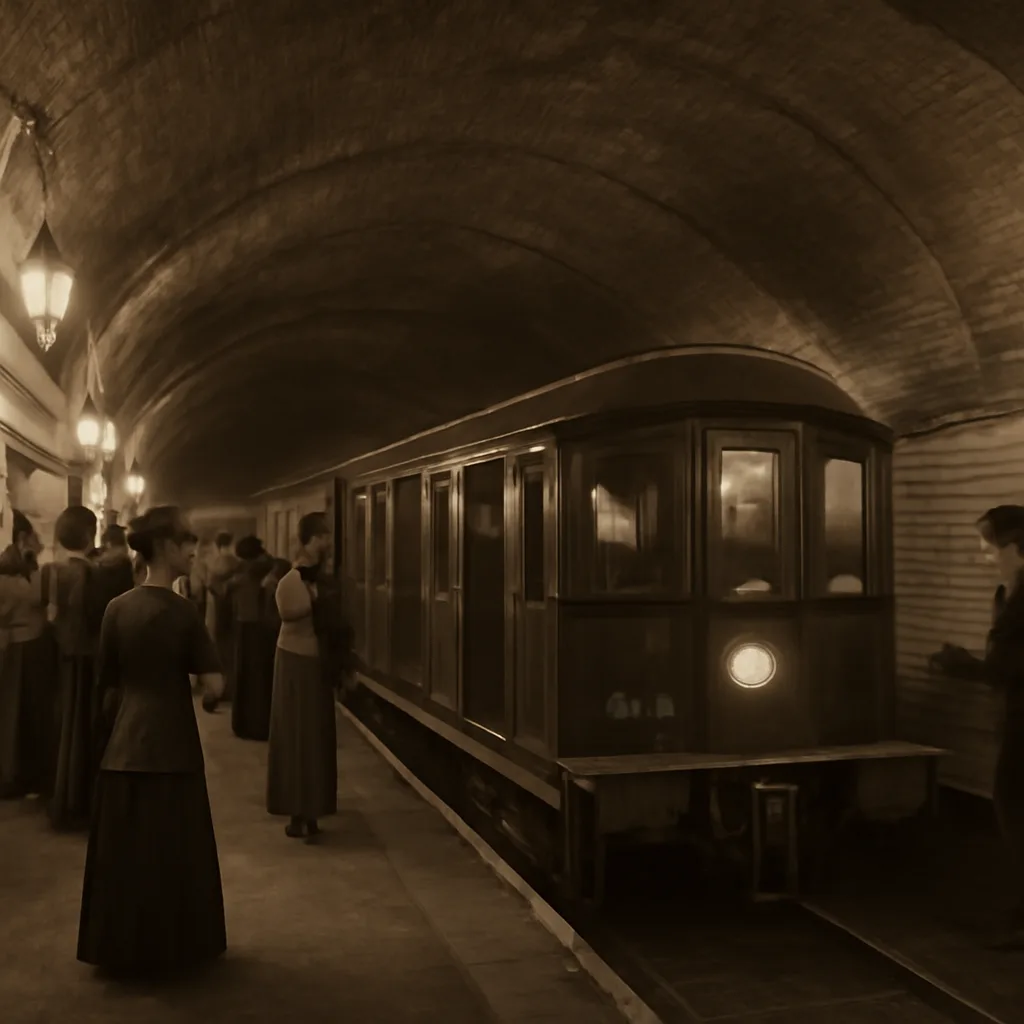
On April 5, 1900, the City & South London Railway — the world’s first deep-level electric underground railway — began regular passenger service, marking a key shift from steam to electric traction in urban transit.
Background and technology
The C&SLR had been authorized in the 1880s and built in smaller-diameter tunnels (about 10–11 feet/3–3.4 m) suited to tunnelling under dense urban streets. Steam traction posed severe ventilation and exhaust problems in such confined tubes, prompting experimentation with alternative motive power. Early electric traction pioneers in Europe and the United States had demonstrated electric traction on surface and elevated lines, but adapting electric motors, control equipment and power supply to make a practical, reliable deep-level underground service required further development.
The C&SLR adopted electric multiple-unit trains powered from a conduit system or third/fourth rail arrangements (contemporary sources describe a four-rail system for some early London electrifications). Electric traction eliminated smoke and steam in the tunnels, allowed smaller tunnel profiles, improved acceleration and provided quieter, cleaner operation. The opening of the C&SLR thus proved that electrically powered deep-level sub-surface railways were technically and commercially viable.
Service and impact
Initial service on the C&SLR was modest by later standards — short trains, limited speeds and stations closely spaced to serve central districts — but it demonstrated crucial advantages: improved tunnel environments for passengers and staff, more flexible station siting, and the capacity to extend lines under crowded urban areas without the disruptive street works required for cut-and-cover routes. The success of the C&SLR influenced subsequent deep-tube lines in London and elsewhere, accelerating the global shift from steam to electric traction in urban rail transit during the early 20th century.
Historical context and caveats
While the C&SLR’s 1900 opening is widely noted as the first deep-level electric underground railway in regular passenger service, the broader history of electric traction includes earlier demonstrations and shorter urban electric lines. For example, electric trams and some suburban electric railways predate 1900, and a few experimental or local electric underground operations appeared elsewhere in the 1890s. Historians therefore distinguish the C&SLR as the first successful, permanent deep-tube electric passenger railway rather than the absolute first use of electricity in any urban rail setting.
Legacy
The technical and operational lessons of the C&SLR fed directly into the expansion of London’s deep-level network (the “Tube”) and informed electrification choices in other cities. Its opening helped establish electric traction as the default for new urban rail tunnels and set standards for rolling stock, station design and power distribution that evolved through the 20th century.
Sources and verification
This summary is based on contemporaneous and retrospective accounts of London’s underground railway development and the history of electric traction. Where interpretations differ, historians usually concur that April 1900 marks the C&SLR’s inauguration of regular electric deep-level passenger service, even as they note earlier electric experiments and surface electric services.