Bakelite: The Birth of the First True Synthetic Plastic
On April 5, 1907, Belgian-born chemist Leo Baekeland announced the creation of Bakelite, the first fully synthetic thermosetting plastic, marking a turning point in materials science and the rise of mass-produced, nonmetallic consumer goods.
On April 5, 1907, Leo Hendrik Baekeland completed the process that produced Bakelite, widely regarded as the first true synthetic (fully human-made) plastic. Baekeland, a Belgian-born American chemist and inventor, had been experimenting with phenol and formaldehyde reactions. He developed a heat- and pressure-controlled process to produce a hard, moldable, electrically nonconductive material that did not soften on heating — qualities that distinguished it from natural resins and earlier semi-synthetic products.
What made Bakelite historically significant was that it was the first industrially practical thermosetting plastic: once cured, its molecular network was permanently cross-linked, giving it durability, heat resistance, and dimensional stability. These properties allowed Bakelite to be molded into complex shapes and used for electrical insulators, radio and telephone casings, jewelry, kitchenware, and countless other consumer and industrial products. Its electrical nonconductivity and heat resistance were especially valuable as electrification spread in the early 20th century.
Baekeland’s work built on a background of laboratory experimentation with phenol-formaldehyde chemistry that had precedents in other researchers’ papers, but his contribution was to control the reaction to produce a practical, reproducible, and easily moldable material and to scale it for manufacture. He patented his process and, in 1909, founded the General Bakelite Company to produce the material commercially. The patent and industrial development helped establish the modern plastics industry and spurred later research into a wide range of synthetic polymers.
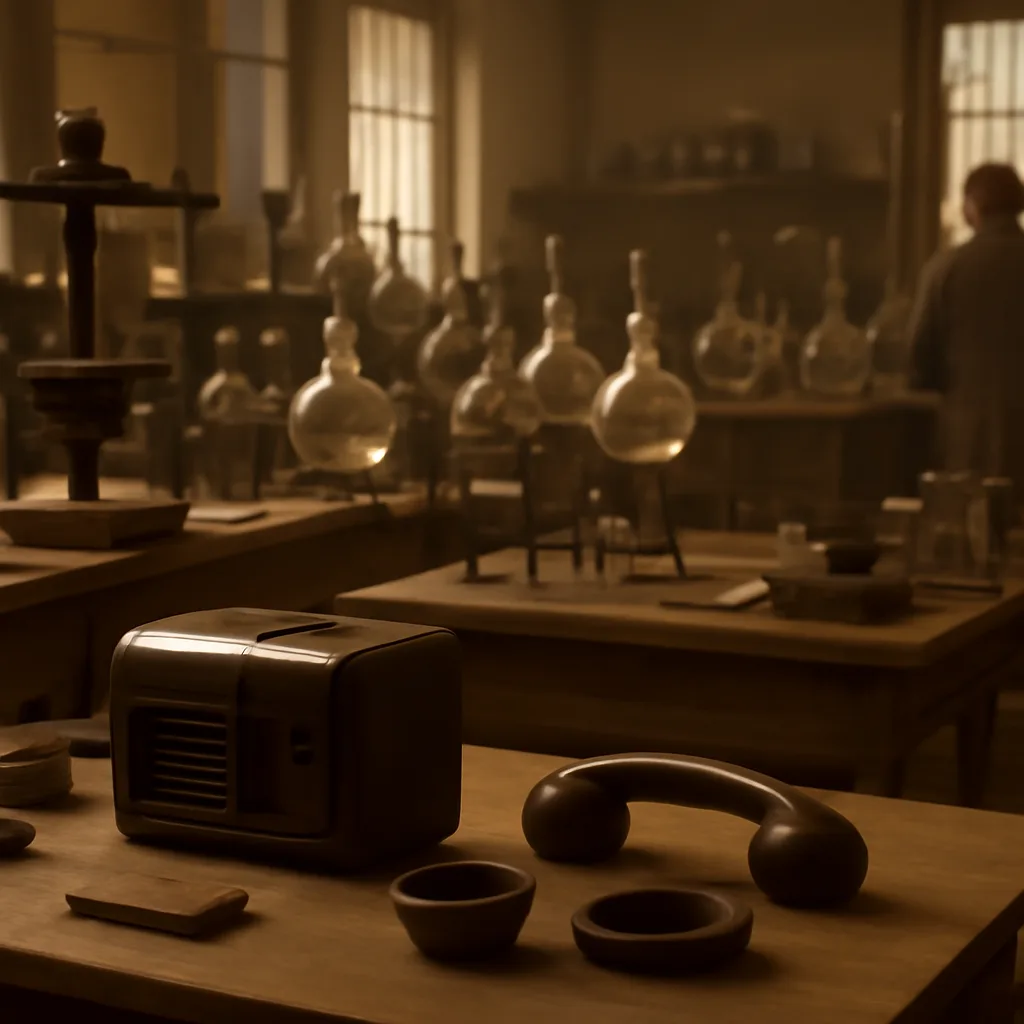
Bakelite also had cultural and economic impacts. In the 1920s and 1930s, it became widely used for consumer goods, often promoted for its modern look and utility. It was sold in colored and marbled forms and used for everything from radio cabinets and telephone housings to costume jewelry and kitchen utensils. Its ease of molding and low cost contributed to the expansion of mass-produced consumer items in the early 20th century.
Limitations and historical context: Bakelite is a thermoset and not recyclable in the way modern thermoplastics are; once cured, it cannot be melted and reshaped. Later generations of plastics — including polyethylene, polystyrene, and polyvinyl chloride — introduced different properties (flexibility, clarity, ease of molding at lower temperatures) and would become dominant in many applications from the mid-20th century onward. Historical accounts note that while Baekeland is credited with inventing Bakelite, aspects of phenol-formaldehyde chemistry had been explored earlier by other scientists; Baekeland’s achievement was turning that chemistry into a practical, commercial product.
Legacy: Bakelite’s invention marked a clear moment in the emergence of synthetic polymer chemistry as a foundation for modern materials science and consumer manufacturing. Museums, collectors, and historians now study Bakelite objects as artifacts of early plastics technology and design. The material’s durability means many Bakelite objects have survived, offering tangible examples of early 20th-century industrial design and everyday life.
This entry avoids conjecture about Baekeland’s intentions beyond documented facts: he pursued practical, patentable improvements that allowed phenol-formaldehyde materials to be manufactured at scale, and his work is recognized as a watershed in plastics history. April 5, 1907, is commonly cited as the date associated with Baekeland’s successful experiment that led to Bakelite, though the subsequent patenting and commercialization process extended over the following years.