
← Back
11/28/2014 • 5 views

United States Announces Troop Drawdown from Afghanistan
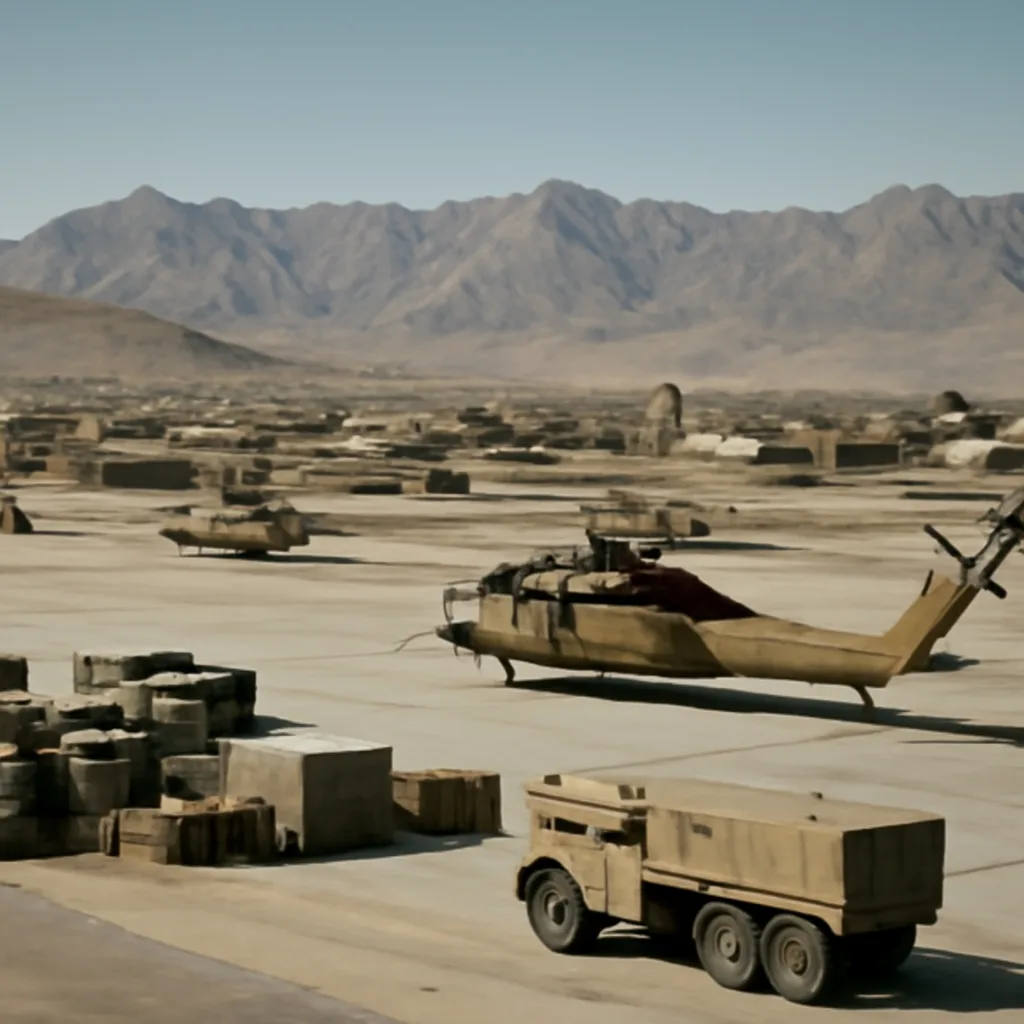
U.S. military helicopters and vehicles at an Afghan airfield during the 2010s, with distant low-rise buildings and mountains on the horizon.

On November 28, 2014, U.S. officials announced a formal withdrawal plan to reduce American combat troops in Afghanistan, shifting to a supporting mission after more than a decade of combat operations.


On November 28, 2014, United States officials publicly announced a major reduction in American combat forces in Afghanistan, marking a shift from large-scale combat operations to a smaller, support-focused presence. The announcement formalized plans to end the U.S.-led combat mission known as Operation Enduring Freedom and transition to a new NATO-led mission, Resolute Support, intended to train, advise and assist Afghan security forces.

Background: U.S. forces entered Afghanistan in late 2001 following the September 11 attacks. Over the next decade-plus, the U.S. and NATO expanded their mission from counterterrorism to counterinsurgency and state-building, peaking at roughly 100,000 foreign troops in the country around 2011–2012. By 2014, Afghan security forces had taken primary responsibility for most combat operations, and international partners were preparing to hand over security duties and transition to a supporting role.

The November 28 announcement set out the political and military framework for that transition. It reaffirmed earlier commitments — including those between the U.S., NATO, and the Afghan government — to complete the transfer of security responsibility to Afghan forces. The drawdown included the withdrawal of most combat-designated U.S. troops, with a much smaller residual force pledged to remain for training, intelligence sharing, counterterrorism, and force protection missions. The exact numbers and timelines were specified in subsequent statements and agreements with NATO allies and the Afghan government.

NATO and Afghan frameworks: Alongside the U.S. announcement, NATO leaders agreed to a follow-on mission under the name Resolute Support, scheduled to begin in January 2015. Resolute Support was intended to be a non-combat mission focused on training, advising, and assisting Afghan security institutions. The Afghan government and international partners negotiated the scope of the mission and the legal status of foreign troops remaining in Afghanistan, including status-of-forces arrangements.

Operational and political implications: The shift did not mean an immediate end to violence or instability. Afghan forces continued to face insurgent attacks from the Taliban and other militant groups, and questions remained about their capacity to hold territory and maintain long-term security independently. U.S. and NATO officials framed the drawdown as a transition to Afghan ownership of security, while acknowledging the continued need for international support in areas such as logistics, intelligence, air support, and special operations against transnational terrorist threats.

Domestic and international reactions: Within the United States and among NATO allies, the announcement reflected war-weariness and political pressure to reduce large-scale overseas deployments after more than a decade of conflict. Afghan leaders publicly welcomed the international commitment to continued support, while also urging sustained assistance and political reconciliation to consolidate security gains. Critics cautioned that a smaller footprint risked emboldening insurgent forces or undermining gains if Afghan institutions and governance did not strengthen in tandem.

Aftermath and context: The November 28, 2014 announcement was one step in a multi-year process of transition and negotiation. Subsequent years saw continuing debate over troop levels, the character of the U.S. presence in Afghanistan, counterterrorism operations, and diplomatic efforts to achieve a political settlement. The drawdown initiated at the end of 2014 set the stage for further changes in U.S. and NATO posture in Afghanistan over the remainder of the decade.

This summary is based on contemporaneous public statements and widely reported timelines of the U.S. and NATO transition from combat operations to a training and assistance mission in Afghanistan beginning in late 2014. Where exact troop numbers and bilateral legal arrangements varied by announcement and agreement, those details are omitted here to avoid misstatement.

Share this

Email Share on X Facebook Reddit

Did this surprise you?