
06/04/1915 • 4 views
U.S. Supreme Court Upholds First Major Film Censorship Decision
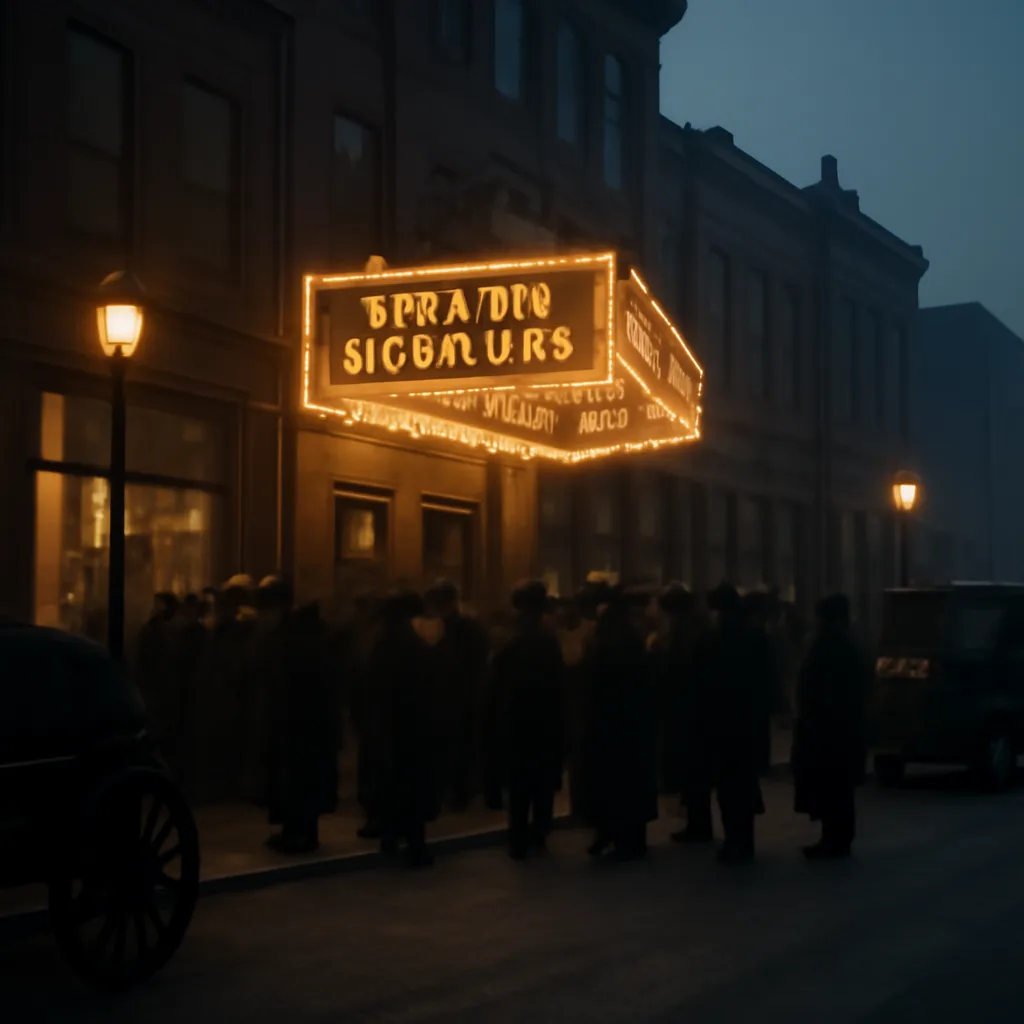
On June 4, 1915, the U.S. Supreme Court in Mutual Film Corp. v. Industrial Commission of Ohio affirmed that motion pictures were not protected by the First Amendment, clearing the way for state and local censorship of films.
Background: By the 1910s movies had become a mass medium with commercial and cultural influence. Local boards and state commissions, concerned about perceived moral risks, violent content, or political messaging, increasingly demanded the power to approve or ban films. The Mutual Film case arose after Ohio’s Industrial Commission, acting as the state censor, refused to license certain films distributed by Mutual Film Corporation. Mutual sued, arguing that films were a form of expression entitled to First Amendment protection and that Ohio’s censorship violated due process and free speech guarantees.
The Court’s reasoning: The Supreme Court, in an opinion delivered by Justice McReynolds, rejected the argument that motion pictures were a protected form of free speech. The majority characterized films primarily as business, entertainment, and spectacle rather than as the type of press or public speech the First Amendment was designed to protect. The Court emphasized the potential for movies to incite crime or corrupt morals, and it endorsed the authority of states to regulate moving pictures in the public interest. The decision therefore sustained Ohio’s censorship scheme and left open broad regulatory latitude for other governments.
Immediate effects: The Mutual Film ruling effectively validated the many municipal and state censorship boards that had begun operating in the United States. Cities such as Chicago, New York, and Boston, and several states, either strengthened existing boards or established new ones. Filmmakers and distributors faced variable standards across jurisdictions; producers often edited or withheld films to avoid bans or costly litigation. Industry self-regulatory efforts intensified in part to forestall inconsistent local action and to reassure exhibitors and municipalities.
Longer-term significance: Mutual Film’s impact endured for over a decade. The decision remained the prevailing constitutional doctrine until 1952, when the Supreme Court in Joseph Burstyn, Inc. v. Wilson reversed course and recognized films as a medium entitled to First Amendment protection. During the intervening years, censorship boards shaped film content, influencing genres, moral portrayals, and the development of production codes. The Mutual Film ruling is thus an early landmark in the legal history of mass communication and government regulation, illustrating how courts, public morals, and emerging media technologies interacted in the Progressive Era.
Historiographical notes and limits: The basic facts of the Mutual Film decision and its date are well established. Interpretations of the Court’s motivations and the broader cultural impact vary among historians: some emphasize moral panic and Progressive reform impulses, others highlight commercial pressures and local political dynamics. No direct quotations appear in this summary; readers seeking primary sources should consult the Supreme Court opinion in Mutual Film Corp. v. Industrial Commission of Ohio (1915) and contemporary newspaper coverage for period detail.