
← Back
08/08/1945 • 4 views

United States Prepares Second Atomic Bomb as Operations Accelerate
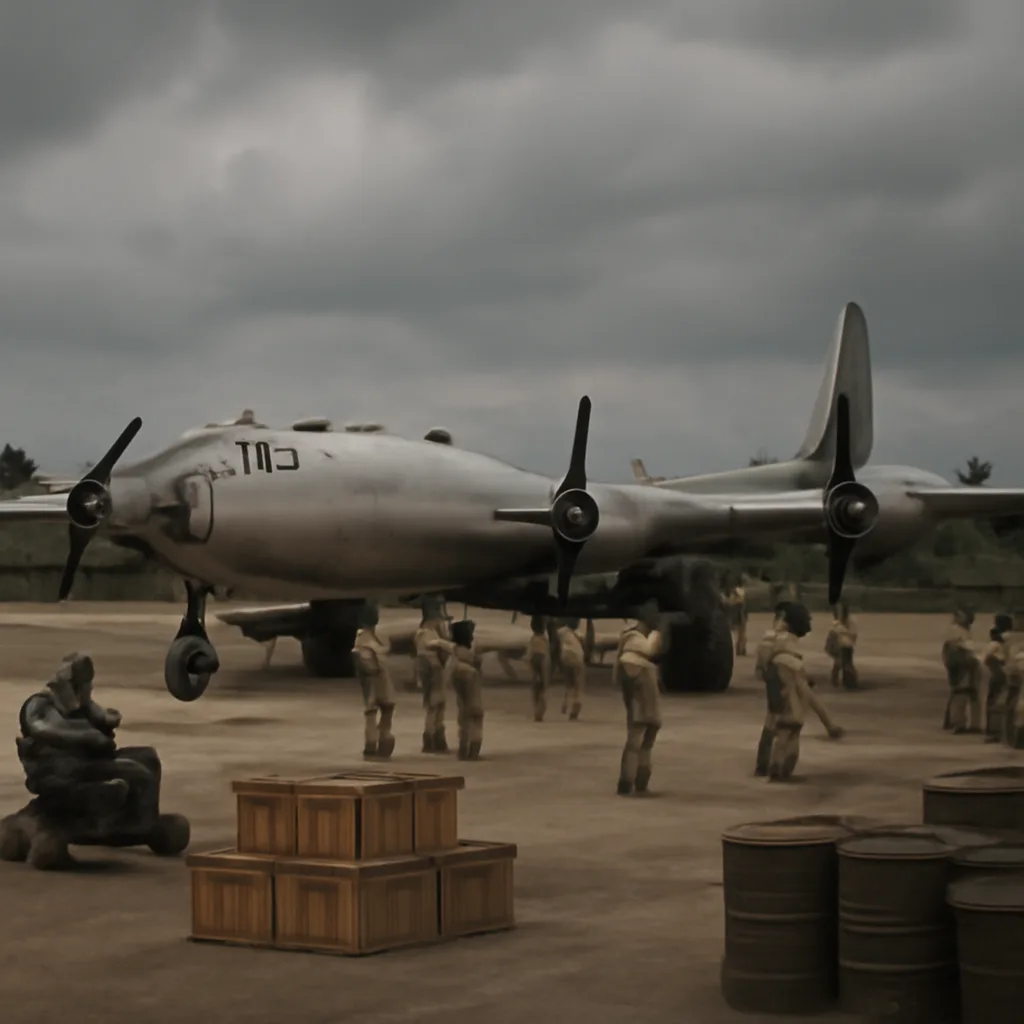
B-29 Superfortress bomber on a wartime airfield with ground crew and support vehicles, 1945 Pacific theater setting, overcast sky.

On August 8, 1945, U.S. authorities reported preparations for a second atomic bomb following the bombing of Hiroshima, with military and logistical efforts accelerating amid uncertainty about Japan’s response and the Soviet entry into the war.


On August 8, 1945, U.S. military and government officials announced that preparations were underway for a second atomic bomb following the atomic bombing of Hiroshima on August 6. The announcement came amid rapid developments in the final stages of World War II: the Allies were pressing Japan for surrender, U.S. strategic bombing and naval blockades continued, and the Soviet Union prepared to enter the Pacific war.

Background and immediate context
The first atomic weapon used in war, dropped on Hiroshima on August 6, caused unprecedented destruction and casualties. At that time the United States had only a very small number of usable atomic bombs and a developing production capability. Military planners and scientists involved in the Manhattan Project had anticipated that further use might be required depending on Japan’s response and broader strategic considerations. The August 8 reports signaled that U.S. authorities were moving to ready another device should it be ordered.

Operational considerations
Preparing a second bomb involved multiple complex steps: assembling fissile material (the Hiroshima bomb used a uranium-235 design), readying delivery aircraft (B-29 Superfortress bombers modified for atomic delivery), and coordinating weather and target reconnaissance. Logistical chains stretched from production sites such as Oak Ridge and Hanford to forward bases in the Pacific. The Manhattan Project’s production limits meant that each weapon was resource-intensive and time-consuming to make, so decisions about further use weighed military objectives, available stockpiles, and political directives from civilian leadership.

Strategic context
The decision to prepare additional bombs was shaped by several considerations. U.S. leaders sought Japan’s unconditional surrender and were uncertain whether the shock of Hiroshima alone would compel capitulation. In parallel, the Soviet Union, honoring agreements made at the Yalta Conference, was preparing to declare war on Japan; Stalin announced the Soviet offensive against Japanese forces in Manchuria on August 8, the same day U.S. preparations for a second bomb were reported. The combined pressure of American military capability and Soviet entry into the war altered Japan’s strategic situation and factored into Allied deliberations about ending hostilities.

Public and diplomatic reactions
At the time, public information was tightly controlled by wartime censorship and official statements. Reports described ongoing preparations without detailing technical specifics or timelines. International reaction was mixed and often muted in official channels, while governments and military staffs assessed the implications for postwar diplomacy and occupation planning.

Historical significance
The announcement of preparations for a second bomb highlights how quickly the new weapon altered military planning and diplomatic calculation. The existence of additional atomic devices, even in limited numbers, introduced a new element into considerations of force and reconciliation. Within days, on August 9, 1945, the United States dropped a second atomic bomb on Nagasaki; the Soviet invasion of Manchuria also began on August 9. Japan announced its intention to surrender on August 15, 1945, though historians continue to debate the relative weight of the atomic bombings, Soviet entry into the war, conventional bombing, and blockade in producing Japan’s decision to capitulate.

Notes on sources and uncertainty
Contemporary announcements and later historical research establish that U.S. authorities were preparing additional atomic weapons after Hiroshima and before Nagasaki. Precise internal deliberations, timelines, and the comparative influence of specific events (Hiroshima, the Soviet declaration of war, blockade and conventional bombing) on Japan’s surrender remain subjects of scholarly analysis and debate. This account avoids fictionalized details or invented quotations and reflects the established historical timeline and widely sourced scholarship.

Share this

Email Share on X Facebook Reddit

Did this surprise you?