
← Back
02/25/1958 • 6 views

First successful permanent cardiac pacemaker implanted, February 25, 1958
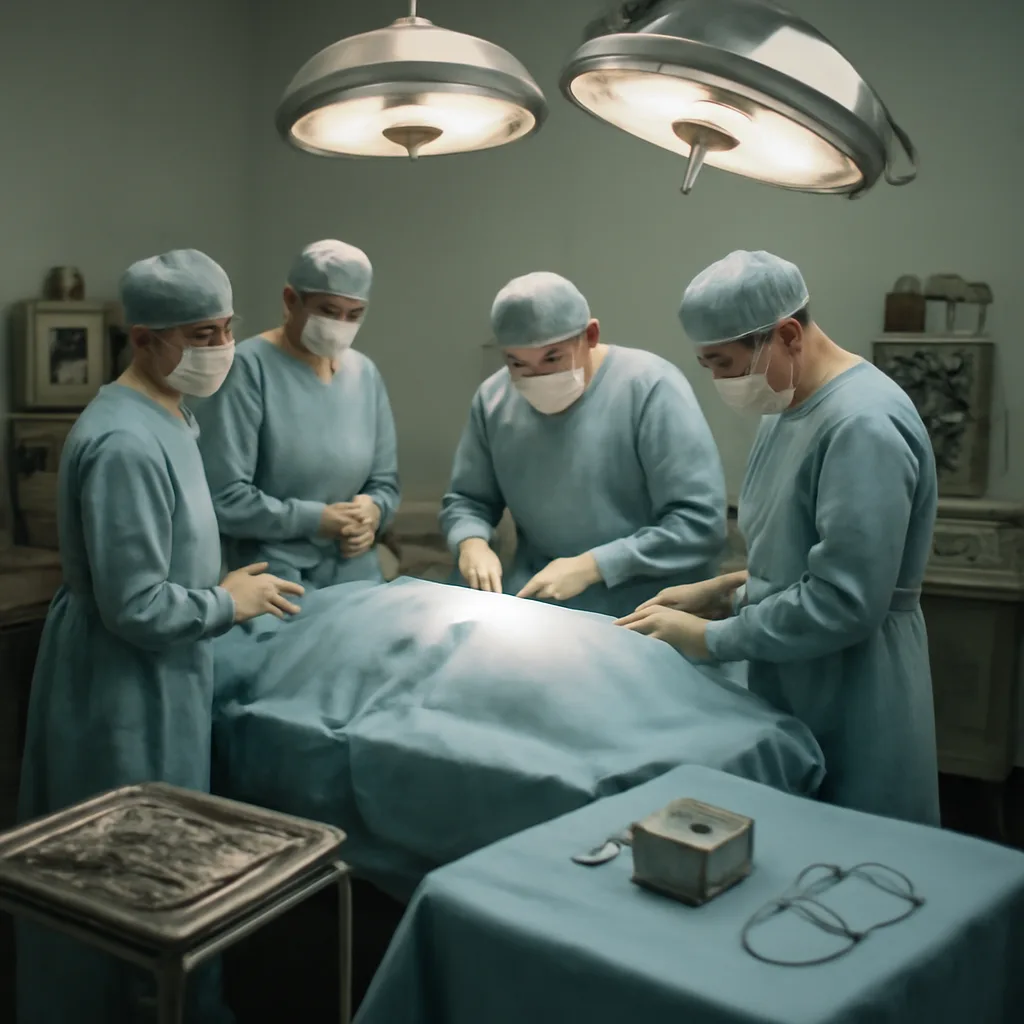
Operating theatre in late 1950s hospital showing surgeons and nurses around an operating table with early medical equipment and a small early pacemaker device on a tray; clinical scene, period-appropriate clothing and instruments.

On February 25, 1958, surgeons implanted what is widely recognized as the first successful long-term cardiac pacemaker, establishing a new era in treating heart block and bradyarrhythmias and paving the way for modern cardiac rhythm management.


On February 25, 1958, surgeons at the Karolinska Institute in Stockholm implanted what is commonly cited as the first successful permanent cardiac pacemaker. The device was implanted to treat complete heart block, a condition in which the heart’s electrical signals from the atria fail to reach the ventricles, causing dangerously slow heart rates. The operation marked a turning point in clinical cardiology: it demonstrated that an electrically driven device could reliably sustain a patient’s heartbeat over an extended period.

The patient was a 43-year-old man named Arne Larsson (also spelled Åke Larsson in some sources). Larsson had suffered repeated episodes of syncope and severe bradycardia due to complete heart block. The initial implants in 1958 involved external or bulky equipment, but the device used in the 1958 operation was a self-contained unit designed for long-term implantation. The first generator, designed by Rune Elmqvist, was small enough to be implanted subcutaneously and delivered electrical stimulation to the heart via electrodes inserted into the myocardium. The surgical lead system and pulse generator represented a practical integration of engineering and surgical technique.

The pacemaker program in Stockholm involved collaboration between Lund-born engineer Rune Elmqvist and cardiac surgeon Åke Senning. Elmqvist had developed an earlier external pacemaker prototype, and Senning performed the surgical implantation. Contemporary accounts and later histories credit this team and the 1958 operation as the first instance in which a wholly implantable pacemaker successfully supported a patient over time. Arne Larsson went on to receive several pulse generators during his lifetime and survived for many decades; he became a well-known figure in histories of pacing because of his long survival with successive implanted devices.

The early devices differed markedly from modern pacemakers. The 1958 generator used transistor-based electronics and primary cells that limited longevity; subsequent replacements were required as battery life ended or as technology improved. Leads at the time were relatively rigid and required epicardial or myocardial fixation methods unlike many transvenous systems used today. Nonetheless, the proof of concept—that an implanted device could maintain cardiac rhythm and improve survival and quality of life—was firmly established.

This implantation catalyzed rapid development in pacing technology and clinical practice. Within a few years engineers and physicians refined pulse generators, improved electrode materials and fixation, and developed transvenous lead techniques that reduced surgical invasiveness. By the 1960s and 1970s pacemakers became smaller, more reliable, and more widely indicated, transforming care for patients with heart block, sick-sinus syndrome, and other bradyarrhythmias.

Historical accounts sometimes vary in detail—particularly in exact descriptions of early prototypes and in attribution among collaborators—but the Stockholm implants of 1958 are consistently recognized in medical histories as the first successful long-term implantation of a cardiac pacemaker. Arne Larsson’s case and the work of Elmqvist and Senning are routinely cited in textbooks, museum exhibits, and review articles on the history of cardiac pacing.

The legacy of the 1958 implantation is evident in today’s cardiac rhythm management: modern pacemakers use highly miniaturized electronics, rechargeable or long-life batteries, programmable pacing modes, rate responsiveness, and sophisticated lead and nonlead technologies. All of these advances rest on the foundational demonstration that an implanted electrical device could safely and effectively maintain a heart’s rhythm over time, beginning with the procedures performed in Stockholm in 1958.

Share this

Email Share on X Facebook Reddit

Did this surprise you?