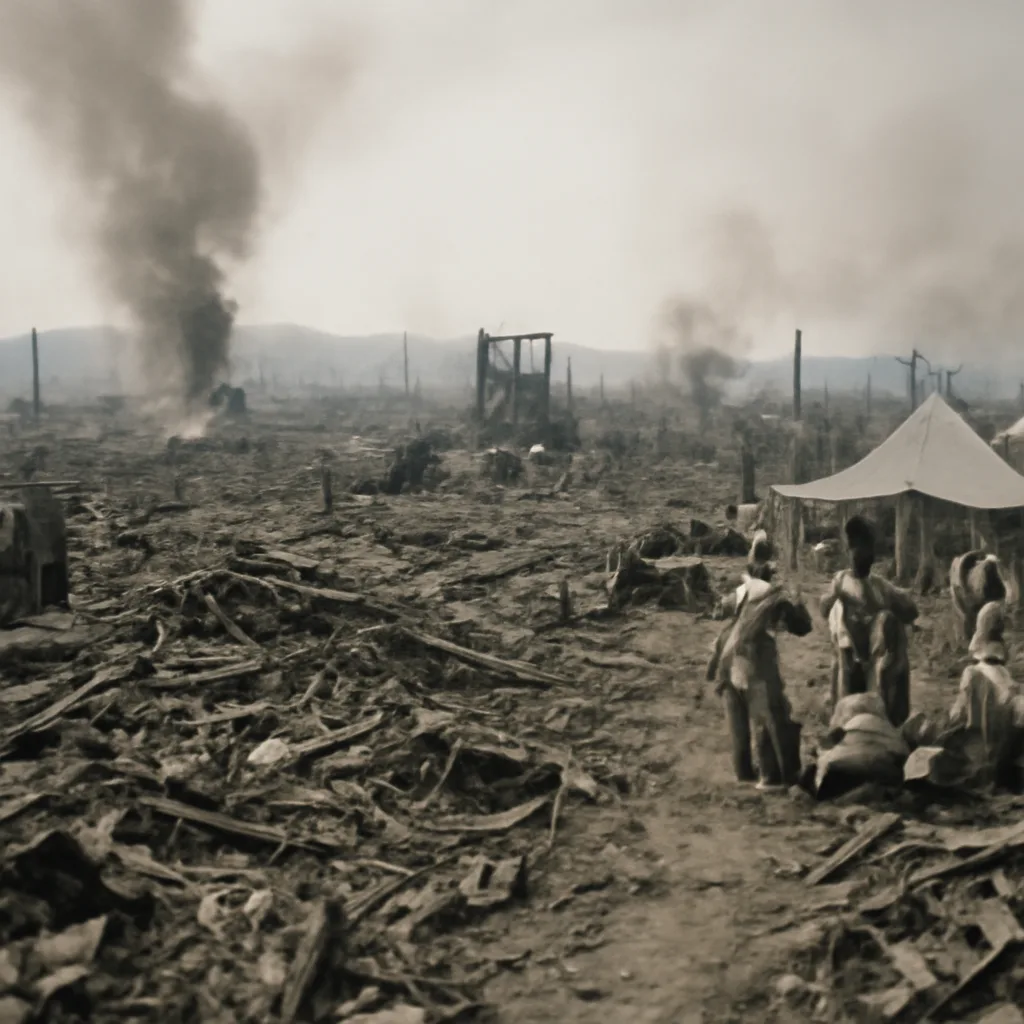
Hiroshima Devastated by Atomic Bomb on August 6, 1945
On August 6, 1945, the U.S. dropped an atomic bomb on Hiroshima, Japan, causing immediate massive destruction, tens of thousands of deaths, and long-term suffering from radiation and social disruption.
On the morning of August 6, 1945, at 8:15 a.m., the United States Army Air Forces dropped an atomic bomb nicknamed "Little Boy" on the city of Hiroshima, Japan. The explosion was the first use of a nuclear weapon in war. The bomb detonated roughly 600 meters above the city center, producing an enormous blast, intense heat, and a burst of ionizing radiation. The detonation flattened large sections of Hiroshima, destroyed military and civilian infrastructure, and caused fires that spread across the urban area.
Casualties and immediate effects: Contemporary estimates of immediate deaths vary; Japanese and international sources commonly cite at least 70,000–80,000 people killed by the end of 1945 as a result of the blast, burns, and acute radiation sickness, with many thousands more injured. Counting later deaths from radiation-related illness and long-term effects raises total estimates higher. The explosion destroyed hospitals, government buildings, and transportation links, complicating rescue and medical care. Many victims died within minutes or hours; others succumbed in the ensuing days and weeks to burns, trauma, and radiation exposure.
Physical and environmental impact: The airburst produced a fireball and shock wave that leveled wooden and many masonry structures within about a mile of ground zero. Buildings nearer the hypocenter were vaporized or reduced to rubble; structures farther out suffered severe damage and collapsed. The blast caused widespread fires; combined with the density of the built environment, the fires consumed large tracts of the city. Debris, soot, and radioactive fallout contributed to hazardous conditions for survivors and responders.
Health and long-term consequences: Survivors experienced acute radiation sickness—symptoms included nausea, hair loss, bleeding, and infection—whose severity depended on proximity to the blast and dose received. Over subsequent years and decades, increased rates of leukemia and certain cancers were observed among atomic-bomb survivors (hibakusha), along with chronic health problems and psychological trauma. Genetic effects and impacts on subsequent generations were investigated extensively; large-scale studies, including those by Japanese and international researchers, have found increased cancer risks in exposed populations, while clear evidence of widespread heritable genetic damage has been limited and remains an area of ongoing study.
Social, cultural, and political aftermath: The bombing contributed directly to Japan’s decision to surrender; on August 15, 1945, Japan announced its intent to surrender, and the formal surrender occurred on September 2, 1945, ending World War II. The destruction of Hiroshima—and the second atomic bombing of Nagasaki on August 9—have since shaped global debates about nuclear weapons, ethics, and arms control. Survivors and their communities have engaged in activism for peace, nuclear disarmament, and recognition of victim needs. Hiroshima itself has been rebuilt; the Hiroshima Peace Memorial (Genbaku Dome), a structure left standing near ground zero, is now part of the Hiroshima Peace Memorial Park and a UNESCO World Heritage Site, serving as a memorial and focal point for remembrance.
Historical context and sources: The decision to use atomic bombs was made by U.S. military and political leaders amid a context of total war and an effort to bring about a rapid Japanese surrender with the fewest Allied casualties, according to official U.S. records and subsequent scholarship. Historians continue to debate aspects of the decision, including alternatives and the relative influence of military, political, and diplomatic factors. Primary sources include military mission reports, Japanese government records, survivor testimonies, and postwar scientific and medical studies of radiation effects; secondary scholarship ranges across military history, diplomatic history, and studies of human consequences.
The bombing of Hiroshima remains one of the most consequential and contested events of the 20th century: a moment of vast immediate human suffering and a catalyst for global efforts to understand and control nuclear weapons.