
← Back
11/11/1918 • 4 views

Armistice Halts Fighting on Western Front, November 11, 1918
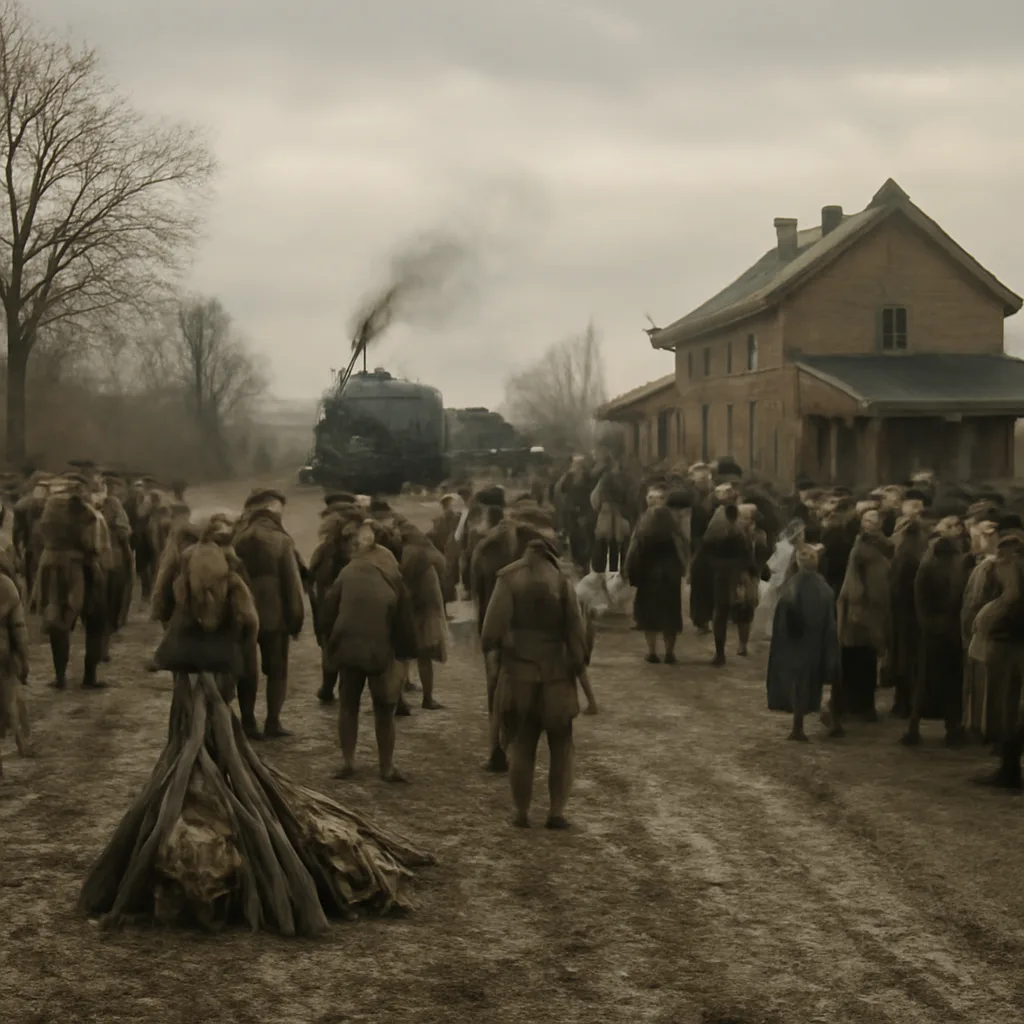
Soldiers and civilians near a field railway station in northern France shortly after the November 11, 1918 armistice, with troops lining the platform, stacked rifles and equipment, and banners or signs of relief being displayed.

On November 11, 1918, an armistice between the Allies and Germany came into effect at 11 a.m., bringing an end to major combat on the Western Front and marking the effective close of World War I fighting in Europe.


On the morning of November 11, 1918, hostilities on the Western Front ceased when an armistice between the Allied Powers and Germany took effect at 11 a.m. The agreement, signed in the Compiègne region of France after negotiations at the Allied Supreme War Council, required German forces to withdraw from occupied territories, surrender artillery and military equipment, and release prisoners of war. The armistice did not constitute a formal peace treaty—that was achieved later with the Treaty of Versailles in 1919—but it ended large-scale fighting that had ravaged Western Europe for over four years.

Background
By late 1918, the military situation for Germany had deteriorated. Allied offensives in the Hundred Days Offensive, combined with shortages, internal unrest, and the collapse of Germany’s allies, left German political and military leaders seeking an end to the fighting. Delegates representing Germany traveled to the Allied lines and signed armistice terms presented by Marshal Ferdinand Foch, the Allied Supreme Commander.

Terms and Immediate Effects
The armistice imposed stringent military conditions: the evacuation of occupied territories (including northern France, Belgium, and parts of Luxembourg), the withdrawal of German forces behind the Rhine, the release of Allied prisoners, and the surrender of a substantial portion of Germany’s guns, aircraft, and other materiel. Railways and roads were to be used to move forces as directed, and hostilities were to cease at 11 a.m. on November 11. In the hours leading up to that time, soldiers on both sides awaited the order; in many places, the day was marked by cautious relief, spontaneous celebrations, and isolated skirmishes and tragedies in the final minutes.

Public Response and Commemoration
Across the Allied nations and in countries affected by the war, news of the armistice prompted mass relief and celebration. Bells rang, crowds gathered in city centers, parades formed, and newspapers declared an end to the fighting. At the same time, communities began to reckon with the immense human cost: millions of dead and wounded, shattered economies, and social dislocation. November 11 later became a day of remembrance in many countries—observed as Armistice Day, Remembrance Day, or Veterans Day—honoring those who served and died in World War I.

Limitations and Aftermath
Although the armistice ended active combat on the Western Front, it was a suspension of hostilities rather than a negotiated peace. The political and territorial issues that had helped spark the war required separate diplomatic settlement. The subsequent Paris Peace Conference produced the Treaty of Versailles in June 1919, which imposed punitive terms on Germany and contributed to political and economic turmoil in the interwar years. Additionally, fighting continued in other regions and theaters for some time, and civil conflicts and revolutions in several countries followed the war’s end.

Historical Significance
The November 11 armistice is widely regarded as the effective end of World War I fighting in Western Europe. It marked a turning point that allowed nations to transition from wartime mobilization to peacetime reconstruction and commemoration. The date’s annual observance reflects both relief at the cessation of hostilities and the enduring effort to remember the war’s human toll.

Notes on Sources and Uncertainties
Details here are based on established historical accounts of the armistice agreement and its immediate consequences. Specific local incidents on November 11 varied widely, and some last-minute casualties and clashes occurred despite the armistice’s terms. The armistice’s long-term political effects are interpreted by historians and remain subject to analysis and debate.

Share this

Email Share on X Facebook Reddit

Did this surprise you?