
← Back
11/11/1973 • 5 views

Military Coup Ousts Elected President on November 11, 1973
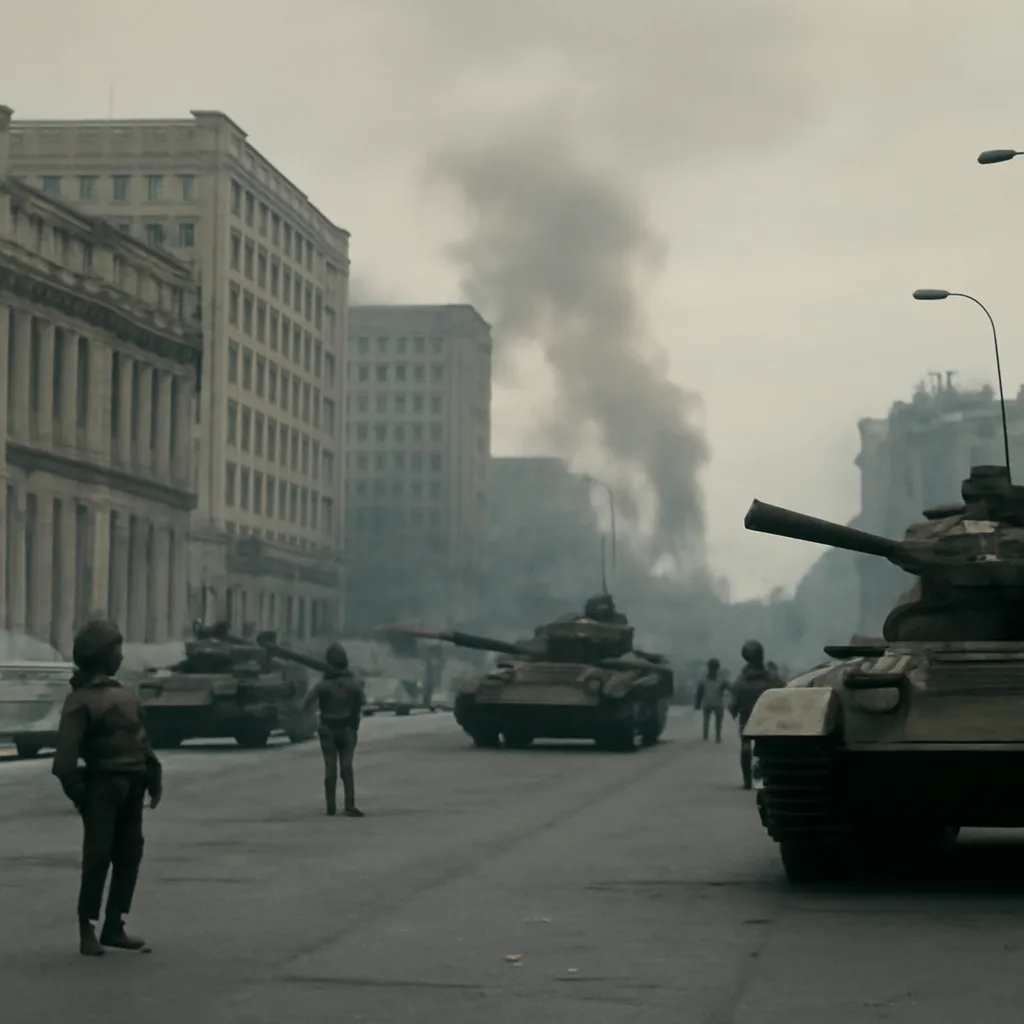
Tanks and soldiers on a wide avenue in Santiago, Chile, in front of government buildings during the November 1973 coup; smoke and military vehicles visible, no identifiable faces.

On 11 November 1973 a military coup removed an elected president, ending a democratic government and beginning an extended period of military rule marked by repression and political realignment.


On 11 November 1973, Chile’s democratically elected president Salvador Allende was overthrown in a military coup led by General Augusto Pinochet. The coup followed months of political polarization, economic turmoil, social conflict, and escalating confrontations between the government, opposition forces, and elements of the armed forces. Allende, elected in 1970 as the first Marxist president elected democratically in the Americas, pursued sweeping nationalizations and social reforms that provoked sustained resistance from conservative political forces, parts of the business sector, and the United States government.

In the days leading up to 11 November, tensions had intensified after the armed forces issued a statement on 29 June 1973 declaring they would uphold public order. The immediate trigger for the coup was a large-scale military operation in the capital, Santiago, where tanks and troops surrounded key government buildings, including the presidential palace, La Moneda. Air Force jets bombed parts of the city during the assault. Reports on the circumstances of Allende’s death inside La Moneda vary: the official military account at the time stated he died during the fighting, while later investigations and forensic analyses have supported the conclusion that he died by suicide amid the assault.

Following the overthrow, a junta chaired by General Pinochet consolidated power and dissolved Congress, suspended the constitution, banned leftist parties, and initiated a broad campaign of political repression. Thousands of Chileans were detained; many were tortured, disappeared, or exiled. The junta implemented neoliberal economic reforms in subsequent years, dismantling many of Allende’s state-led economic policies and opening the economy to market-oriented measures advised by economists known as the Chicago Boys.

International reactions were mixed: some governments criticized the coup and the human rights abuses that followed, while others quickly recognized the new regime or supported it as a bulwark against communism during the Cold War. U.S. involvement in Chilean politics in the years before the coup, including covert actions to destabilize Allende’s government, has been documented and is part of ongoing historical assessment of the coup’s broader international context.

The coup’s legacy remains deeply contested and consequential. Under Pinochet’s rule (1973–1990) Chile experienced both economic growth by some measures and extensive human rights violations. The transition back to democracy began in the late 1980s and culminated in a return to civilian rule in 1990, but debates over accountability, memory, and the long-term social and political effects of the coup persist in Chilean society and scholarship. Historical accounts rely on government records, testimonies from survivors and witnesses, contemporary journalism, and later judicial investigations; where details remain disputed, historians note differing interpretations and evolving evidence.

Share this

Email Share on X Facebook Reddit

Did this surprise you?