
11/19/1984 • 5 views
British Miners’ Strike Intensifies, Sparks Nationwide Crisis
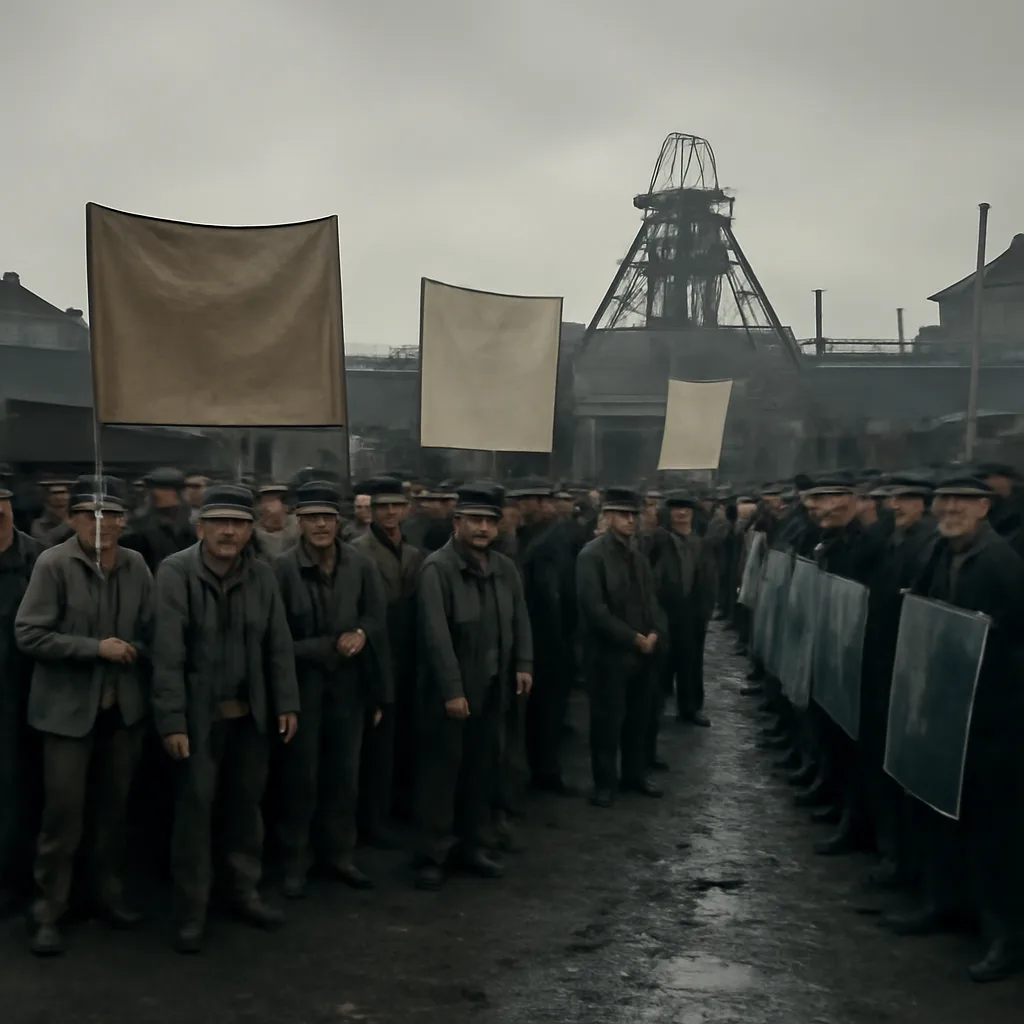
On 19 November 1984 the year-long miners’ strike escalated as clashes, widespread picketing and sympathetic actions intensified across Britain, deepening an economic and political crisis that had been building since March.
By mid-November 1984 the miners’ strike, called by the National Union of Mineworkers (NUM) in March over proposed pit closures and job losses, had moved from industrial dispute to national crisis. The strike had already sharply divided communities, employers and the government; events on 19 November represented a peak in confrontation that widened the strike’s social and economic impact.
What happened on 19 November 1984
On 19 November picketing and blockades intensified at pits and coal distribution points. In several areas confrontations between striking miners and police became more frequent and more forceful, with reports of baton charges, mounted police deployments and use of riot shields. Large-scale sympathetic actions by other unions and workers—such as secondary picketing and refusal to handle coal—disrupted supply chains and energy provision. Coal stocks at power stations fell in some regions, increasing pressure on electricity supply and contributing to localized power shortages or rationing of fuel for industry.
Political and legal context
The strike had been declared unlawful by the courts for a number of branches because the NUM had not held a national ballot. The Conservative government, led by Prime Minister Margaret Thatcher, took a hard line: reinforcing police powers, planning contingency measures to maintain essential services and resisting negotiations that it said would reward illegal action. The government framed the dispute as a matter of law and public order as well as economic reform.
Economic and social effects
By November the strike’s economic toll was evident. Coal production had fallen drastically from pre-strike levels; many pits were idle and thousands of miners were out of work. Industries dependent on coal or on miners’ labor faced disruption. Communities in mining areas suffered not only from lost wages but from deepening social tensions; families were divided between those who continued to work and strikers, and scenes of confrontation became common at colliery gates and town centers.
Role of the police and public order
Police numbers deployed to manage pickets and protect working miners and coal convoys increased. The policing strategy—aimed at preventing violence and keeping key sites accessible—was criticized by the NUM and other groups as heavy-handed and by some business interests as insufficient. The confrontations on 19 November and surrounding days intensified debates over the balance between the right to strike and the maintenance of public order.
Wider labour movement reactions
Some unions and local authorities expressed solidarity with the miners; others were cautious because of the NUM’s lack of a national ballot. Secondary industrial actions—refusing to handle coal or provide ancillary services—expanded the strike’s practical impact and brought additional unions into the dispute indirectly, increasing political pressure on the government.
International and media attention
The strike attracted sustained national and international media coverage, framing it as a test of Britain’s industrial relations model and of the Thatcher government’s resolve to restructure the economy. International observers and labor organizations monitored events closely, and the dispute influenced debates on union power and privatization in other countries.
Aftermath and significance
The escalation in November 1984 foreshadowed a protracted confrontation that would continue into 1985. The events of 19 November crystallized divisions within British society over deindustrialisation, union influence and state power. Historically, the miners’ strike is seen as a turning point in British labour history: it weakened the NUM’s bargaining power, affected subsequent union strategy, and underscored the political transformation of the 1980s economy.
Caveats
Precise details of clashes, numbers of arrests and specific local incidents varied by source and locality. Contemporary accounts from police, unions and local press sometimes conflicted; this summary synthesizes widely reported developments without asserting disputed specifics.