
11/07/1917 • 4 views
Bolsheviks seize power in Petrograd, toppling the Provisional Government
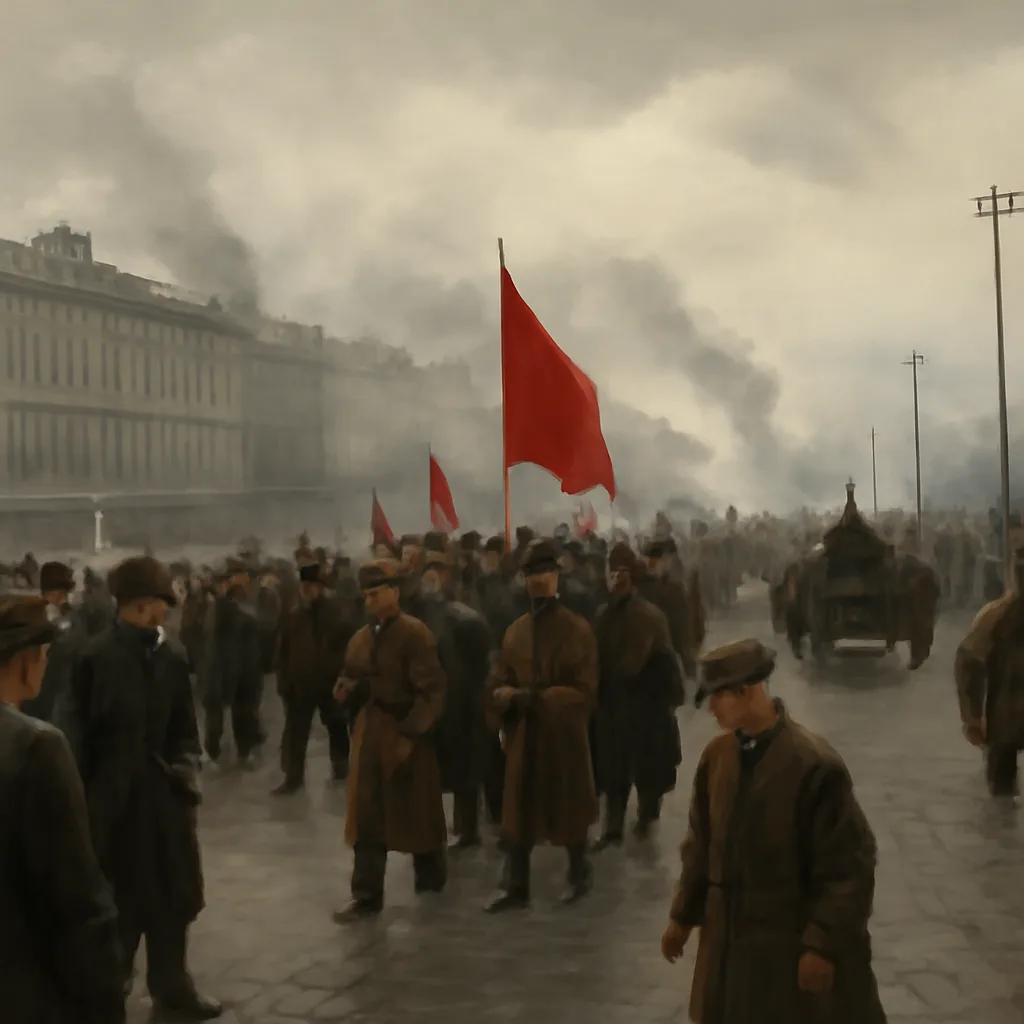
On 7 November 1917 (Old Style), Bolshevik forces and allied soviet units seized key points in Petrograd, arresting members of the Provisional Government and paving the way for Soviet rule across Russia.
The insurrection targeted strategic sites: the Winter Palace, where members of the Provisional Government met; the telegraph and telephone exchange; railway stations; the state bank; and the main bridges and bridges' checkpoints across the Neva River. Troops loyal to the Provisional Government were fragmented, and many units either refused to fire on demonstrators or sided with the soviets. Bolshevik-led forces and allied Red Guard detachments, supported by sailors from the Kronstadt naval base and soldiers from garrison units, consolidated control over the city by daybreak.
Members of the Provisional Government were arrested or dispersed; Alexander Kerensky briefly attempted to resist and later fled Petrograd. Following the seizure of Petrograd, the Bolsheviks moved to legitimize their actions through soviet institutions. The Second All-Russian Congress of Soviets convened on 7–8 November, where Bolshevik and Left Socialist-Revolutionary delegates proclaimed that power had passed to the soviets and established a new government, the Council of People’s Commissars (Sovnarkom), headed by Vladimir Lenin. The Mensheviks and many Socialist-Revolutionaries opposed the Bolshevik seizure and either walked out of the Congress or expressed dissent.
Contemporary accounts and later scholarship emphasize that the takeover in Petrograd was both a coordinated political coup and a product of broader social forces: war fatigue, land hunger among peasants, urban food shortages, and the discrediting of liberal and moderate socialist parties that had led the Provisional Government. While violent clashes occurred in parts of the city, many historians note the relative swiftness and limited widespread bloodshed in Petrograd compared with later stages of the Russian Civil War.
The Bolshevik seizure in Petrograd did not immediately translate into uncontested authority across the former Russian Empire. Outside the capital, the Provisional Government’s supporters, other socialist factions, regional authorities, and the nascent White movement contested Bolshevik rule, which precipitated a multi-sided civil war during 1918–1922. The new Bolshevik government moved quickly to negotiate separate peace with the Central Powers, withdraw Russia from World War I, and implement measures such as land redistribution and nationalization of major industries—policies that reshaped Russian society but also provoked opposition and military intervention.
Historians continue to debate aspects of the October–November events: the degree of spontaneity versus central planning by Bolshevik leaders, the roles played by subordinate commanders and local soviets, and the extent to which the seizure reflected genuine mass support. Primary sources from the time—party documents, contemporary newspapers, and eyewitness memoirs—offer differing perspectives, and subsequent interpretations were influenced by later political developments, including Soviet-era historiography.
In sum, the overthrow of the Provisional Government in Petrograd on 7 November 1917 marked a decisive turning point that allowed the Bolsheviks to establish a new revolutionary government, setting Russia on a course toward civil war and the creation of a Soviet state.