
← Back
12/20/1987 • 6 views

December 1987 Philippine ferry disaster leaves hundreds dead or missing
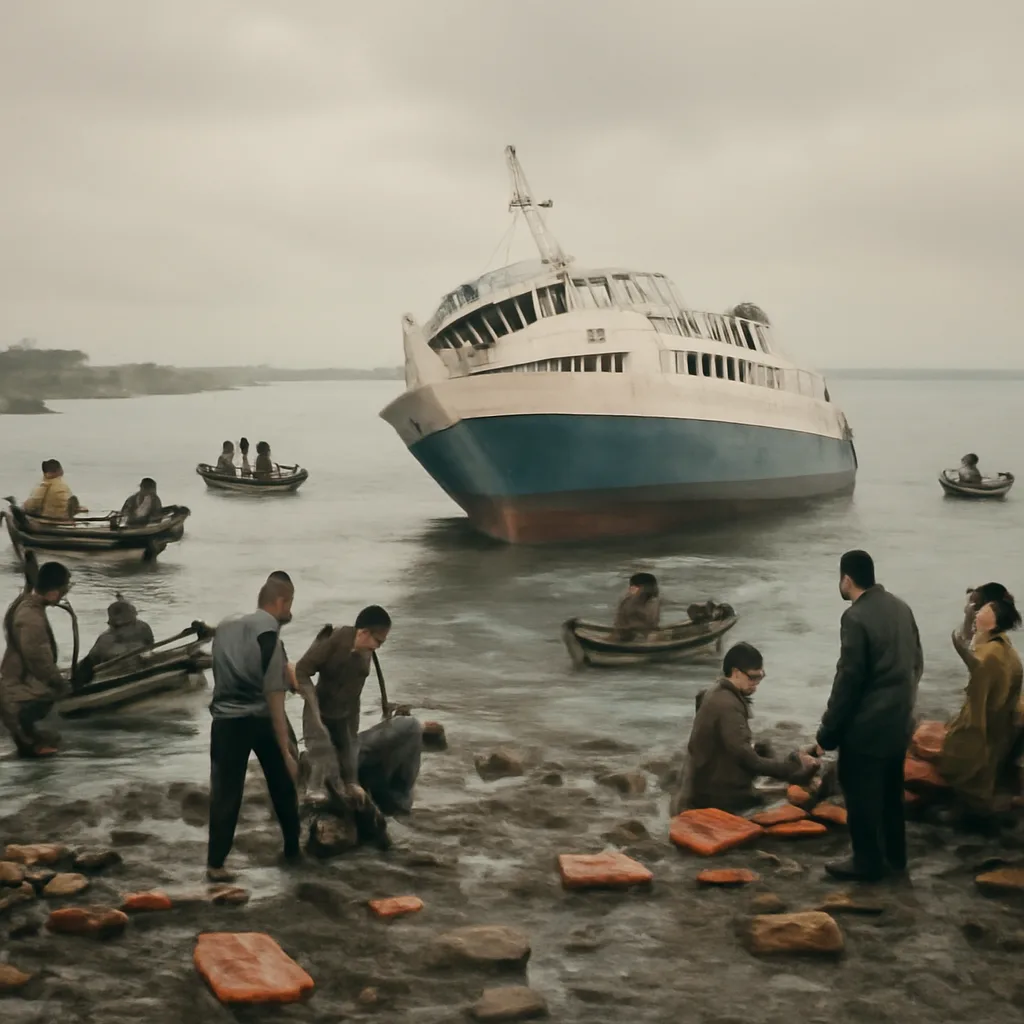
Beached or overturned passenger ferry hull near a Philippine shoreline with rescue boats and debris in the water; overcast sky and somber atmosphere.

On 20 December 1987 a passenger ferry in the Philippines sank after encountering rough seas and possible overloading, killing and leaving hundreds missing in one of the country’s deadliest peacetime maritime accidents.


On 20 December 1987 a passenger ferry operating in the Philippines foundered in adverse conditions, resulting in one of the nation’s most lethal peacetime maritime disasters. Exact casualty figures vary between contemporaneous reports and later accounts, but newspapers at the time and subsequent summaries placed the number of dead and missing in the hundreds. The disaster exposed long-standing safety problems in Philippine inter-island ferry transport, including overcrowding, inadequate enforcement of capacity limits, poor life-saving equipment, and limited search-and-rescue resources.

Background
Philippine maritime travel in the 1980s relied heavily on roll-on/roll-off (RoRo) ferries and passenger vessels that connected the archipelago’s many islands. Inspections and regulatory oversight were inconsistent across ports and operators, and seasonal storms could rapidly turn routine crossings into hazardous voyages. December is within the northeast monsoon and typhoon season window in the Philippines, and rough seas frequently affect ferry operations.

The incident
Contemporary press coverage reported that a ferry departed on a scheduled run carrying far more passengers than its certified capacity, with some accounts noting large numbers of unregistered travelers and vehicle cargo aboard. The vessel encountered rough seas; reports described listing and eventual capsizing or sinking before rescue operations could reach all passengers. Survivors later recounted chaotic evacuations and insufficient life jackets or lifeboats. Weather, vessel stability compromised by overloading, and possible structural or mechanical failure were identified by observers as contributing factors, though definitive technical investigation details published publicly at the time were limited.

Casualties and response
Different sources cited varying totals for the dead and missing; many early news articles reported several hundred fatalities or missing persons. Rescue efforts involved local coast guard units, naval vessels, and civilian boats that recovered survivors and bodies over subsequent days. The scale of the loss highlighted the challenges of conducting maritime search-and-rescue across the country’s dispersed islands, especially under adverse weather conditions.

Aftermath and significance
The disaster intensified public scrutiny of ferry safety in the Philippines and contributed to calls for stricter enforcement of passenger limits, better maintenance standards, and improved emergency equipment and procedures. It formed part of a pattern of maritime accidents in the Philippines that prompted regulatory reviews in later years. However, long-term improvements were uneven; enforcement and funding for safety measures continued to be recurrent issues for decades.

Sources and uncertainties
Contemporary newspaper reports and later summaries of Philippine maritime accidents provide the basis for the broad facts presented here: a ferry sank on 20 December 1987 with a very high number of dead and missing, and overcrowding and rough seas were widely reported factors. Precise casualty totals and a full technical investigation report are not consistently available in public archives, and some details—such as the vessel’s exact manifest, owner/operator specifics, and definitive mechanical causes—are variably reported or undocumented in accessible sources. Where figures or causes differ between accounts, this summary notes the uncertainty rather than asserting unverified specifics.

Share this

Email Share on X Facebook Reddit

Did this surprise you?