
06/08/1964 • 4 views
Match Abandoned After Cows Wander Onto Pitch
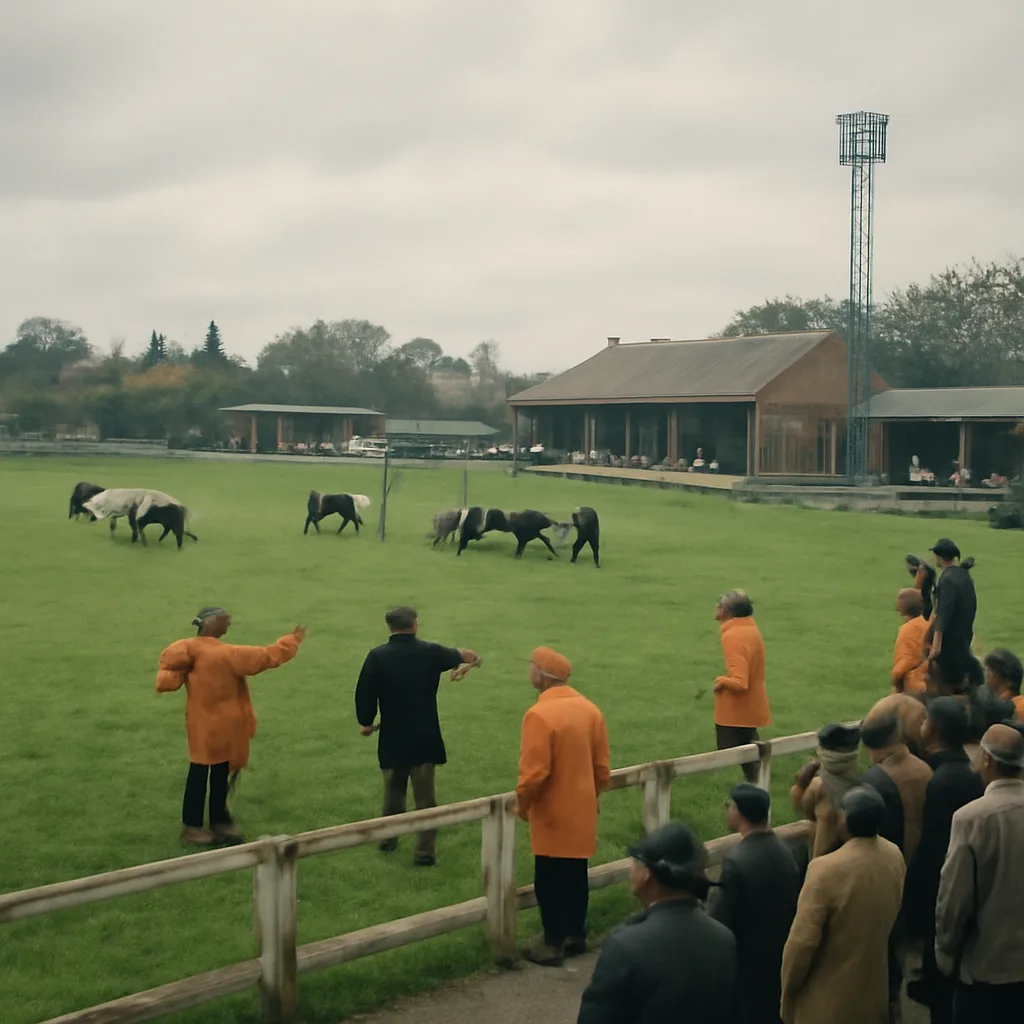
On 8 June 1964 a football match was abandoned when cows entered the playing field, making play impossible. The incident reflects the more informal ground conditions and farm-adjacent stadiums common in mid-20th-century football.
The basic sequence in this 1964 incident is straightforward: during play, bovine animals entered the field of play. Match officials judged the situation unsafe or unsuitable to continue, and the referee stopped the game. Attempts to remove the animals or herd them back off the grass were evidently not successful enough to resume the match, so the fixture was abandoned. Local stewards, ground staff, or farmers were typically the people available to manage such a disruption; precise details about who intervened in this specific case are not uniformly recorded in contemporary summaries.
Context helps explain why an animal incursion could cause abandonment. Many football grounds of the era—especially at lower-league or non-league level—were situated in rural or semi-rural areas and did not have the robust perimeter barriers seen in modern stadia. Drainage ditches, open gates, or shared pasture boundaries could allow livestock to move between fields. Health and safety standards were also less formalized, and match officials relied on pragmatic judgments about player safety and the state of the pitch.
While the image of cows on a football pitch has persisted in popular memory and occasional press anecdotes, reliable, detailed primary-source documentation for specific matches can be sparse. Contemporary newspaper wire copy and local press accounts sometimes mention such incidents in brief; however, full match reports—including formal decisions about abandonment and any disciplinary or replay arrangements—are not always preserved or widely circulated. In many cases, abandoned fixtures were replayed later or decided administratively by the relevant football authority, but the precise outcome for this June 1964 fixture is not consistently reported in the accessible record.
This incident is emblematic of a period in which community sport and rural life were more visibly entangled than in later decades. Improvements to stadium infrastructure, tighter boundary fencing, and evolving regulatory oversight in the decades after 1964 reduced the frequency of animal incursions. Nevertheless, accounts like this remain a reminder of the practical challenges of running outdoor sporting events in environments shared with agriculture.
Where specific archival records exist—club minute books, local newspapers, or the governing body’s match records—they would provide the most authoritative account of actions taken after such an abandonment (for example, whether a replay was ordered or a result awarded). Absent a single definitive primary source in the public domain for this particular fixture, summaries rely on contemporaneous press mentions and the broader context of ground conditions at the time.
In short, the June 8, 1964 abandonment arose from cows entering the playing surface, forcing the referee to stop the match. The episode highlights how the physical and regulatory environment of mid-20th-century football sometimes left matches vulnerable to disruptions now largely prevented by modern stadium design and procedures.