
← Back
06/08/1962 • 5 views

Researchers Revisit 1962 Study of Contagious Laughter
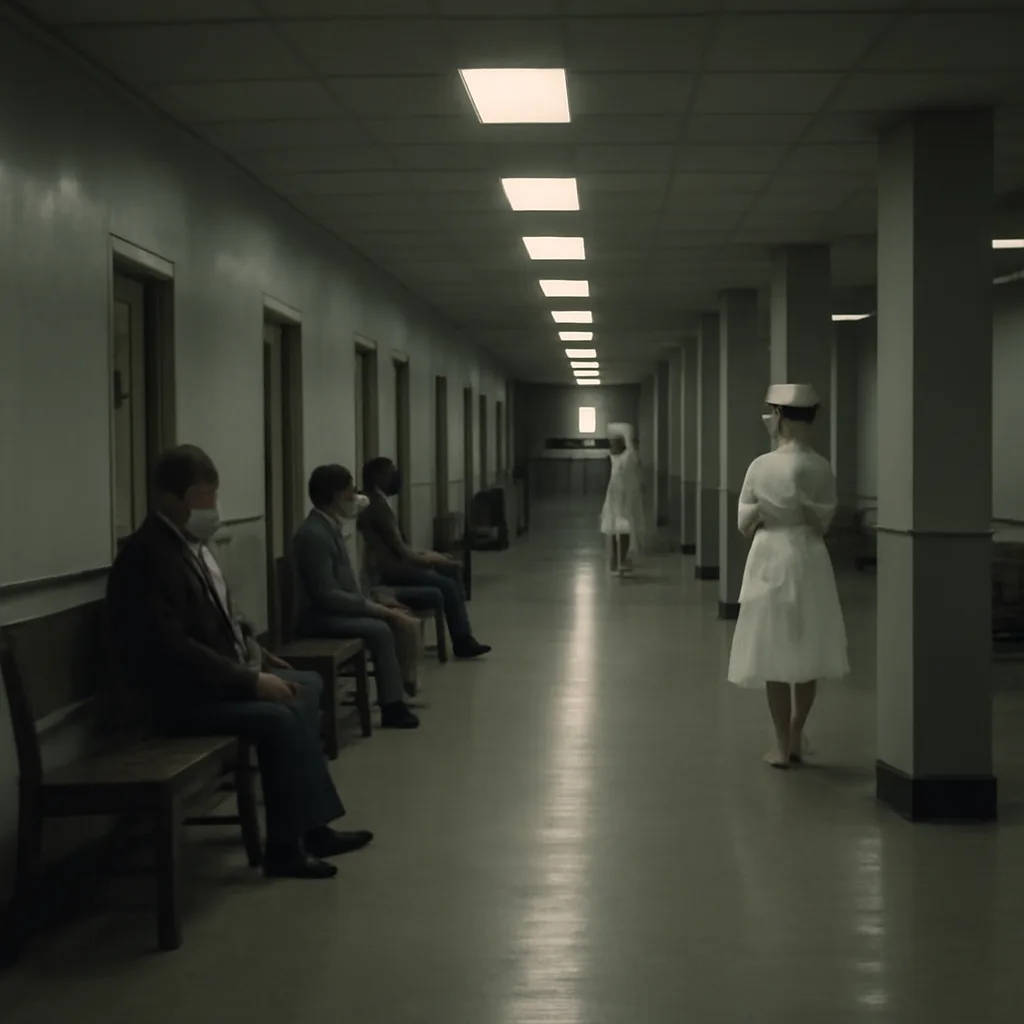
Hospital ward corridor in the early 1960s with patients sitting on benches and nurses in period uniforms; the scene shows a crowded institutional interior without identifiable faces.

On June 8, 1962, clinicians documented an outbreak of contagious laughter among patients in a psychiatric hospital; researchers have since revisited the case to examine social and neurological factors that may explain how laughter spreads.


On June 8, 1962, clinicians at a psychiatric facility recorded what has been described in later literature as an instance of contagious laughter: a prolonged episode during which one person’s laughter triggered sustained laughter among multiple patients. The incident drew attention because it occurred in a congregate clinical setting and because observers noted features—sudden onset, rhythmic vocalization, and spread across individuals—that differed from isolated bouts of amusement.

Contemporary reports of the episode derive primarily from hospital records and case notes rather than from controlled experimental data. Those clinical documents describe an initial patient producing an involuntary, repetitive laughing vocalization. Staff accounts indicate that nearby patients, some of whom were not interacting directly with the originator, began producing similar vocalizations within minutes. Nursing notes emphasize the episode’s duration and the difficulty of calming patients once the pattern established. Detailed demographic or diagnostic information about the individuals involved is limited in the surviving documentation, and ethical standards at the time did not support the systematic recording or later publication of identifiable clinical data.

Early interpretations focused on social contagion: in a closed environment where residents were physically proximate and under similar stressors, vocalizations can function as cues that others mimic, whether reflexively or through learned social responsiveness. Clinical observers in the 1960s lacked contemporary neuroscientific tools but suggested psychological mechanisms including suggestibility, heightened arousal, and imitation. Some commentators also considered the role of the hospital environment—boredom, routine disruption, and close quarters—in lowering thresholds for behavioral contagion.

Since 1962, research into emotional contagion and the neural basis of social mirroring has advanced. Modern studies implicate networks involved in perception–action coupling, including motor and limbic pathways, and describe mirror neuron systems and connectivity patterns that can facilitate automatic imitation of expressions and vocalizations. Researchers note that laughter is multimodal—comprising respiratory, laryngeal, and facial components—so its contagion can be driven by auditory cues, visual cues, and timing rhythms. However, linking these general findings directly to the 1962 hospital episode is inferential: the case remains a clinical anecdote rather than a rigorously documented experiment.

The 1962 episode is sometimes cited in discussions of mass psychogenic illness and behavioral contagion in enclosed institutions (schools, workplaces, hospitals). Mass psychogenic episodes typically involve the rapid spread of symptoms without a clear organic cause, often in settings of social stress. Scholars caution against overpathologizing such events: contagious laughter can be benign and self-limiting, but when sustained or coupled with distress it can reflect underlying vulnerabilities in institutional care, including inadequate stimulation, staffing shortages, or failure to address patient anxiety.

Ethical and methodological issues limit what can be definitively concluded from the 1962 record. Patient consent and privacy norms of the era mean that much primary data were never collected for research purposes or cannot be publicly evaluated. As a result, modern analyses rely on hospital summaries, secondary accounts, and comparisons with better-documented instances of vocal or emotional contagion.

Today’s researchers approach similar phenomena with multidisciplinary tools—ethnographic observation, audio and video recordings, physiological monitoring, and neuroimaging—while adhering to ethical standards for participant protection. Re-examining the 1962 case offers historical perspective: it highlights how clinicians noticed and attempted to make sense of social transmission of behavior long before contemporary neuroscientific frameworks existed, and it underscores the need for careful documentation and ethical oversight when studying contagious expressions in clinical settings.

Share this

Email Share on X Facebook Reddit

Did this surprise you?