
← Back
11/24/1978 • 5 views

Deng Xiaoping Announces Major Economic Reforms, Paving Way for Market-Oriented Changes
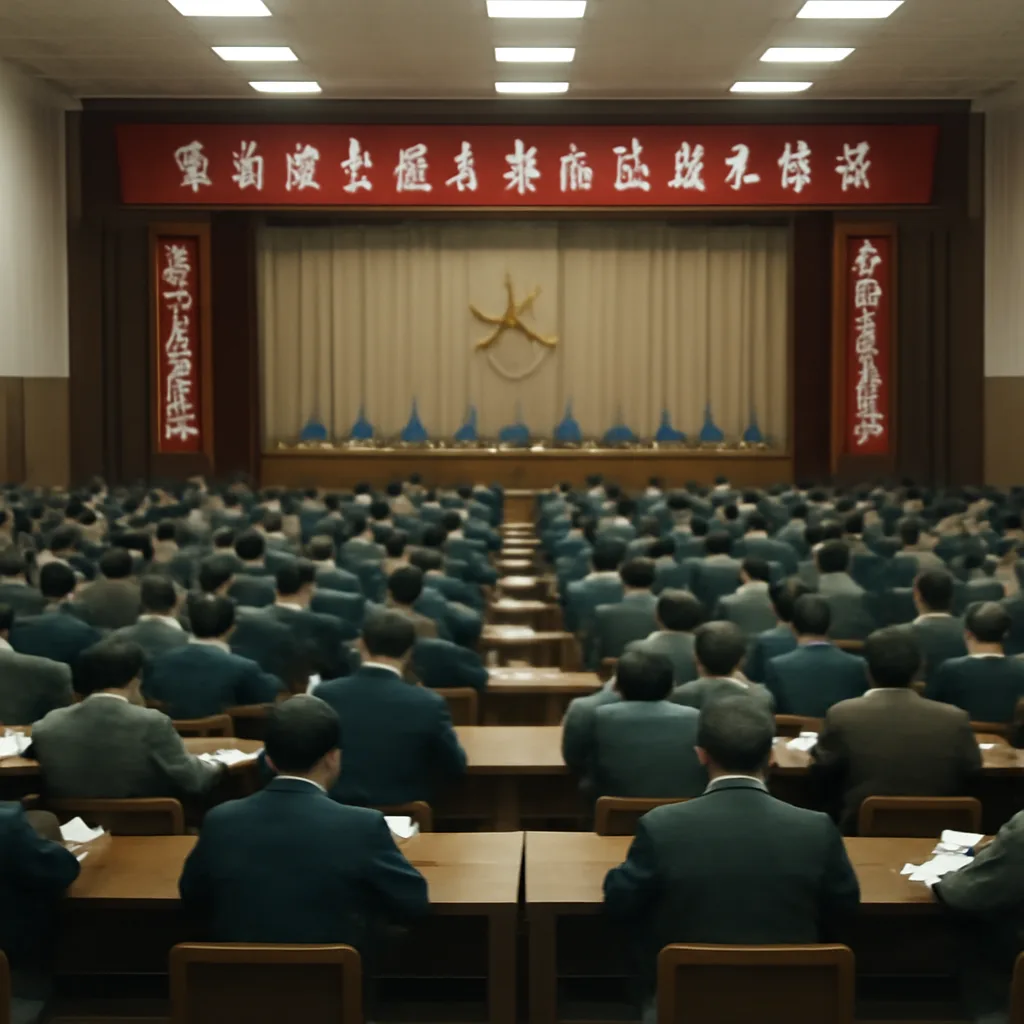
A wide view of a late-1970s Chinese government meeting hall with officials gathered around tables and posters emphasizing modernization; plain 1970s suits and Mao-era decor visible, no identifiable faces.

On November 24, 1978, China under Deng Xiaoping signaled a decisive shift toward economic reform and opening, beginning a transition from strict Maoist central planning toward market-oriented policies and foreign engagement.


On November 24, 1978, during the Third Plenary Session of the 11th Central Committee of the Chinese Communist Party, Deng Xiaoping and his allies consolidated a policy direction that prioritized economic modernization and reform. The meeting marked a turning point in the People’s Republic of China’s post-1949 economic trajectory: leadership shifted from ideological campaigns toward practical measures aimed at raising productivity, improving living standards, and engaging with the global economy.

Background: After Mao Zedong’s death in 1976 and a subsequent period of political struggle, Chinese leadership faced a damaged economy, low agricultural output, and industrial inefficiencies. Deng, who had been politically rehabilitated, advocated moving away from mass political campaigns and toward policies emphasizing science, technology, and economic development. The Third Plenum in December 1978 (often dated in late November–December in different accounts for preparatory meetings) is widely regarded as the forum where these priorities were formally adopted by the Party leadership.

Key policy directions: The reforms emphasized several interrelated shifts: a focus on modernizing agriculture, industry, defense, and science and technology (the “Four Modernizations”); decentralization of economic decision-making; experimentation with market mechanisms within a socialist framework; and opening to foreign investment and trade. Policies that followed included decollectivization in agriculture (allowing households to contract land and keep surpluses), the establishment of Special Economic Zones beginning in the early 1980s, and incentives to attract foreign capital and technology.

Implementation and early effects: Reforms were introduced gradually and often experimentally, with pilot projects in rural areas and coastal cities. The household responsibility system in agriculture increased incentives for farmers and led to higher production in many regions. Urban industrial reforms progressed more slowly and unevenly, as state enterprises remained central but were gradually exposed to market disciplines. The new approach emphasized pragmatic problem-solving, encapsulated by Deng’s aphorism often paraphrased as “It doesn’t matter whether a cat is black or white, as long as it catches mice,” reflecting a turn toward practical results over ideological purity.

Political context and continuity: While economic policy shifted, the Communist Party maintained its political monopoly and emphasized that reforms would be carried out under Party leadership. The reforms were framed as a renewal of socialism with Chinese characteristics rather than wholesale adoption of Western capitalism. This balance between economic liberalization and continued political control became a defining feature of China’s reform era.

Long-term significance: The decisions made at the 1978 plenum and the subsequent reform program set China on a path of sustained economic growth and deeper integration into the global economy. Over the following decades, China experienced rapid industrialization, urbanization, and substantial reductions in poverty. The reform era also produced new social and economic challenges, including regional disparities, environmental degradation, and debates over the pace and limits of political liberalization.

Historical notes and sources: Historians and contemporaneous sources commonly date the decisive policy shift to the Third Plenary Session of the 11th Central Committee in late 1978. Some timelines note preparatory meetings in November with the plenum convening in December; accounts differ slightly on exact dating of specific decisions, but the late-1978 session is universally identified as the turning point initiating Deng-era reforms. Contemporary scholarship, archival materials released since the 1980s, and memoirs of participants underpin this narrative. No direct or fabricated quotations are included here; the summary is based on well-documented developments in Chinese policy from 1978 onward.

Share this

Email Share on X Facebook Reddit

Did this surprise you?