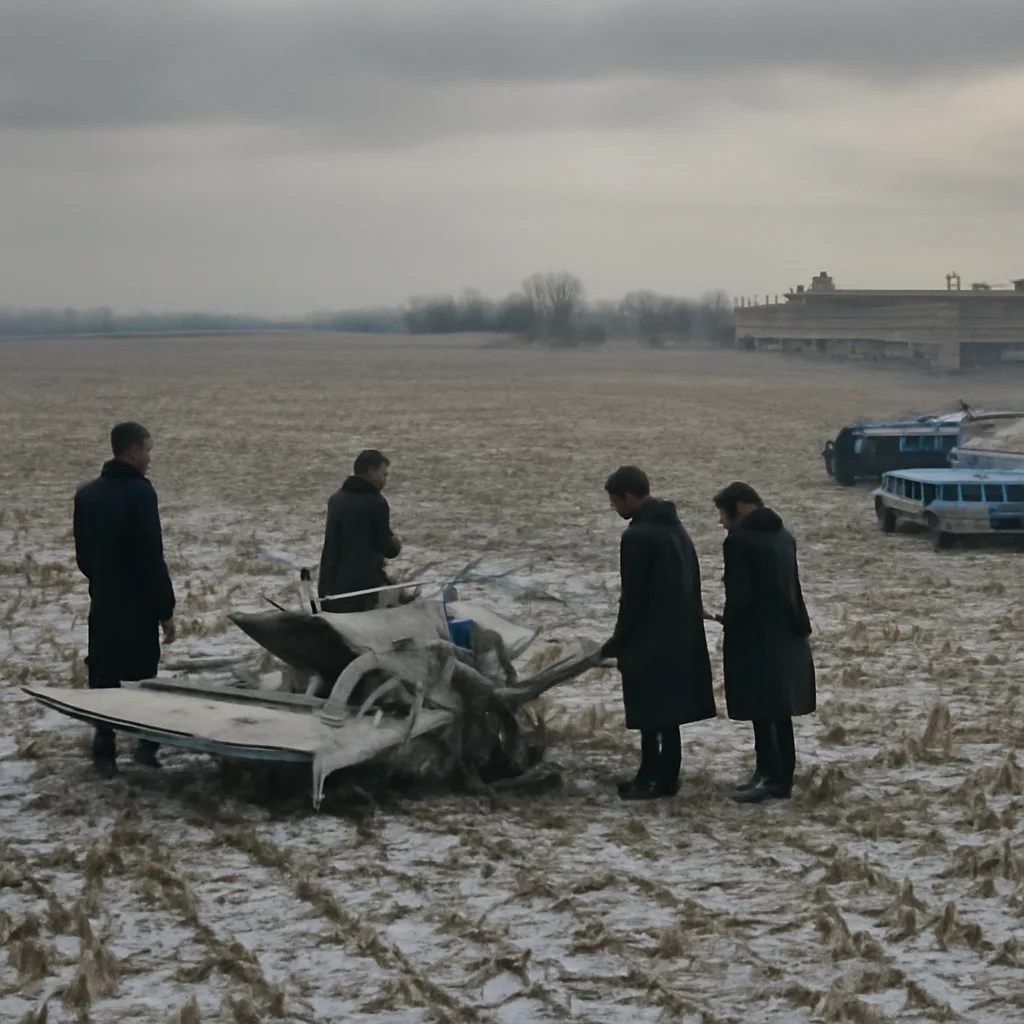
Three Musicians Die in 1959 Plane Crash Near Clear Lake, Iowa
On Feb. 3, 1959, rock-and-roll musicians Buddy Holly, Ritchie Valens and J.P. “The Big Bopper” Richardson were killed when their small charter plane crashed shortly after takeoff near Clear Lake, Iowa, a tragedy later dubbed “The Day the Music Died.”
On the night of February 2–3, 1959, a chartered Beechcraft Bonanza 35 carrying rock-and-roll musicians Buddy Holly, Ritchie Valens and J.P. “The Big Bopper” Richardson crashed into a field near Clear Lake, Iowa, killing all three aboard. The performers had been touring the Midwest as part of the “Winter Dance Party” tour and were traveling between stops when Holly chartered the plane to reach his next engagement more quickly.
The group had performed at the Surf Ballroom in Clear Lake on February 2. Facing frigid weather, unreliable buses, and a grueling schedule of shows, Holly arranged to fly to Fargo, North Dakota, for the next concert. Pilot Roger Peterson, a 21-year-old with Federal Aviation Administration flight certification, piloted the small, single-engine aircraft. Also traveling by other means were members of Holly’s band, the Crickets, who stayed behind to follow by bus.
Shortly after takeoff in the early hours of February 3, the aircraft crashed into a cornfield about five miles from the Clear Lake Municipal Airport. Investigators later determined that the probable cause included pilot spatial disorientation in nighttime instrument meteorological conditions; the pilot was not qualified for instrument flying, and weather that night included light snow and low visibility. The crash and the deaths of the three musicians prompted public shock and widespread media coverage.
Buddy Holly (born Charles Hardin Holley, 1936–1959) was 22 and a key figure in early rock and roll who had a string of hits and influenced later musicians. Ritchie Valens (Richard Steven Valenzuela, 1941–1959) was 17 and a rising star whose brief career included the hit “La Bamba.” Jiles Perry “J.P.” Richardson Jr., known as the Big Bopper (1930–1959), was 28 and known both as a disc jockey and for novelty and rock recordings. The losses cut short rapidly ascending careers and left a lasting impact on popular music.
The phrase “The Day the Music Died” entered public consciousness after American singer-songwriter Don McLean referenced the crash in his 1971 song “American Pie,” which memorialized the three musicians among other cultural losses. The Surf Ballroom became an enduring site of remembrance; it hosts annual tributes and a historical marker notes the event. Physical artifacts, contemporary press reports, and official investigation records are the primary sources documenting the crash and its aftermath.
Investigations included inquiries by the Civil Aeronautics Board (CAB). The CAB report cited probable causes related to the pilot’s inability to maintain control in conditions that required instrument flight, compounded by marginal weather and the limitations of the small aircraft. Over the years, alternative theories and speculation occasionally resurfaced in media accounts and books, but the official findings remain the primary record.
The crash’s cultural legacy has been the subject of biographies, documentaries, museum exhibits and continuing public interest. It remains a pivotal and well-documented episode in the history of American popular music, notable both for the promising artists lost and for the way it shaped recollection and mythmaking in rock-and-roll history.