
← Back
03/15/-43 • 6 views

Julius Caesar Murdered on the Ides of March, 44 BCE
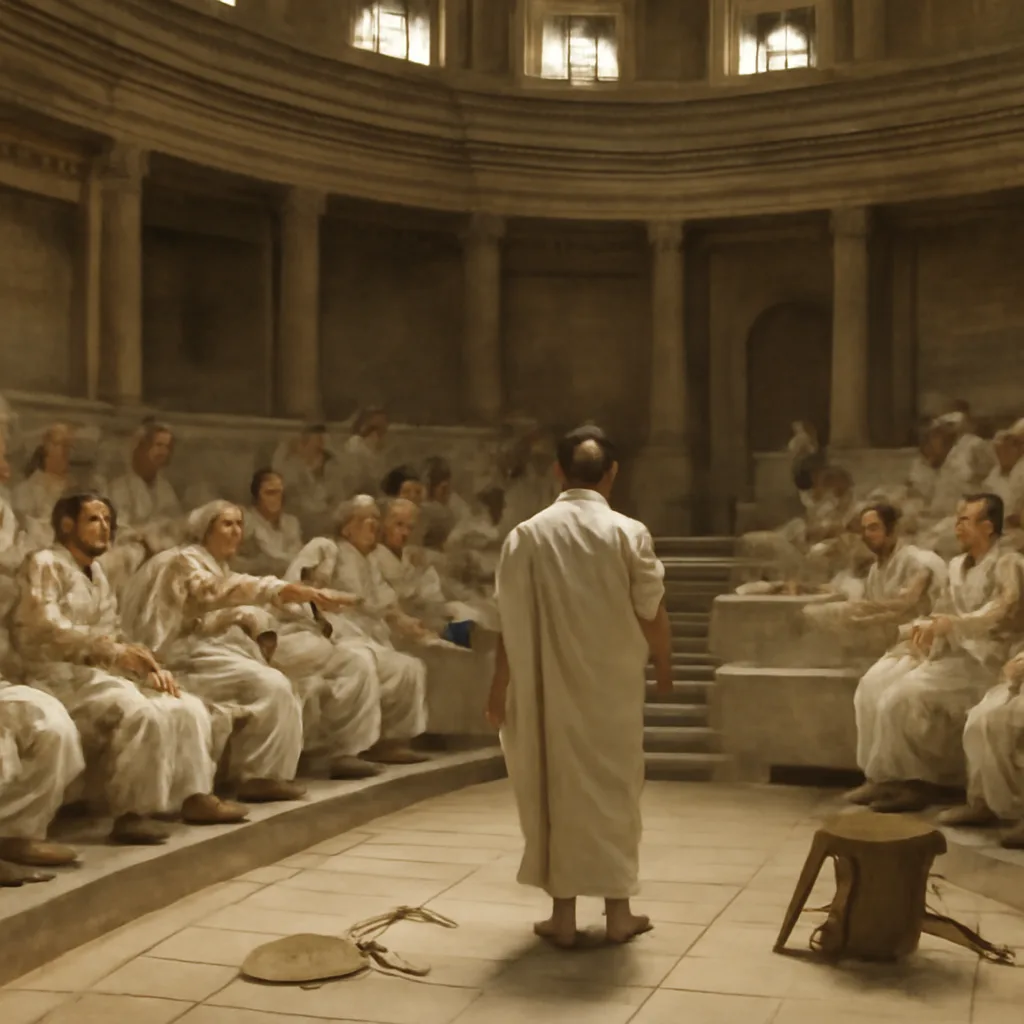
Scene of senators in the Curia of the Theatre of Pompey confronting Julius Caesar during a senate meeting in Rome, March 15, 44 BCE.

On March 15, 44 BCE, Gaius Julius Caesar was assassinated during a Senate session in the Theatre of Pompey, stabbed by a group of senators opposed to his accumulation of power. The killing precipitated a final round of Roman civil wars and the end of the Roman Republic.


On the morning of March 15 (the Ides of March), 44 BCE, Julius Caesar, the Roman dictator, was attacked and killed by a group of senators while attending a session in the Curia of the Theatre of Pompey. The conspirators, led by figures including Gaius Cassius Longinus and Marcus Junius Brutus among others, claimed they were acting to preserve the Republican system after a series of actions by Caesar—such as extraordinary magistracies, honors, and accumulation of powers—that many perceived as threats to senatorial authority and the traditional republican constitution.

The assassins surrounded Caesar as he entered the senate meeting; contemporary and near-contemporary accounts report he was stabbed multiple times. Ancient sources differ on details: some emphasize a planned, collective plot by around 60 conspirators, while others give varying lists of participants and motives. Ancient historians such as Suetonius and Plutarch provide narrative accounts of the event and its immediate aftermath, but their works postdate the assassination and reflect differing perspectives and sources.

Caesar’s murder did not restore the Republic as the conspirators had hoped. Instead, it unleashed political chaos. Public reaction in Rome was volatile—Caesar’s funeral drew large crowds, and his eulogies and public displays of his wounds helped turn popular sentiment against the assassins. The power vacuum led to a series of political maneuvers, alliances, and armed conflicts involving Mark Antony, Octavian (the future Augustus), and others. These struggles culminated in the final war of the Roman Republic and the establishment of the Roman Empire under Augustus.

Historians continue to debate aspects of the assassination and its motivations. Questions remain about the extent to which the conspirators acted out of principled attachment to republican ideals versus personal rivalry, fear for their own positions, or broader political calculation. The precise role of Caesar’s accumulation of honors—such as perpetual tribunician powers, the title of dictator perpetuo reported by some sources, and public displays of monarchical trappings—in provoking the plot is discussed in scholarship, which must weigh partisan ancient testimony and limited documentary evidence.

The assassination is significant for its immediate political consequences and its lasting symbolism: it marks a definitive turning point in Roman history from republic toward autocracy. It is also a frequently cited example in discussions of political violence, regime change, and the risks of concentrated personal power in republican institutions.

Where sources conflict or are incomplete, historians rely on critical comparison of literary accounts, inscriptions, coinage, and later historiography to reconstruct events and context. While many core facts—date, location, the presence of multiple senatorial assailants, and the ensuing civil wars—are well established, specific motives, the full list of participants, and some particulars of the assassination remain subjects of scholarly investigation and debate.

Share this

Email Share on X Facebook Reddit

Did this surprise you?