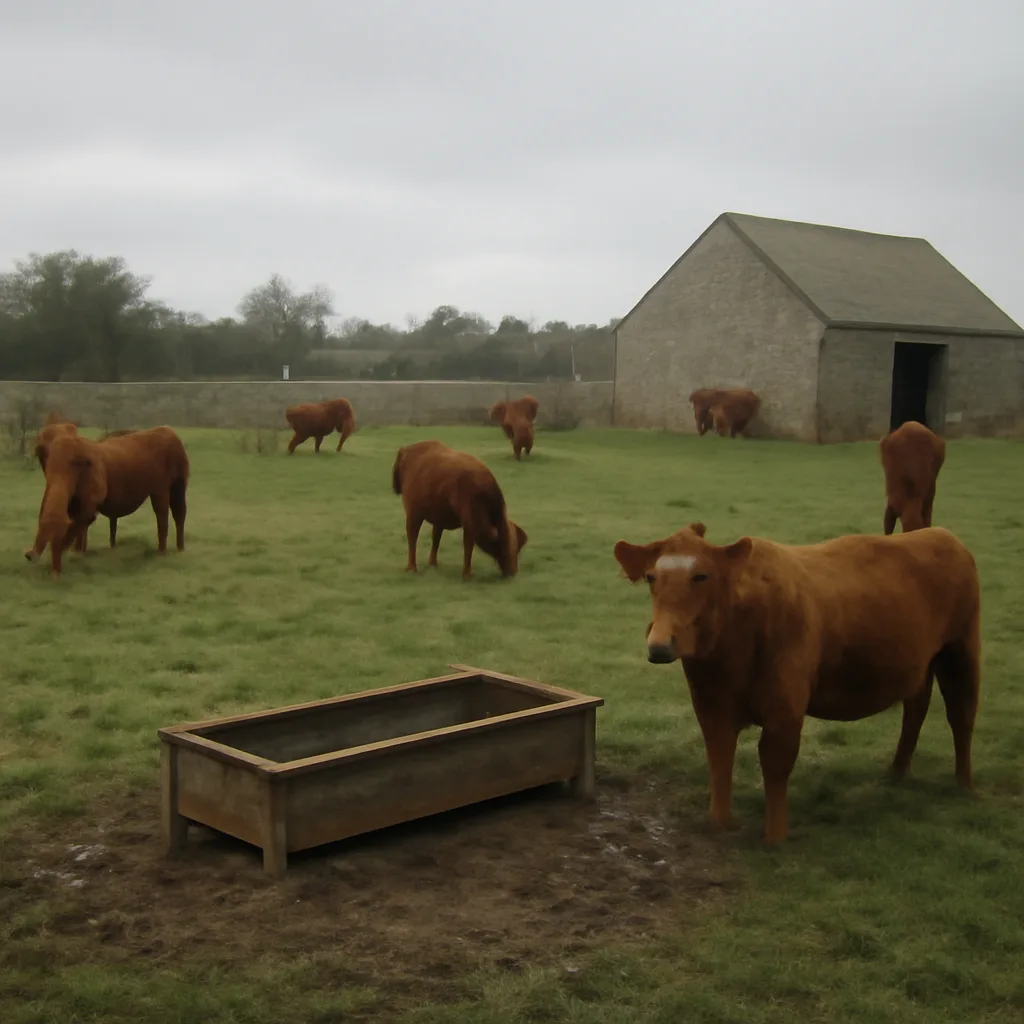
Britain confirms first case of bovine spongiform encephalopathy
On January 14, 1985, British authorities recorded the first confirmed case of bovine spongiform encephalopathy (BSE), later known as mad cow disease, marking the start of an outbreak that would have extensive agricultural, public-health, and policy consequences over the following decades.
On January 14, 1985, veterinary authorities in the United Kingdom identified the first confirmed case of bovine spongiform encephalopathy (BSE) in a cow. BSE is a progressive, fatal neurological disease of cattle characterized by spongy degeneration of the brain and spinal cord. At the time, the condition was newly recognized; veterinary pathologists described a distinctive pattern of brain lesions and linked them to a feeding practice that recycled animal protein into cattle feed.
Early detection and investigation
The index confirmation in January 1985 followed reports from regional veterinarians of cattle displaying changes in behavior, incoordination, and weight loss. Postmortem examination and neuropathological analysis revealed the characteristic vacuolation of the brain tissue associated with transmissible spongiform encephalopathies (TSEs). Investigators rapidly began tracing affected herds and examining feed practices to determine possible causes and routes of transmission.
Epidemiological findings and feed practices
Epidemiological work in the months and years after 1985 implicated contaminated meat-and-bone meal (MBM) used in cattle feed as the primary vehicle for spreading BSE. Rendering processes at the time did not reliably inactivate the infectious agent—later identified as a prion, an abnormal form of a host-encoded protein resistant to conventional sterilization. Feeding cattle protein supplements derived from infected ruminant tissue created a recycling loop that allowed the disease to amplify within the national herd.
Regulatory and agricultural responses
Following confirmation and accumulating cases, the UK government and veterinary authorities implemented progressive control measures: restrictions on the use of ruminant-derived protein in cattle feed, culling of affected and at-risk herds, surveillance and testing programs, and bans on specified risk materials entering the food chain. The measures evolved as scientific understanding advanced; initial steps focused on feed controls, later expanding to tissue and food safety regulations and active monitoring of the cattle population.
Public-health implications and legacy
Throughout the late 1980s and 1990s, BSE became a major public and political concern in the UK and internationally. Scientific research established that the bovine prion could, in a subset of cases, cross to humans as variant Creutzfeldt-Jakob disease (vCJD), a rare but fatal neurodegenerative illness first recognized in the 1990s. That association prompted stricter controls on animal byproducts, changes in slaughter and rendering practices, and long-lasting impacts on public confidence in food safety and agricultural policy.
Uncertainties and subsequent understanding
At the moment of the first confirmation in January 1985, many aspects of the disease were uncertain: the specific infectious agent, the precise mechanisms of transmission, and the future scale of the outbreak. Subsequent research identified prions as the causative pathological agent and clarified the central role of contaminated feed. Estimates of the total number of infected cattle and the human health burden evolved over years as surveillance improved and scientific methods advanced.
Historical significance
The 1985 confirmation marks the start of a public-health and agricultural crisis that reshaped policy on animal feed, food safety, and disease surveillance. It stimulated new research into prion biology and highlighted the risks of industrialized livestock practices that recycle animal tissues into feed. The legacy of BSE includes tighter regulatory frameworks internationally and a heightened precautionary approach to food-borne and zoonotic threats.