
← Back
09/24/1968 • 5 views

France Conducts Nuclear Test in South Pacific, September 24, 1968
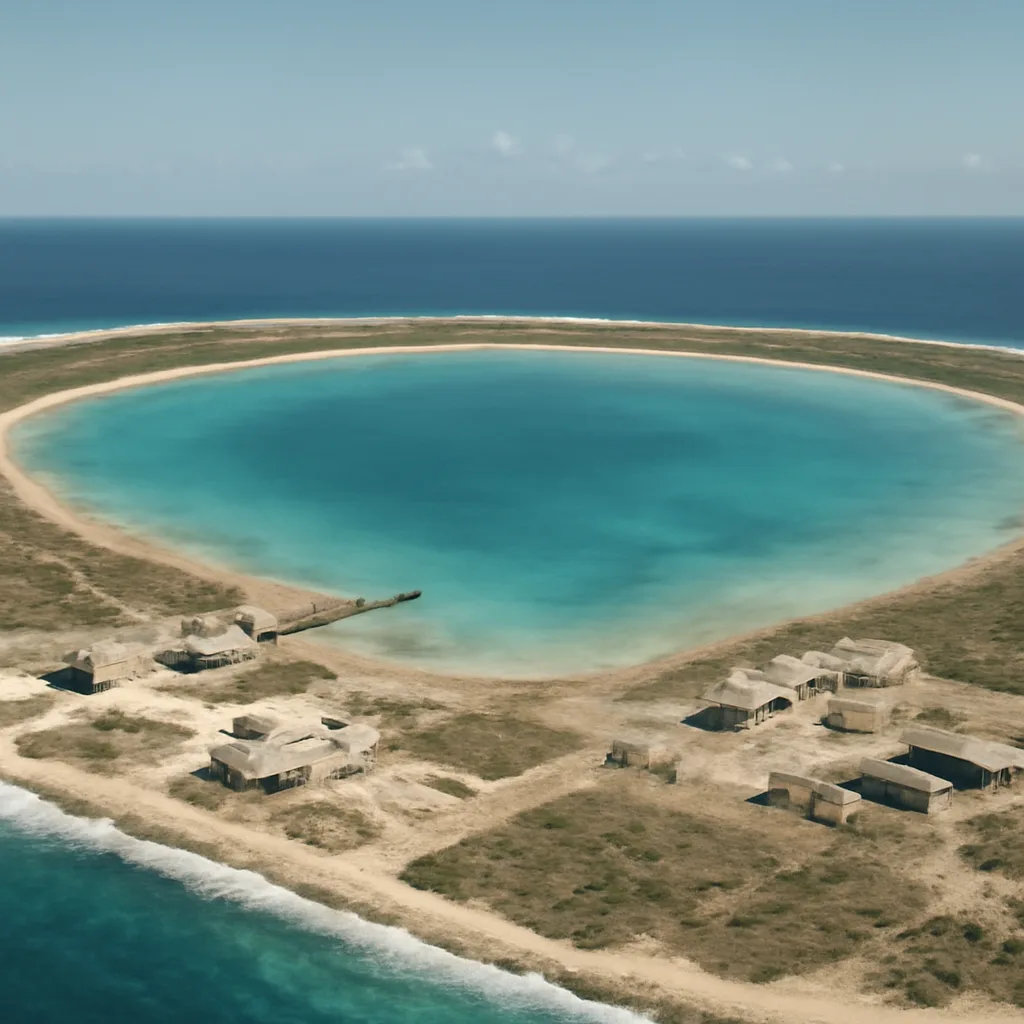
Aerial view of a South Pacific coral atoll and lagoon under clear sky, with low-lying vegetation and research or military infrastructure along the shore; no individuals identifiable.

On September 24, 1968, France detonated a nuclear device in the South Pacific as part of its atmospheric testing program at the Mururoa/Emirau area, continuing a sequence of Cold War–era tests that drew regional and international attention.


On 24 September 1968, France carried out a nuclear detonation in the South Pacific as part of its ongoing weapons testing program. After moving much of its test series from the Algerian Sahara following Algerian independence, France established test facilities in the French Polynesian atolls of Mururoa and Fangataufa in the 1960s. The 1968 detonation took place within that broader context of atmospheric and later underground tests conducted by the French government to develop and validate its nuclear arsenal.

France’s nuclear program began in the post-World War II period and accelerated through the 1960s. The nation’s first successful thermonuclear-capable detonation occurred earlier in the decade, and Paris continued to perform tests to refine warhead designs, yields, and delivery mechanisms. Tests in the Pacific were controversial from the outset: they occurred far from metropolitan France but within territories administered by France, and they generated diplomatic protest from neighboring states, environmental and health concerns among Polynesian residents, and international criticism from states and anti-nuclear movements.

Publicly available timelines and declassified records show that French atmospheric testing in the Pacific continued until 1974, when France shifted to underground tests at the same atolls before eventually ending nuclear testing altogether in 1996. The 24 September 1968 event fits into a period of relatively frequent testing; however, specific technical details such as the device yield, classification, or exact test name are treated in official sources with varying levels of disclosure. Some later French archival releases and independent analyses have provided more precise data for particular tests, but complete transparency about each detonation’s parameters was not always present in contemporary public reporting.

Reactions to French testing in the Pacific were multifaceted. Regional governments and indigenous communities raised concerns over radioactive fallout, health effects, and environmental damage. Internationally, the tests contributed to debates over nuclear proliferation and arms control in the Cold War era. Over subsequent decades, controversies over health impacts and compensation have led to legal actions and political discussions in France and French Polynesia, with the French government acknowledging some health consequences and instituting limited compensation programs for certain populations exposed to radiation.

Historians place the 1968 detonation within the larger arc of Cold War nuclear competition and France’s desire for strategic independence. France positioned its nuclear force, the Force de Frappe, as a guarantor of national sovereignty. The testing program was therefore both a technical effort to ensure weapon reliability and a political demonstration of independent deterrent capability.

Because contemporary reporting and later archival releases sometimes disagree on specifics of individual tests, researchers rely on a combination of government records, scientific monitoring data, eyewitness accounts, and subsequent legal and environmental studies to reconstruct events and impacts. For those seeking further verification, primary sources include French government publications and declassified defense documents, contemporaneous international monitoring reports, and peer-reviewed studies on Pacific nuclear testing and its environmental and health effects.

Share this

Email Share on X Facebook Reddit

Did this surprise you?