
← Back
09/24/1976 • 5 views

Argentine junta intensifies 'Dirty War' campaign
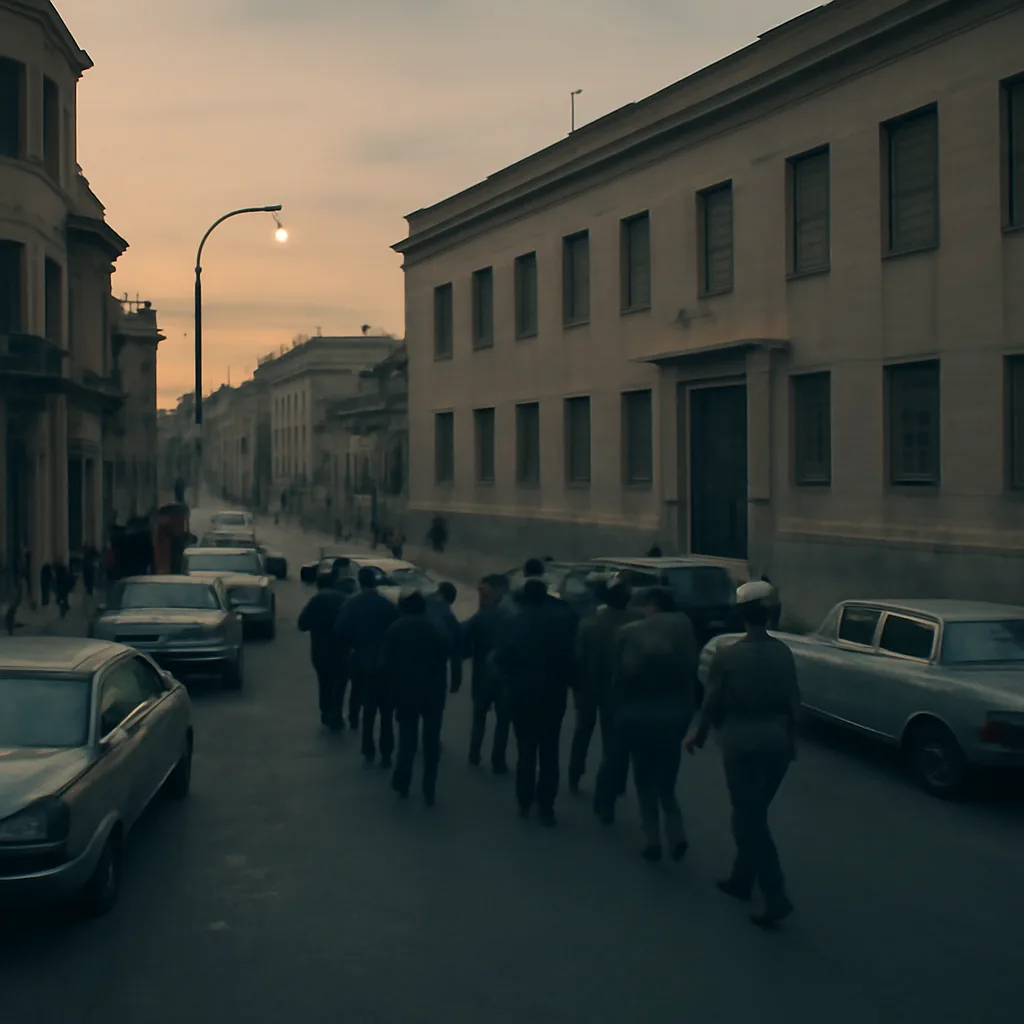
Agents of Argentina's military regime escorting detained individuals near a nondescript building in 1970s Buenos Aires; bystanders and police vehicles nearby, period clothing.

On Sept. 24, 1976, Argentina's ruling military junta escalated its campaign against suspected leftists and dissidents, marking a deepening phase of the so‑called 'Dirty War' characterized by widespread arrests, disappearances and state repression.


In 1976 Argentina, a military junta led by General Jorge Rafael Videla, Admiral Emilio Massera and General Orlando Agosti continued and intensified a nationwide campaign of repression against perceived political opponents popularly labeled the "Dirty War." Beginning with the coup of March 24, 1976, and into the latter half of that year, the regime consolidated power through security decrees and an expanding network of security forces and clandestine detention centers.

By September 1976 the junta had institutionalized counterinsurgency policies that targeted not only armed guerrilla groups but also broader sectors of civil society: trade unionists, student activists, teachers, journalists, and suspected sympathizers. The security apparatus—comprising the armed forces, police, naval intelligence and special task forces—carried out systematic arrests often without warrants, followed by detention in secret facilities where detainees were held outside legal protections. Many detainees were subjected to interrogation and torture, and a large number vanished; Argentine human rights organizations later documented thousands of such "disappearances" (desaparecidos).

The junta justified its measures as necessary to restore order and eradicate subversion. In practice, its policies blurred the lines between armed insurgency and peaceful opposition, enabling large‑scale abuses. State repression included censorship of the press, suspension of political parties, purges of public institutions and the use of forced exile. The military regime also implemented economic policies that opened markets and curtailed labor rights, aligning state repression with efforts to reshape Argentina's political economy.

International responses were mixed at the time. Some foreign governments engaged with the junta diplomatically or commercially, while human rights groups and exiled Argentines began documenting and publicizing abuses. Over subsequent decades, investigations, testimonies by survivors, declassified documents and the work of human rights organizations such as the Mothers of Plaza de Mayo and the Grandmothers of Plaza de Mayo established the scale and methods of the repression that intensified in 1976.

Estimating precise numbers remains contested: different researchers and official bodies have produced varying totals for the dead and disappeared, reflecting limitations in records and the clandestine nature of state violence. What is widely documented is the pattern of covert detention centers, use of torture, disappearances, and the targeting of families—especially children of detainees, some of whom were illegally adopted or otherwise removed from their parents.

The events of September 1976 sit within a broader timeline that culminated in a regime lasting until 1983, when democratic rule was restored following economic collapse and the military's defeat in the Falklands/Malvinas War. In Argentina's subsequent transitional justice efforts, legal cases and truth‑seeking processes sought accountability for abuses carried out during the Dirty War era.

Understanding the intensification of the junta's campaign in 1976 requires recognizing both its immediate tactics—expanded clandestine detention and repression—and the longer‑term consequences: deep social trauma, unresolved disappearances, and enduring legal and moral questions about state crime. Historians continue to refine details as new documents and testimonies emerge; where specifics are disputed, the consensus among human rights researchers and post‑dictatorship investigations is that 1976 marked a significant escalation in systematic state repression.

Share this

Email Share on X Facebook Reddit

Did this surprise you?