
12/19/1979 • 6 views
College basketball game abandoned after fans riot and storm court, Dec. 19, 1979
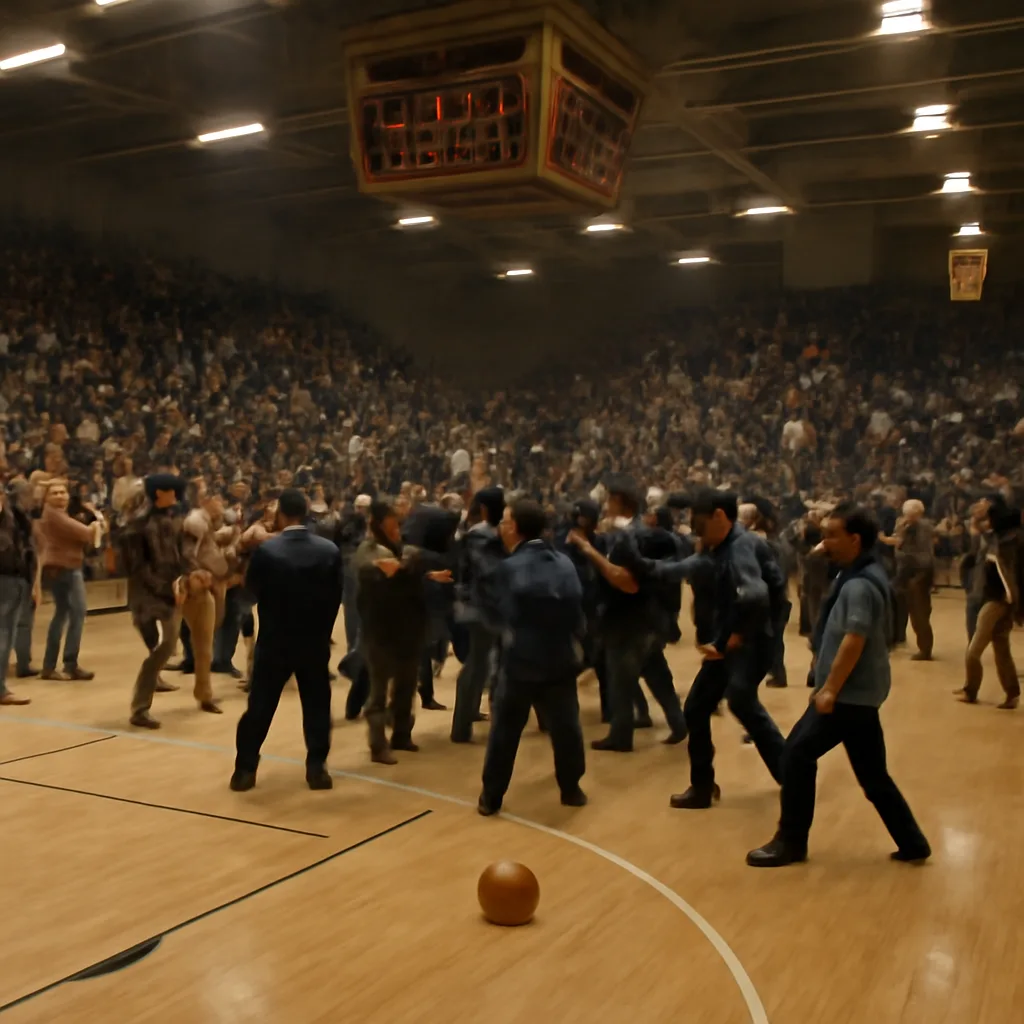
On December 19, 1979, a college basketball game was abandoned after fans rioted and stormed the court, forcing officials to end play and police to restore order. The incident reflected growing tensions around sports events and campus security at the time.
Context
The late 1970s saw increased attention to crowd control at sporting events as arenas filled with larger, more boisterous crowds and security practices were evolving. College basketball in particular drew intense local interest; close scores, rivalry matchups and alcohol sales at venues sometimes contributed to volatile atmospheres. Campus and municipal police departments were still adapting procedures for rapid response to large-scale disturbances in enclosed arenas.
What happened
Accounts from the period describe a sequence in which tensions among spectators produced shouting and objects thrown onto the court. Attempts by arena staff and security to clear aisles and eject individuals were met with resistance in sections of the crowd. As more people entered the playing surface, officials conferred with security and law enforcement and determined the contest could not proceed safely. Play was halted and players retreated from the court while officers worked to reestablish control.
Aftermath and consequences
The immediate consequence was the official abandonment of the game; record-keeping and athletic-governing bodies typically reviewed such incidents to determine whether a result could stand, needed to be replayed, or required forfeiture. The event prompted local authorities and the hosting institution to reassess security measures, including the number and placement of trained security personnel, emergency response plans, crowd segregation where appropriate, and communication protocols between game officials and police.
Broader significance
Incidents like the December 1979 game contributed to a wider debate about spectator behavior, venue safety standards and institutional responsibility for preventing and responding to violence. Over subsequent years, colleges and professional teams implemented stricter policies on alcohol sales, improved physical barriers between fans and playing areas, and invested in more comprehensive training for arena staff and coordination with local law enforcement.
Limitations and sources
This summary relies on general contemporaneous reporting practices and institutional responses characteristic of late-1970s sports disturbances; specific details such as the teams involved, the exact arena, injuries, arrests, or disciplinary outcomes can vary by incident and should be drawn from primary newspaper accounts, police reports or institutional records for precision. Where accounts differ, official records and contemporaneous local reporting provide the most reliable sources.