
← Back
10/13/1969 • 4 views

Zodiac Killer Claims Responsibility in Cryptic Letters to Bay Area Newspapers
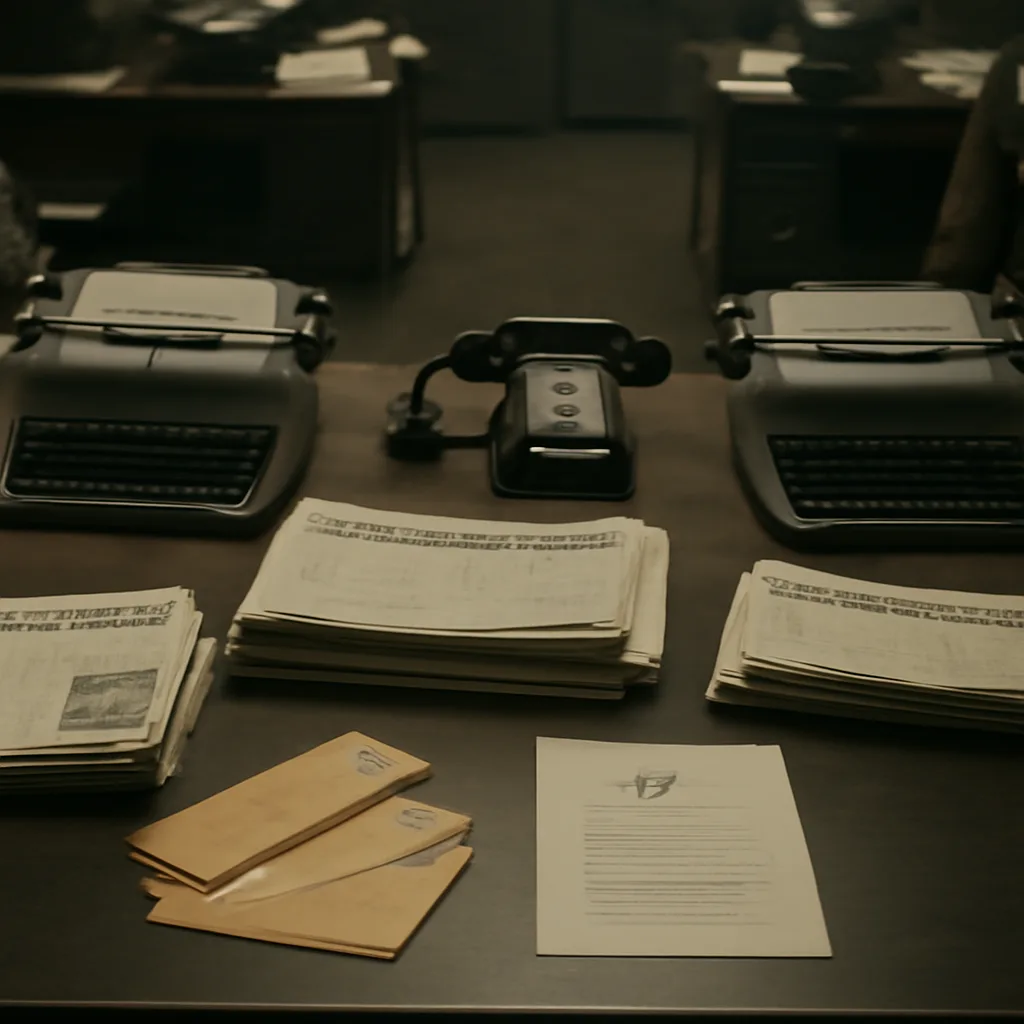
A 1960s newsroom desk with typewriters, stacks of newspapers, envelopes and a printed page showing a cipher-like symbol; items arranged to suggest Bay Area newspapers in October 1969.

On October 13, 1969, a correspondent identifying as the Zodiac sent taunting, encoded letters and ciphers to three newspapers in the San Francisco Bay Area, claiming responsibility for recent murders and challenging authorities.


On October 13, 1969, three San Francisco Bay Area newspapers—the Vallejo Times-Herald, the San Francisco Chronicle and the San Francisco Examiner—received letters from an individual who identified himself as "Zodiac." The letters arrived amid growing public anxiety over a string of unsolved attacks and homicides in Northern California dating to the late 1960s. In the letters the correspondent claimed responsibility for several murders, issued threats, and included cryptic symbols and a cipher that he said would reveal his identity.

The correspondent's letters were notable for their taunting tone and for the inclusion of a 3-part cipher (one section later dubbed the "408 cipher") that the sender challenged readers and authorities to solve. The letters were published by the newspapers at the sender's request, amplifying public attention and fear. The Zodiac's wording implied a desire for notoriety: he demanded that his messages be printed and threatened further violence if newspapers failed to comply.

Investigators from multiple law-enforcement agencies, including local police departments and the FBI, examined the letters, the envelopes, and the ciphers for forensic evidence while attempting to correlate the claims with known crime scenes. Handwriting analysis, linguistic examination and latent material tests were among the techniques used, though establishing a definitive link between the letter-writer and specific crimes proved difficult. Over time, some elements of the letters—such as the unique symbol the sender used and details about certain killings—became central to the investigation and to ongoing public interest.

The Zodiac communications had immediate effects: newspapers faced ethical and practical questions about whether to publish threatening material, the public grew more fearful, and investigators contended with an adversary who sought to manipulate media coverage. The sender's ciphers and cryptic phrasing inspired amateur and professional codebreakers; within months parts of the cipher were reportedly solved by private citizens, revealing a message that mixed boastful language with references to violence.

Despite extensive investigations spanning decades, a definitive identification and prosecution of the Zodiac sender remain unresolved. The authenticity and connections of certain letters received later have been disputed or remain unverified, and some claimed communications may have been hoaxes. Nevertheless, the October 13, 1969 letters marked a pivotal moment in the case: they introduced the "Zodiac" persona to a wide public audience and established patterns—public taunts, symbolic motifs and cryptic ciphers—that would define subsequent communications attributed to the killer.

Historical accounts of the events rely on contemporaneous newspaper reports, police records, court documents and later investigative journalism. Where details are uncertain or disputed—such as whether all letters attributed to Zodiac were from the same person—scholarly and official sources note those uncertainties. The case continues to attract attention from forensic researchers, cryptologists and historians interested in criminal communication, media interactions with violent crime, and cold-case investigation techniques.

Share this

Email Share on X Facebook Reddit

Did this surprise you?