
← Back
04/03/1895 • 8 views

First Modern Bowling Tournament Held in New York, April 3, 1895
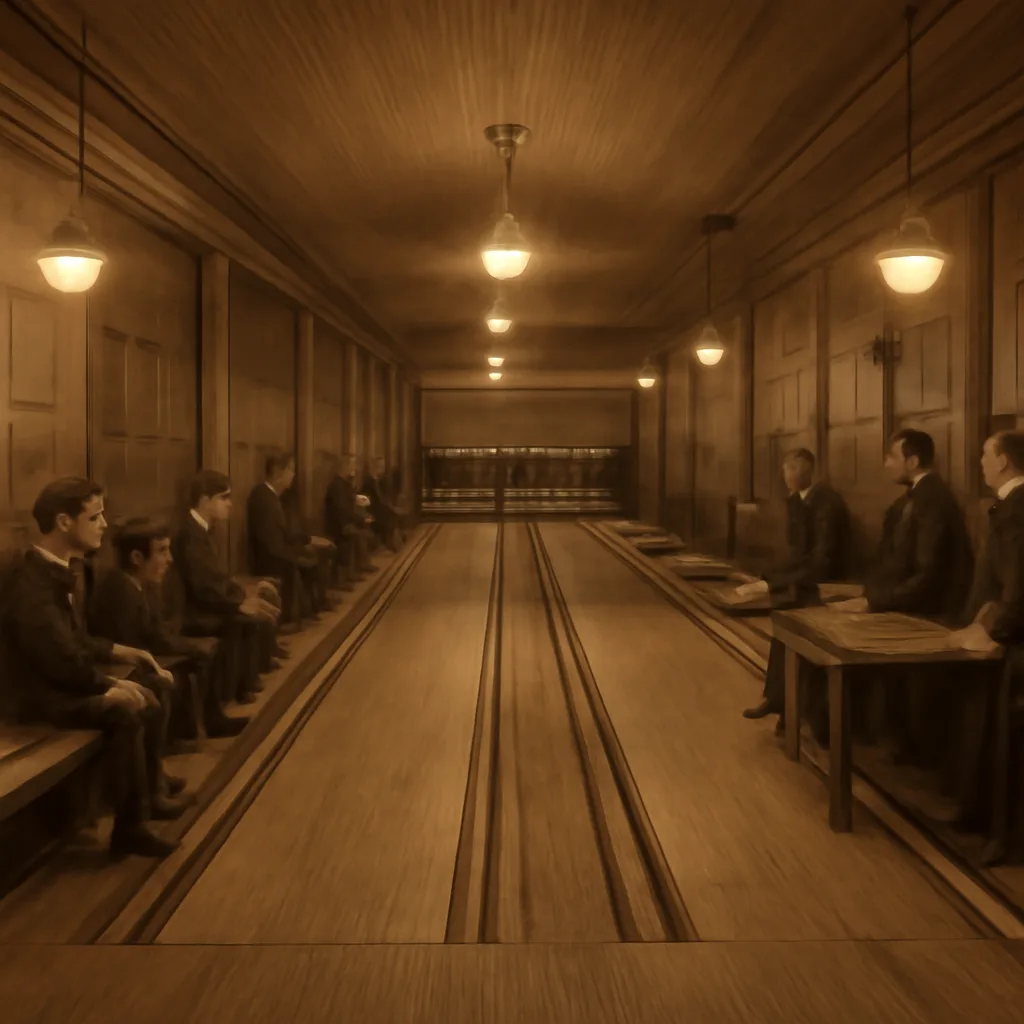
Late 19th-century indoor bowling alley with wooden lanes, pins set at the far end, bowlers and suited spectators in period clothing, gas or early electric lighting overhead.

On April 3, 1895, delegates and bowlers gathered in New York for what is widely recognized as the first modern organized bowling tournament in the United States, marking a milestone in the sport’s formal competition and standardization.


On April 3, 1895, a bowling tournament took place in New York that is often cited as the first modern organized bowling competition in the United States. The event reflected broader late-19th-century efforts to standardize rules and organize competitive play for recreational sports. By the 1890s bowling, particularly nine-pin and ten-pin variations, had been played across American social clubs, taverns and specialized alleys for decades, but competitions were typically local, informal or varied by differing rules and lane conditions.

The 1895 tournament grew out of efforts by civic and sporting organizations to formalize bowling as a respectable and regulated pastime. Participants and organizers sought consistent rules, scoring practices and lane specifications so that contests could be held fairly across different venues. Contemporary reporting and later historical accounts identify the April 3 gathering as notable because it assembled multiple teams and officials under agreed terms for play, signaling a transition from ad hoc matches to organized tournament structure.

This event also occurred during a period of technological and organizational change: the late 19th century saw improved alley construction, mechanical pinsetters in early experimental forms, and increased publication of rulebooks and periodicals covering bowling. The tournament on April 3, 1895, therefore helped crystallize practices—such as standardized pin layouts, scoring conventions and formalized match play—that would underpin later regional and national competitions.

It is important to note that historical records about “firsts” in sports are often complex. Different locales had their own traditions, and earlier organized contests may have existed but were less widely documented or used different rule sets (for example, nine-pin contests versus ten-pin). Some sources emphasize other early tournaments or organizational milestones—such as the formation of bowling associations later in the decade and into the early 20th century—as equally consequential to the sport’s formalization.

Still, the April 3, 1895 tournament remains significant to historians of American sport as an early, documented instance of multiple teams and officials convening under mutually accepted rules to contest bowling at a competitive level. It illustrates how leisure activities in the Gilded Age became sites for standardization and mass participation, leading to the organized amateur and professional circuits developed in the 20th century.

For readers seeking further verification, primary sources for this period include contemporary newspaper accounts, sporting journals of the 1890s, and early rulebooks published by bowling clubs and associations. Secondary histories of American bowling and compilations by sporting historians offer context about how tournaments like the April 1895 event fit into the broader timeline of the sport’s institutional development.

Share this

Email Share on X Facebook Reddit

Did this surprise you?