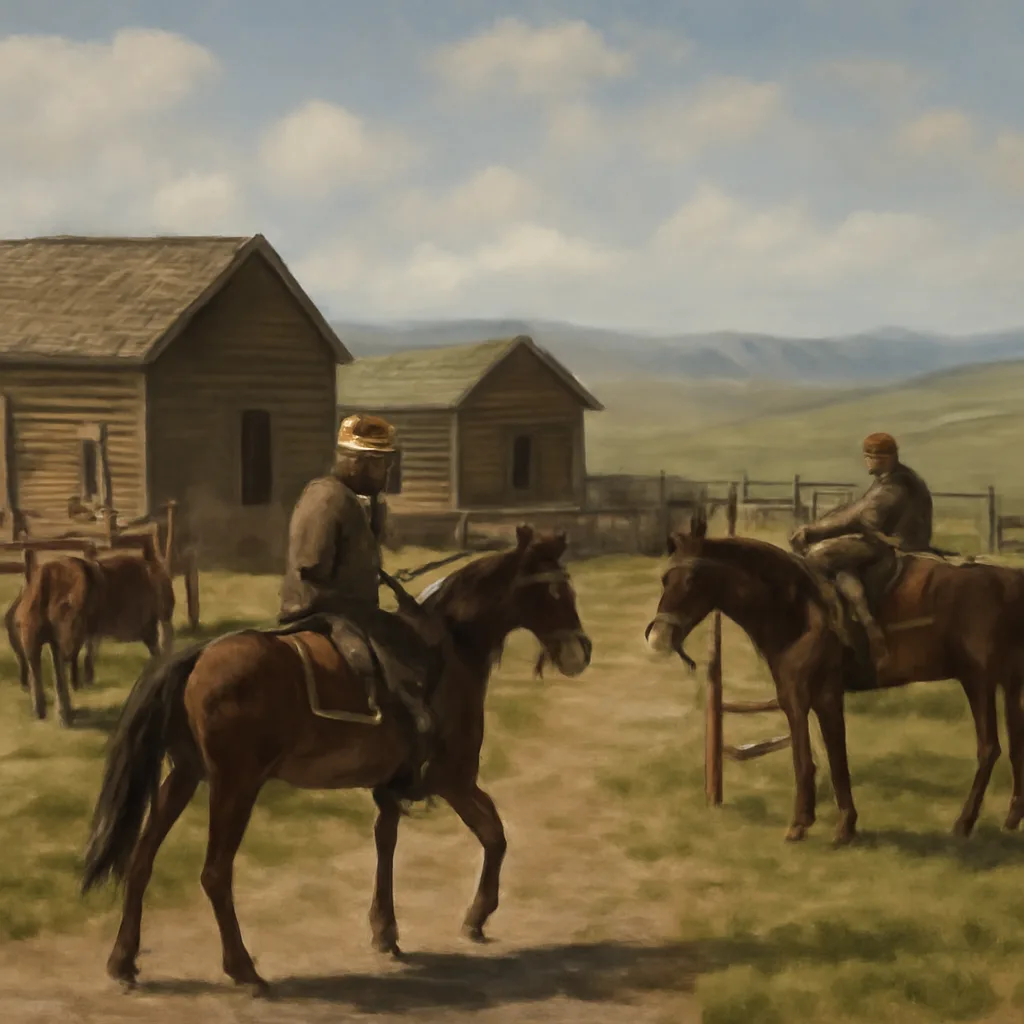
Pony Express Begins Regular Service with First Delivery, April 3, 1860
On April 3, 1860, the Pony Express began its first scheduled westbound delivery, inaugurating a fast mail relay between St. Joseph, Missouri, and Sacramento, California, that would briefly accelerate communication across the continent.
On April 3, 1860, the Pony Express commenced its first official westbound delivery from St. Joseph, Missouri, marking the start of a privately run relay mail service designed to shorten transit time between the eastern United States and California. Organized by the Central Overland California and Pikes Peak Express Company and financed by investors including William H. Russell, Alexander Majors, and William B. Waddell, the Pony Express used mounted riders and a system of stations to carry letters and small packages across about 1,900 miles of plains, mountains, and deserts.
The operation relied on a chain of closely spaced stations—home and swing stations typically every 10 to 15 miles, and larger home stations or changers about 75 to 100 miles apart—where fresh horses and, at changers, new riders awaited. Riders traveled light and fast, carrying packs called mochilas that held mail pouches; the service emphasized speed and regularity over bulk. The advertised schedule aimed to move mail from St. Joseph to Sacramento in about 10 days, a dramatic reduction from the weeks or months required by stagecoach or sea routes around Cape Horn.
The route traversed varied and often dangerous terrain across present-day Kansas, Nebraska, Colorado, Wyoming, Utah, Nevada, and California. Riders faced weather extremes, river crossings, rough trails, and the risk of attacks by outlaws or hostile encounters with Native American groups—threats that made the work perilous. Stations were staffed by station masters, hostlers, and sometimes local settlers or Indigenous people who provided services ranging from changing horses to food and shelter for riders.
The Pony Express was conceived partly in response to the growing need for faster communication with the burgeoning population and economic activity in California after the Gold Rush and amid rising national tensions over sectional issues. The federal government had not yet established a reliable transcontinental mail route, and telegraph lines across the continent were incomplete. The Pony Express offered a commercial solution: a tightly timed, horse-and-rider relay that could deliver news, letters, and small items more quickly than existing alternatives.
Despite its notoriety in American memory, the Pony Express was short-lived. It operated for about 18 months before the completion of the transcontinental telegraph in October 1861 rendered the service obsolete for most long-distance communication. Financially, the company struggled; the high operating costs of maintaining horses, stations, and riders across remote country made profitability difficult. Nonetheless, its brief operation left a durable impression on the American imagination as a symbol of frontier daring and speed.
Contemporary newspaper accounts, company records, and later historical studies provide the basis for our understanding of the Pony Express’s logistics, personnel, and challenges. Some popular details associated with the Pony Express—such as dramatic shootouts or consistently youthful riders making entire long-distance trips alone—are often exaggerated in later retellings. Historians note that riders usually covered single segments between changers and that the enterprise depended on an extensive support network rather than lone heroic figures.
The service’s first delivery on April 3, 1860, therefore represents both a practical experiment in accelerating communication across the continent and a chapter in the broader story of mid-19th-century American expansion, transportation innovation, and the intense demand for faster information flow. While the Pony Express’s operational life was brief, its reputation grew afterward in newspapers, memoirs, and later popular culture, shaping how Americans remembered westward connections before the era of instant electronic communication.