
← Back
04/03/1973 • 6 views

Motorola engineer demonstrates first portable cellular handset in public
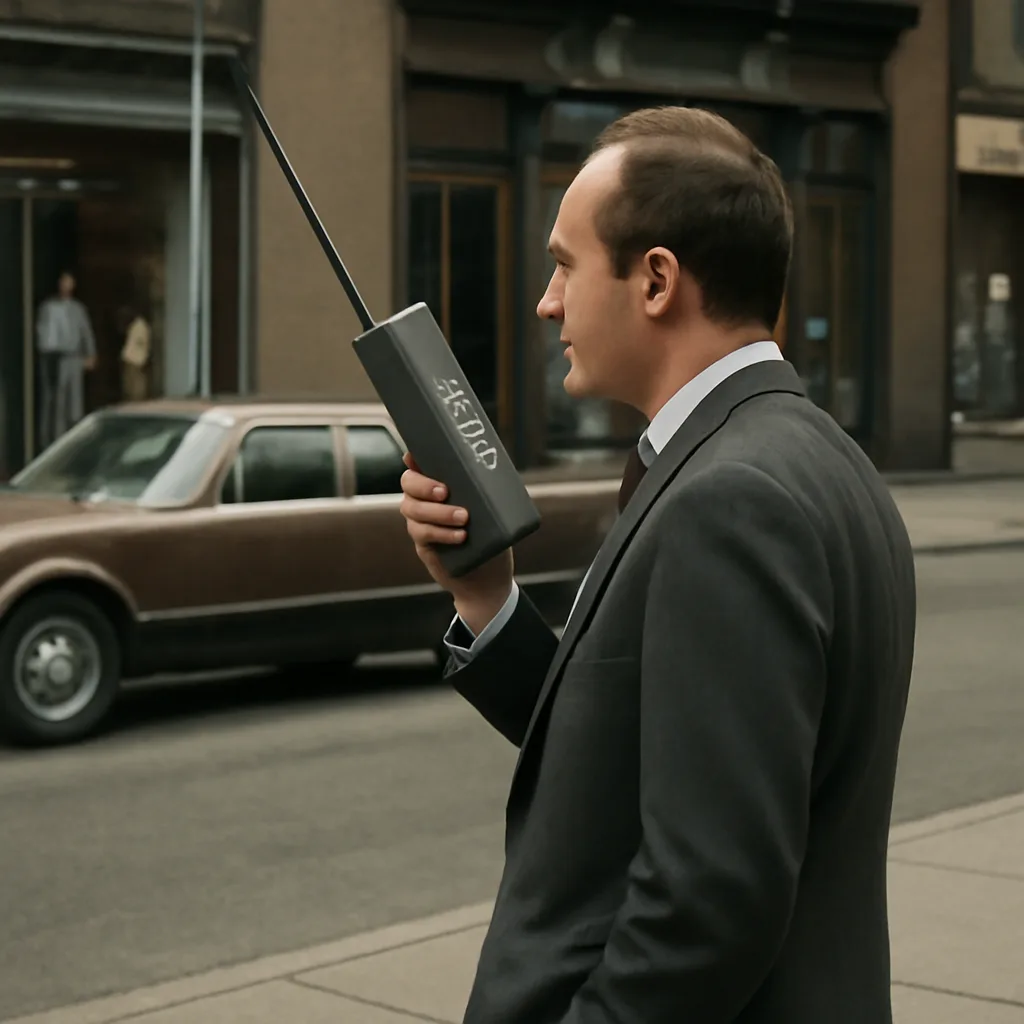
Motorola engineer holding a large handheld radio telephone prototype on a city sidewalk in 1973, with a visible antenna and bulky casing; background shows 1970s urban street scene.

On April 3, 1973, Motorola engineer Martin Cooper publicly demonstrated the first portable handheld cellular phone, showing a new path for wireless voice communication beyond car-based systems.


On April 3, 1973, Martin Cooper, a lead engineer at Motorola, made a public demonstration of the first portable handheld cellular telephone, marking a milestone in the development of personal wireless communication. The device used in the demonstration was the Motorola DynaTAC prototype, a large, handheld radio capable of operating on the cellular network concept that engineers had been developing since the 1940s and 1950s. The event drew attention because it contrasted with the prevailing mobile telephone systems of the time, which were largely vehicle-installed units using limited radio channels.

Background

The idea of cellular telephony—dividing geographic areas into small cells served by low-power transmitters to reuse frequencies—had been explored by researchers and telephone companies for decades. During the 1960s and early 1970s, Bell Labs, AT&T, and other organizations investigated radio frequency reuse and automated handoff between base stations. Motorola, meanwhile, pursued the practical realization of a truly portable handset that could connect to a cellular network and be carried in a user’s hand.

The demonstration

Cooper’s April 3 demonstration in Manhattan is the documented public moment when a portable handheld cellular phone was shown in operation. Contemporary accounts and later histories note that Cooper made the call while standing on a city sidewalk—often reported as showing the device’s portability and potential to free people from fixed or car-installed phones. The prototype used for that call was bulky by today’s standards: it weighed several pounds and included a large antenna and battery pack, yet it was small enough to be held and operated without being installed in a vehicle.

Technical and commercial context

The DynaTAC prototype and the demonstration were steps within a broader technological and regulatory landscape. Cellular concepts required not only handheld radios but also network architectures, spectrum allocation, and standards for handoff between base stations. In the U.S., regulatory and industry processes continued through the 1970s to define technical standards and the allocation of frequencies for cellular service. It was not until the 1980s that commercial cellular networks and consumer handheld phones began to appear widely; Motorola’s DynaTAC 8000X, a significantly refined and commercially marketed product, was approved by the U.S. Federal Communications Commission in 1983 and became available to consumers thereafter.

Significance and legacy

The April 1973 public demonstration is often cited as a symbolic origin point for handheld mobile telephony because it showcased a working portable device and made the concept tangible to the public and industry. The event helped crystallize attention on the possibilities of personal wireless voice communication and accelerated investment and research into cellular networks, miniaturization of components, and battery technology. While the prototype itself was far from a consumer product, its demonstration represented a clear shift in what engineers and the public imagined wireless telephony could become.

Caveats and attribution

Historical accounts attribute the public demonstration to Martin Cooper and Motorola; this attribution is well documented in trade publications, interviews, and retrospective histories of mobile telephony. The development of cellular technology was the cumulative result of many researchers, companies, and regulatory decisions over decades, and other institutions (including AT&T and academic researchers) also made foundational contributions to the concepts and infrastructure that enabled cellular networks. The April 3, 1973 demonstration is best understood as a pivotal public showcase of an emerging technology rather than the sole origin of cellular telephony.

Overall, the demonstration remains a landmark moment in the long, collaborative history that transformed radio voice communication into the personal mobile networks that later became ubiquitous.

Share this

Email Share on X Facebook Reddit

Did this surprise you?