
04/03/1954 • 7 views
First successful kidney transplant between identical twins, 1954
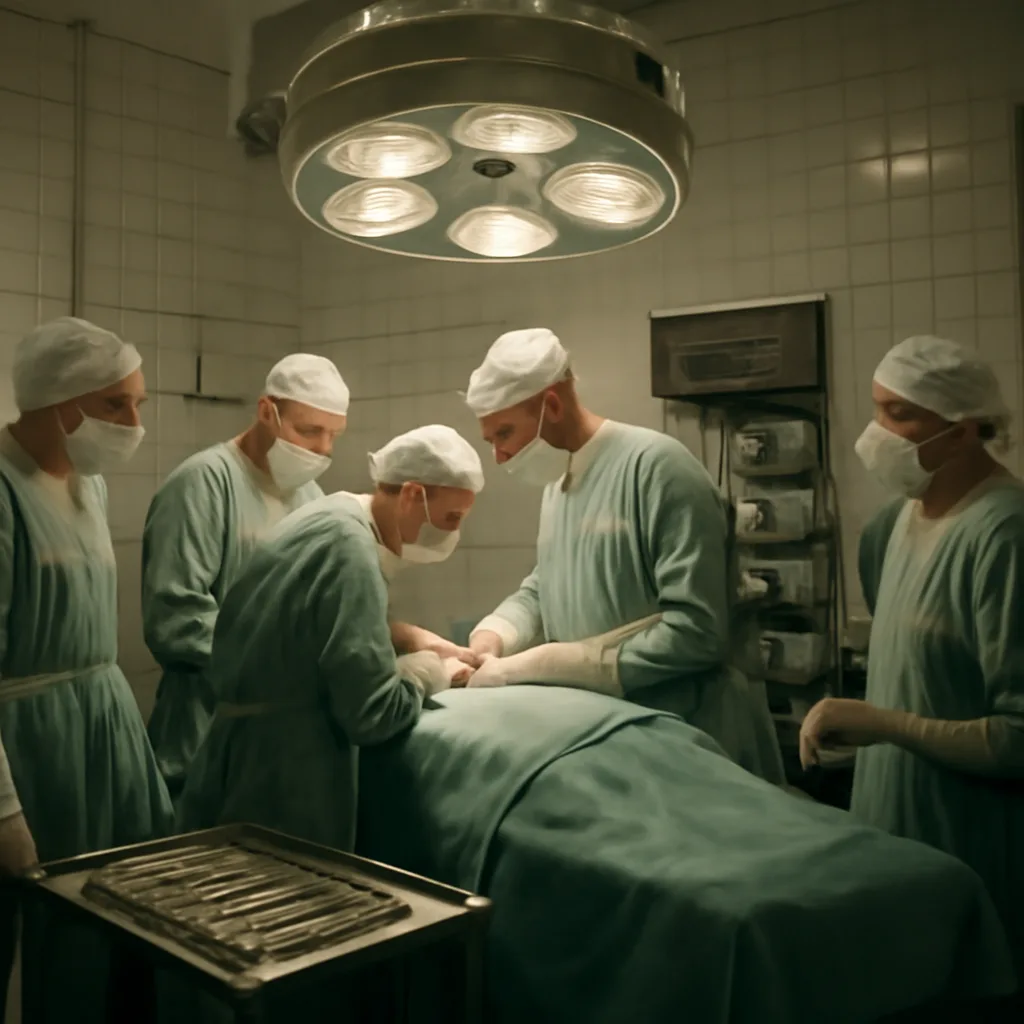
On April 3, 1954, surgeons at Peter Bent Brigham Hospital in Boston performed the first successful human kidney transplant—between identical twin brothers—marking a milestone in transplant surgery by avoiding rejection without lifelong immunosuppression.
Background and significance
Before 1954, attempts to transplant organs into humans nearly always failed because the recipient’s immune system attacked the foreign tissue. Experimental work in the decades prior—on tissue grafting, immunology, and surgical technique—laid groundwork but could not overcome rejection in clinical practice. Identical twins offered a unique opportunity: their shared genetics made transplanted organs effectively immunologically compatible, allowing surgeons to test whether anatomical and physiological transplantation could succeed without the complicating factor of immune rejection.
The operation
The donors and recipients were adult male identical twins; contemporary reports focused on their clinical status rather than personal details. The transplant team removed a kidney from the healthy twin and implanted it into his brother, connecting blood vessels and the urinary tract in standard vascular and urological fashion for the era. The recipient’s failing kidneys were left in place (a common practice at the time). The transplanted kidney began producing urine immediately and renal function was restored, freeing the recipient from dialysis and significantly improving his clinical condition.
Outcomes and aftermath
The immediate success demonstrated that a human kidney could be surgically transferred and function in another person when immune rejection was not an issue. The recipient survived for eight years after the transplant—dying in 1962 of a heart attack—providing proof that long-term function was possible. The donor reportedly remained well after donation. The case catalyzed research into immunology and led to the later development of immunosuppressive drugs (notably azathioprine and later cyclosporine) that made transplants between non-identical individuals feasible.
Historical context and legacy
The 1954 transplant was both a technical and conceptual breakthrough. It validated the surgical methods for organ implantation and underscored the central role of the immune system in graft failure. The operation earned Dr. Joseph Murray a share of the Nobel Prize in Physiology or Medicine in 1990 for his contributions to organ transplantation. Over subsequent decades, advances in tissue typing, immunosuppression, and postoperative care transformed renal transplantation into a routinely performed, life-saving therapy.
Caveats and accuracy
Contemporary sources and later histories emphasize the ethical and clinical caution surrounding early transplants: the choice of an identical twin donor avoided rejection but raised questions about donor risk and consent that remain part of transplant ethics discussions. Details such as team composition and exact perioperative care are documented in medical literature from the period; this summary avoids inventing personal quotations or unverifiable specifics.
Today’s relevance
Kidney transplantation is now one of the most common solid-organ transplants worldwide, informed by the lessons of 1954 about immune compatibility, surgical technique, and the need for lifelong follow-up. The Boston operation remains a pivotal moment in medical history, marking the transition from theoretical possibility to clinical reality.