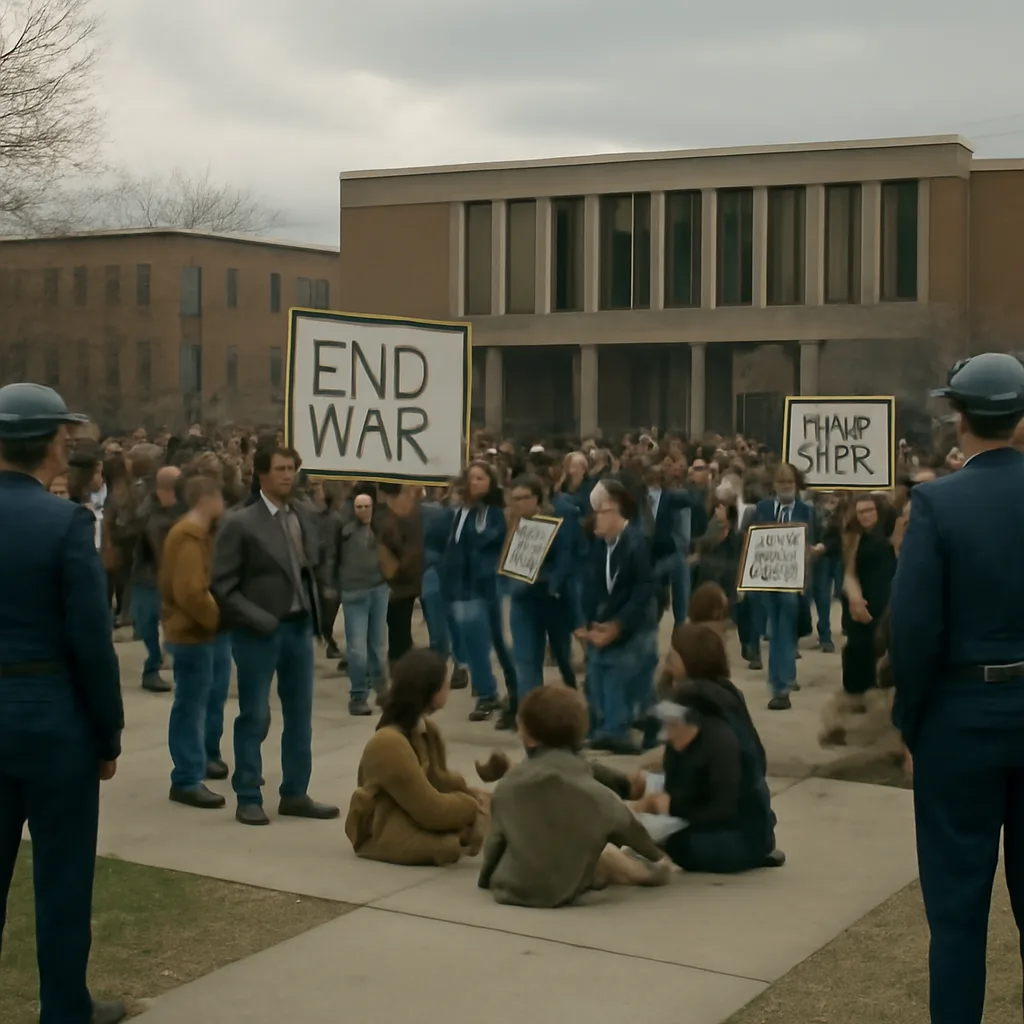
Nationwide Campus Protests Over Vietnam Escalate into Violence, November 15, 1969
On November 15, 1969, antiwar demonstrations at universities across the United States escalated into clashes between protesters and police, resulting in injuries, arrests, and significant property damage as the Vietnam War protest movement reached a volatile peak.
On November 15, 1969, a coordinated series of anti-Vietnam War demonstrations at colleges and universities across the United States turned violent in multiple locations, reflecting deepening national divisions over the war and the draft.
Background
By late 1969 the antiwar movement had grown from campus teach-ins and marches to broad, organized actions involving student groups, local activists and national coalitions. Opposition to the draft and to U.S. policy in Vietnam had intensified after years of increasing American troop deployments and rising casualty figures. Demonstrations in previous months, including large marches in Washington and confrontations at several campuses, set the stage for the November events.
Events of November 15, 1969
On the day itself, protests took place at numerous institutions, with the scale and character varying by campus. In several cities, planned demonstrations included sit-ins, rallies and attempts to occupy administrative buildings. At some sites, police responded with force to break up occupations or to control crowds, and confrontations produced injuries and arrests. At other campuses clashes began after confrontations between small groups of agitators and law enforcement or when demonstrators attempted to move into restricted areas.
Consequences and responses
In the immediate aftermath, university administrations, municipal officials and federal authorities faced criticism from different sides. Administrations were accused both of tolerating disruptive behavior and of overreacting with police tactics. Local law enforcement defended their actions as necessary to restore order and protect property. Media accounts from the period documented broken windows, burned effigies and arrests; some campuses saw brief shutdowns or cancellation of classes. The incidents intensified debates over campus governance, free speech, and the appropriate response to civil disobedience.
Broader significance
The November 15 confrontations occurred amid a broader escalation in domestic unrest tied to the Vietnam War and the military draft. They influenced public perceptions of the antiwar movement—some observers saw the violence as undermining public sympathy for protesters, while others pointed to heavy-handed policing as evidence of state repression. In the months and years that followed, campuses remained focal points for protest, and the events of November 1969 contributed to ongoing discussions about the relationship between universities, students and the state.
Limitations and sources
Accounts of specific incidents on November 15 vary by campus and by contemporary reporting; historians rely on newspaper archives, university records and oral histories to reconstruct events. This summary avoids attributing specific, disputed actions or direct quotes to named individuals when primary-source verification is lacking.
Aftermath
The clashes of November 15 did not end campus protest activity but helped shape subsequent tactics on both sides: some student organizers pursued more disciplined, nonviolent strategies, while others embraced militant direct action. Universities reviewed crowd-control procedures and policies on demonstrations. Nationally, the incidents fed into ongoing political debates over the war, the draft and civil liberties that would continue into the early 1970s.