
← Back
10/13/1974 • 6 views

1974 London Bombings Attributed to Irish Republican Groups
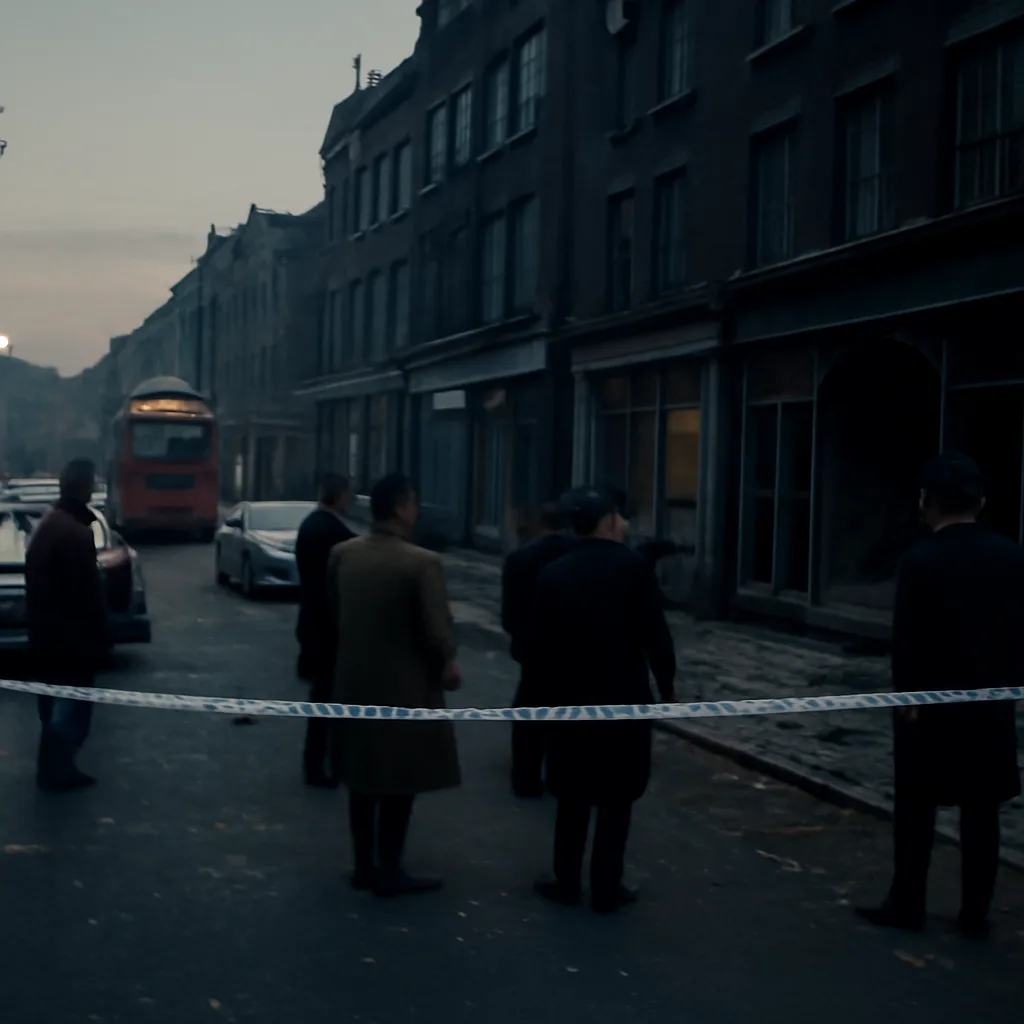
Early 1970s London street scene with police cordon, plainclothes officers and uniformed personnel near damaged storefronts and smashed windows; 1970s vehicles and signage visible, no identifiable faces.

On 13 October 1974, a series of bombings in London were widely linked by police and officials to Irish republican paramilitary groups amid a year of heightened violence related to the Troubles in Northern Ireland.


On 13 October 1974, London experienced a sequence of explosions that authorities and much of the British press linked to Irish republican paramilitary activity during a turbulent year of the Troubles. The bombings occurred against a backdrop of escalating violence since the late 1960s between republican and loyalist paramilitaries, British security forces, and political actors across Northern Ireland and Great Britain.

Immediate reporting and official statements following the attacks identified the Irish Republican Army (IRA) or associated republican groups as the likely perpetrators. The IRA had carried out a number of bombings on the British mainland throughout the early 1970s, seeking to bring attention to their campaign and to pressure the UK government over its policies in Northern Ireland. Intelligence services, police investigations, and media coverage at the time treated links to republican paramilitaries as the leading explanation for the London incidents on 13 October.

Casualties and damage varied depending on the specific locations targeted that day. Bombs in public places and transport hubs were a recurrent tactic used by paramilitary groups during this period, designed to disrupt daily life, cause economic impact, and draw political attention. In response, the British government continued to expand security measures in urban centres, increase policing resources, and pursue both criminal prosecutions and intelligence operations to identify and arrest those involved.

The attribution of responsibility for specific attacks in this era was sometimes complicated by the existence of multiple republican factions, splinter groups, and differing claims of responsibility. Some operations were claimed openly by groups; others were left unclaimed or attributed by investigators based on modus operandi and intelligence assessments. Historical research into militant activity in the 1970s relies on contemporaneous police records, government files, press reports, and later academic studies — sources that can reflect conflicting accounts or incomplete evidence.

Over subsequent decades, historians and analysts have used declassified documents and archival material to refine understanding of particular incidents, including which groups carried out particular attacks and how operations were planned and supported. Where direct, contemporaneous claims of responsibility are lacking, firm attribution can remain disputed or probabilistic.

The London bombings of 13 October 1974 are thus best understood within the broader pattern of IRA-linked operations on the British mainland during 1974 and the wider political and sectarian conflict in Northern Ireland. They contributed to public anxiety in Britain, shaped government counterterrorism policies, and fed into the complex legal, political, and security responses that characterized British–Irish relations in the mid-1970s.

Because precise details about responsibility for individual blasts can be contested in sources from the period, researchers refer to primary records and vetted secondary accounts when assessing the historical record. The events of 13 October form part of the documented campaign of violence associated with the Troubles, a conflict that produced many widely attributed attacks as well as some incidents where accountability remains unclear or debated.

Share this

Email Share on X Facebook Reddit

Did this surprise you?