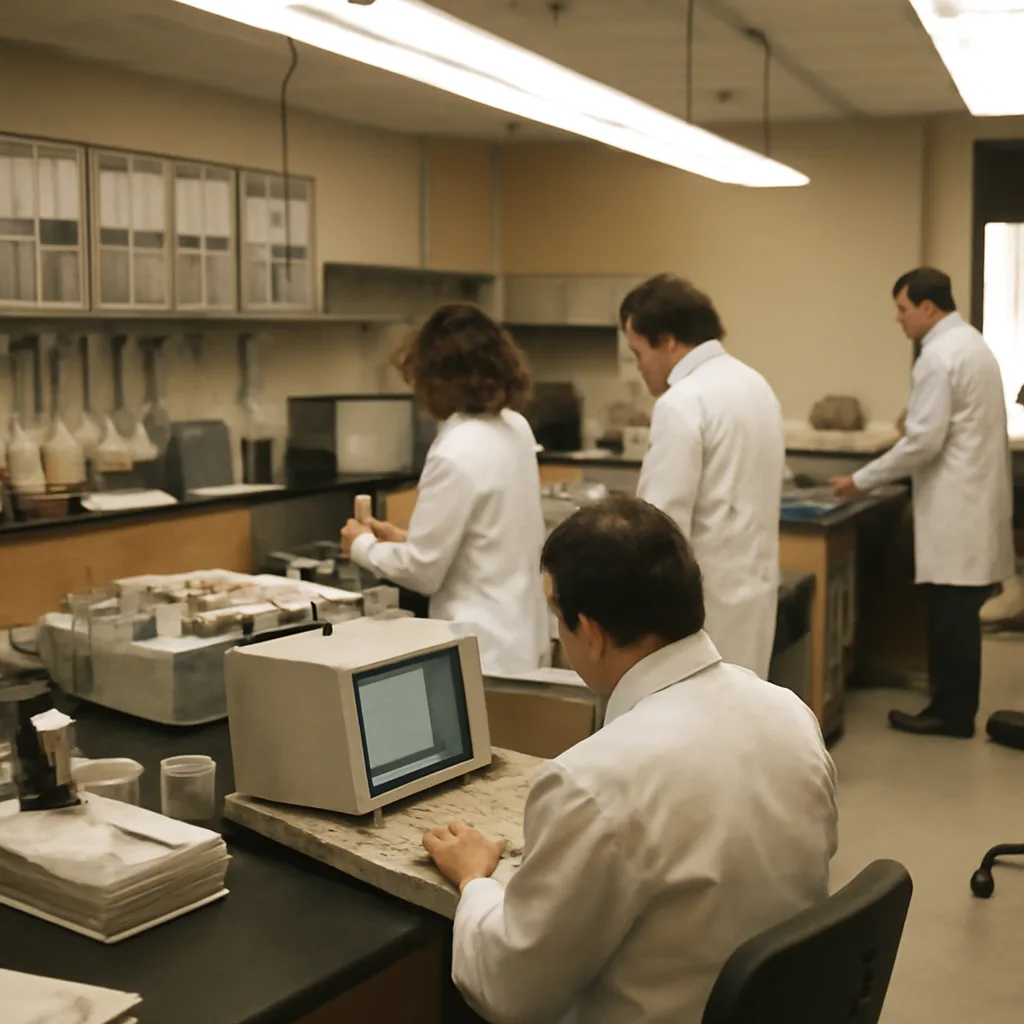
Scientists Propose First Human Genome Sequencing Project
On May 14, 1985, researchers proposed a large-scale effort to sequence the entire human genome, laying conceptual groundwork for what became the Human Genome Project and sparking debates about feasibility, cost, and ethical implications.
On May 14, 1985, scientists publicly advanced the idea of systematically sequencing the entire human genome — a proposal that helped crystallize a research ambition which would later be formalized as the Human Genome Project (HGP). The mid-1980s context combined rapid advances in molecular biology and computing with growing interest in applying these tools to map human genetic information comprehensively. Advocates argued that a complete sequence would transform biomedical research, enabling identification of disease genes, improving diagnostics and therapeutics, and providing fundamental insights into human biology.
Scientific and technological context
By 1985, DNA sequencing methods pioneered in the 1970s (notably Sanger sequencing) were well established, but sequencing was slow, expensive, and labor-intensive. Automated sequencers and improved biochemical techniques were beginning to appear, and computational resources for storing and analyzing sequence data were expanding. These advances made the notion of sequencing large stretches of DNA more plausible, though many technical challenges remained. Proponents emphasized that coordinated, large-scale efforts could drive further technological innovation and reduce per-base sequencing costs.
Motivations and early proponents
The proposal drew support from a mix of academic researchers, government advisors, and industry observers who saw both scientific and practical value in a reference human genome. Goals cited in early discussions included creating a map and sequence to locate genes associated with important inherited disorders, building foundational resources for comparative genomics, and accelerating basic research into gene function. At the time, proponents also anticipated broader societal and economic impacts, including new biotech applications and a strengthened scientific workforce.
Debate and concerns
The proposal promptly generated debate within and beyond the scientific community. Critics raised scientific and ethical concerns: whether the project would siphon funding from investigator-driven research, the technical feasibility and cost-effectiveness of sequencing an entire complex genome, and the potential for misuse of genetic information. Ethical, legal, and social implications (ELSI) — such as privacy, discrimination, and consent — were discussed early on and later became a formal component of the Human Genome Project’s planning.
From proposal to program
The 1985 proposal did not immediately become a full-scale program. In the years that followed, additional planning, pilot projects, and policy discussions shaped the enterprise. The idea gained institutional momentum through advisory committees, national funding agencies, and international conversations. In 1990, the U.S. Department of Energy and the National Institutes of Health formally launched the Human Genome Project as a coordinated, multi-year international effort. That program drew on and expanded the conceptual groundwork laid in the mid-1980s.
Legacy and historical significance
The initial 1985 proposal is historically significant as an early public articulation of a large-scale genomic ambition. It marks the transition from sequencing individual genes and genomes of microbes to envisioning an organized, collaborative effort aimed at a complete human reference sequence. The eventual Human Genome Project (completed in draft form in 2001 and refined thereafter) fulfilled many of the goals anticipated by 1980s proponents, while also prompting longstanding ethical and policy debates about genetic data use. Historians and scientists view the 1985 proposal as a key moment in the emergence of genomics as a distinct scientific field.
Notes on sources and uncertainty
Descriptions here synthesize the broader historical record of genomics and the documented evolution from early sequencing methods to the formal Human Genome Project. Specific attributions for the May 14, 1985 date reflect public proposals and discussions from that period; however, multiple meetings, reports, and individual contributions influenced the project's development, and attribution of a single originator is disputed. Where precise claims are contested, accounts vary among institutional histories and contemporary news and scientific coverage.