
06/10/1914 • 6 views
First Public Demonstration of Electric Hearing Aids Held in London, 1914
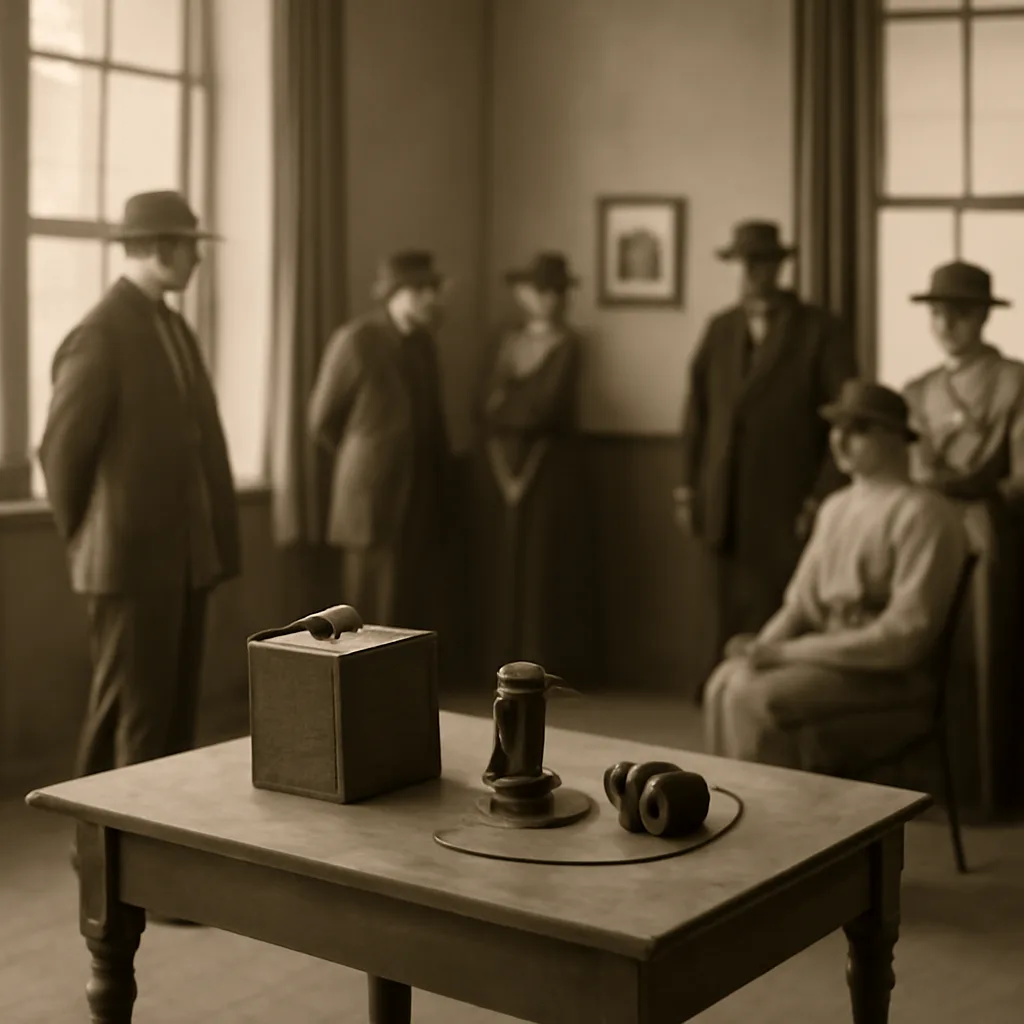
On June 10, 1914, an early electromechanical hearing aid was publicly demonstrated in London, marking a milestone in assistive-audio technology as inventors showcased devices that amplified sound using carbon and electromagnetic components.
Background
Before electric amplification, most hearing assistance relied on mechanical means: ear trumpets and speaking tubes that gathered and directed sound. From the 1890s onward, developments in telephony and microphone technology created the technical foundation for electrically assisted hearing. Inventors adapted components used in telephones—carbon transmitters and receivers, batteries, and wiring—to deliver amplified sound directly to a listener.
The 1914 demonstration
Contemporary accounts identify several inventors and companies in Europe and the United States working on “electric ear” devices. The June 10, 1914, demonstration in London showcased a portable electromechanical apparatus consisting of a carbon transmitter or microphone, a battery pack, and a compact electromagnetic receiver worn near the ear. The demonstrators emphasized improved speech intelligibility at modest listening distances compared with acoustic horns.
Reception and significance
Observers noted that electric amplification could help people with moderate hearing loss, particularly in one-on-one conversational settings. While the devices were noisy by modern standards—introducing electrical hiss and limited frequency range—they represented a clear technological shift. The demonstration helped shift public and medical attention toward electrically based solutions and spurred further refinements in receiver design, battery technology, and acoustic coupling to the ear.
Limitations and context
These early devices were not widely accessible. They were relatively bulky, required frequent battery changes, and offered limited amplification and fidelity compared with later vacuum-tube and transistor-based aids. Clinical audiology was still developing standardized methods to measure hearing loss and outcomes, so claims about effectiveness were unevenly documented. Additionally, several inventors and small manufacturers pursued similar ideas, so no single 1914 device can be said to be the definitive “first” electric hearing aid; rather, the public demonstration exemplified a broader transitional moment.
Legacy
The 1914 demonstration sits in a chain of technological advances that led to commercially viable electric hearing aids in the 1920s and 1930s—notably vacuum-tube amplifiers that offered greater gain and frequency response. Those later developments eventually produced the behind-the-ear and in-the-ear forms that became common by mid-20th century. The public demonstration in 1914 is historically important because it made visible to lay audiences that electricity could be harnessed to aid hearing, accelerating interest, investment, and further innovation.
Sources and historiography
Primary sources for this period include contemporary newspaper reports, patent filings, and trade journal descriptions of hearing and telephony equipment. Historians note that records from smaller demonstrations and prototype devices can be sparse or inconsistent; when specifics (such as a single inventor’s priority) are disputed, historians rely on patents and contemporaneous trade press to reconstruct the sequence of developments. The 1914 London demonstration is best understood as part of an incremental, multi-actor process rather than the sole origin of electric hearing aids.