
06/10/1968 • 5 views
Nationwide Strikes Paralyze Paris on June 10, 1968
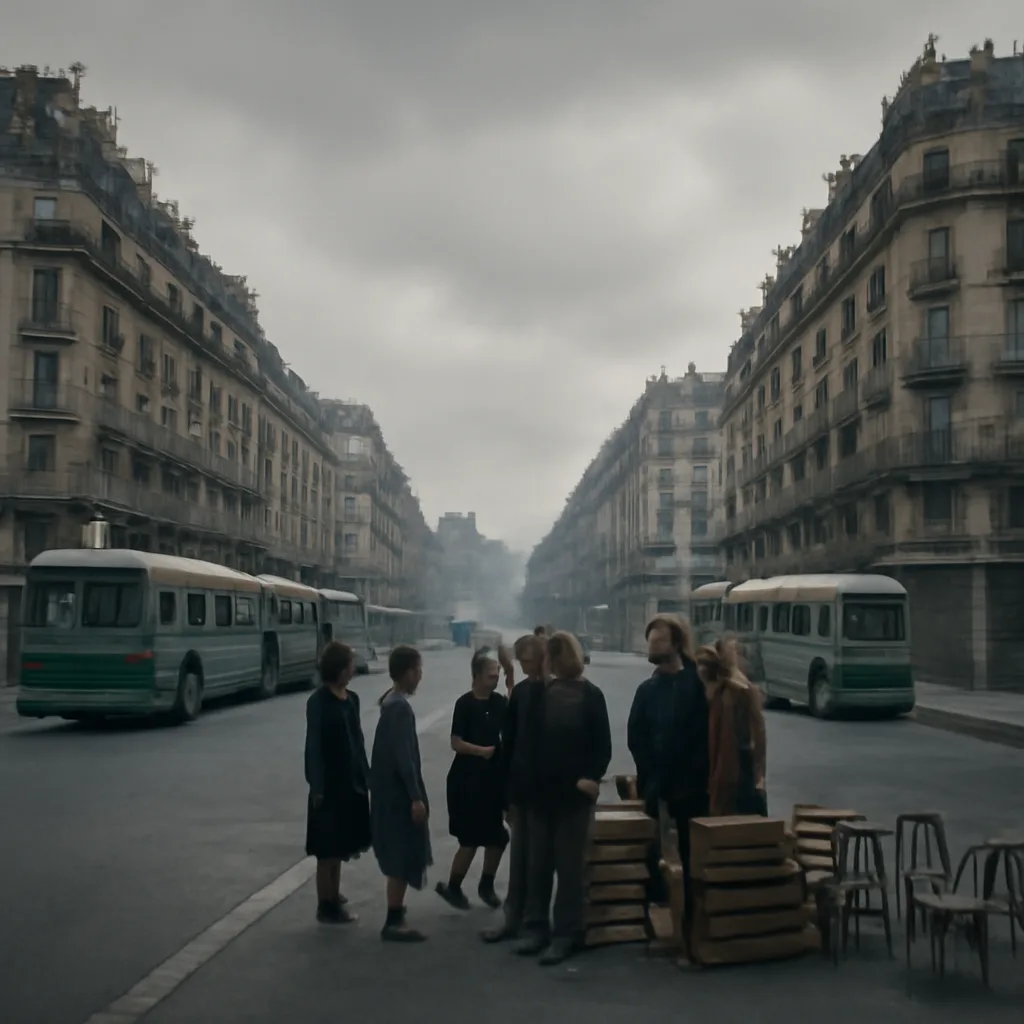
On June 10, 1968, Paris was brought to a standstill as mass strikes and protests—part of the wider unrest of May–June 1968—shut down transportation, closed shops and halted public services across the city.
On June 10 specifically, public transportation in Paris was severely affected: many buses and trams did not run, and commuter traffic was chaotic as drivers, maintenance staff and other transport workers participated in actions or were obstructed by demonstrations. Commercial activity in central neighborhoods declined sharply as shopkeepers shuttered premises amid the uncertainty. Public institutions—including some schools and administrative offices—either closed or operated at reduced capacity.
The protests and strikes of this period were not centrally uniform. They combined coordinated union actions—largely organized by major trade unions such as the CGT (Confédération générale du travail) and other left-wing labor organizations—with spontaneous local occupations and demonstrations by students and workers. Factory councils and worker assemblies continued to press demands for higher wages, shorter hours and greater workplace democracy. Negotiations at national and company levels were ongoing but uneven, and many workers remained skeptical of the pace and scope of talks.
The French government, led by President Charles de Gaulle and Prime Minister Georges Pompidou at the time, faced intense pressure to restore order and resolve economic and social grievances. Security forces remained present in Paris; there were confrontations at various sites in preceding weeks, but by June 10 the situation was characterized more by large-scale paralysis of services than by single moments of violent clash. Political debates in parliament and in the press focused on the balance between law-and-order measures and concessions to labor and student demands.
International observers noted that the events of early June were part of a broader wave of 1968 unrest across Europe and beyond, though France's crisis was distinctive for the scale of worker participation and the extent to which it threatened normal economic activity. For workers and many citizens, the strikes of June 10 underscored persistent grievances over wages, working conditions and political representation. For business owners and conservative politicians, the same day highlighted fears of prolonged disruption and economic damage.
By late June and into July 1968, the situation began to shift: major union federations negotiated accords with employers in late May (most prominently the Matignon Agreements) that led to wage increases and other concessions, and political developments—culminating in de Gaulle's dissolution of the National Assembly and the subsequent legislative elections—altered the immediate dynamics. Nonetheless, the paralysis experienced on June 10 remained a vivid example of how deeply the May–June 1968 crisis had penetrated daily life in Paris, leaving a lasting mark on French political and social memory.
Note: Accounts of specific incidents on June 10 vary in detail across contemporary reports and later histories; this summary focuses on broadly attested disruptions and the wider context of the 1968 movement without attributing singular, contested events that some sources describe differently.