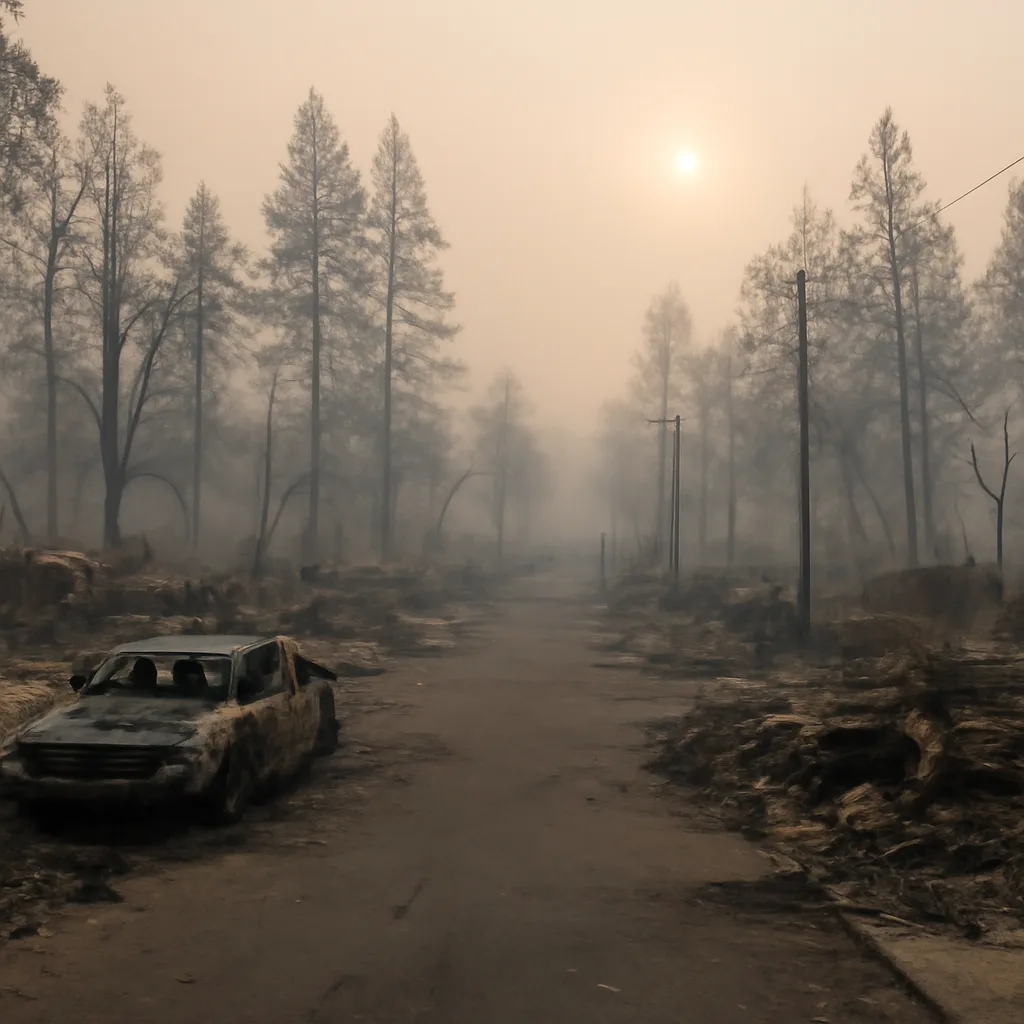
On October 8, 2018, the Camp Fire rapidly consumed the town of Paradise, California, killing at least 85 people, destroying more than 18,000 structures and displacing thousands as one of California’s deadliest and most destructive wildfires.
On the morning of October 8, 2018, the Camp Fire ignited in Butte County, northern California. Fueled by extreme winds, low humidity and abundant dry vegetation following years of drought, the fire spread with extraordinary speed across the hills and into the town of Paradise, located about 90 miles north of Sacramento. Within hours the blaze overwhelmed evacuation routes and neighborhoods.
The fire was later named for Camp Creek Road, near its reported origin in the Pulga area. By the time the main fire was contained weeks later, it had burned more than 153,000 acres. The blaze destroyed an estimated 18,804 structures, mostly homes, and resulted in at least 85 confirmed civilian fatalities, making it the deadliest wildfire in California history. Thousands more residents were injured, displaced, or suffered losses of property and livelihoods.
Emergency response involved local, state and federal agencies. Evacuation orders were issued for Paradise and surrounding communities; many residents fled under nighttime conditions and intense smoke, leading to chaotic scenes on congested roads. Hospitals and shelters in the region received large numbers of patients and evacuees, and utilities were disrupted across wide areas. Investigations into the cause of the fire focused on electrical equipment owned by Pacific Gas and Electric Company (PG&E); state and federal inquiries, as well as civil litigation, examined whether utility infrastructure and maintenance practices contributed to the ignition and spread of the fire. In 2019 PG&E filed for bankruptcy protection, citing liabilities including those from the Camp Fire and other wildfires.
The Camp Fire’s human toll was compounded by its impact on infrastructure and community institutions. The town of Paradise lost a majority of its buildings, including schools, businesses and churches. Local government, emergency services and social support networks were themselves damaged or displaced, complicating recovery efforts. Residents faced environmental hazards in the aftermath: hazardous debris, ash, burned materials and damaged utility lines required specialized cleanup and long-term remediation. Air quality across the region deteriorated sharply during and after the fire, posing health risks especially to older adults, children and those with respiratory conditions.
Recovery and rebuilding have proceeded unevenly. Some former residents returned or rebuilt, while others relocated permanently. Rebuilding efforts have involved updated building codes, land-use deliberations and debates over infrastructure resilience, vegetation management and evacuation planning. Mental health and community cohesion proved long-term challenges, with many residents experiencing grief, trauma and economic insecurity. State and local agencies, non-profits and federal funds provided assistance through housing programs, grants and cleanup support, but critics and many affected residents argued that assistance was insufficient or slow to meet needs.
The Camp Fire shifted public and policy attention to wildfire risk across California and the U.S. West, prompting discussions about forest management, utility regulation, the role of climate change in increasing fire risk, and the need for improved evacuation planning and resilient infrastructure. The event remains a reference point for the catastrophic potential of wildfires in heavily populated wildland–urban interface areas and for debates over how to prevent, respond to and recover from such disasters.