
← Back
08/29/1946 • 4 views

Allied tribunals begin war crimes trials for Japanese leaders
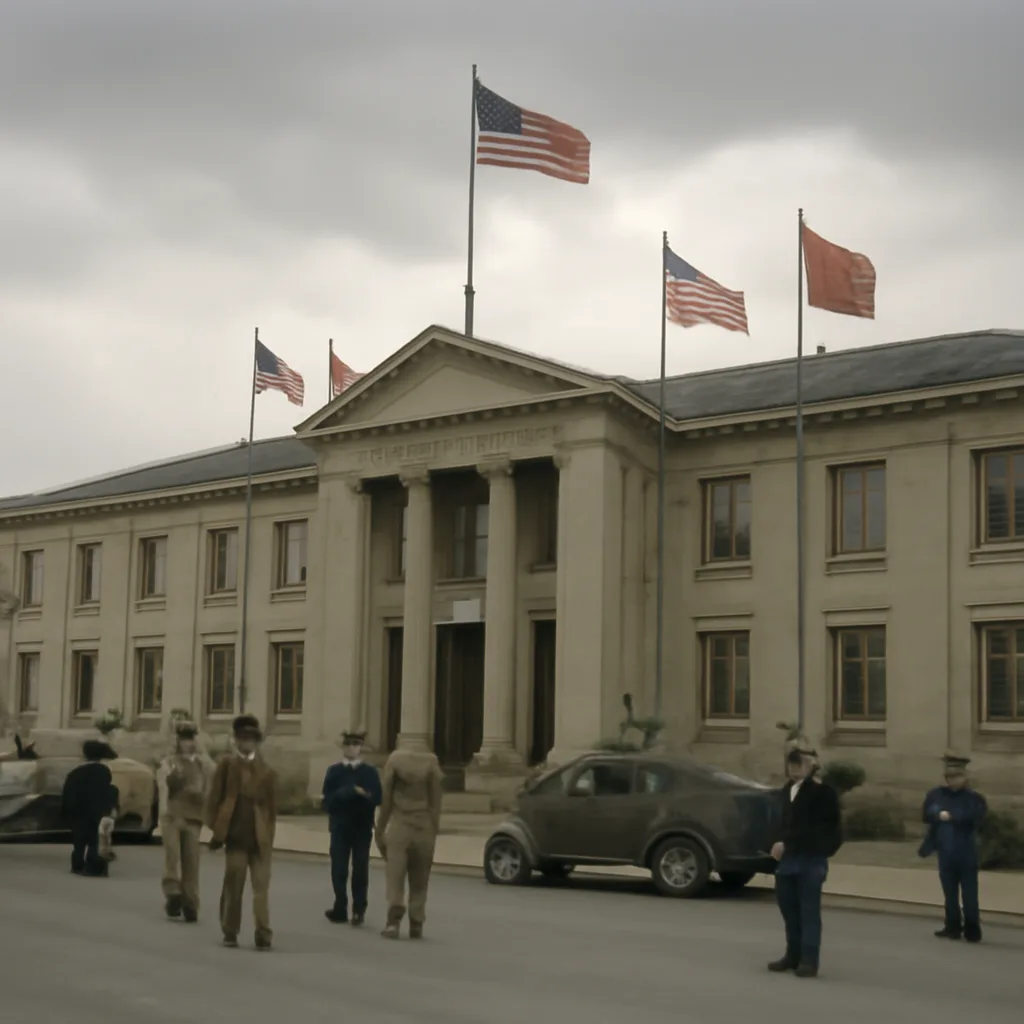
Exterior view of the wartime-era government compound in Tokyo adapted for the International Military Tribunal for the Far East, circa 1946: a low-rise official building with Allied flags and soldiers nearby.

On August 29, 1946, the International Military Tribunal for the Far East opened proceedings to try Japanese political and military leaders for war crimes, marking a major postwar effort to address wartime atrocities in Asia under legal process.


Following Japan’s surrender in August 1945, Allied authorities undertook efforts to bring senior Japanese political and military leaders to account for wartime conduct. On August 29, 1946, the International Military Tribunal for the Far East (IMTFE) — convened by Allied powers and often called the Tokyo Trials — formally opened in Tokyo to try defendants on charges including crimes against peace, conventional war crimes, and crimes against humanity.

The tribunal was modeled in part on the Nuremberg Trials in Germany but reflected distinct political and legal challenges in Asia. The IMTFE indicted 28 individuals, including former prime ministers, military commanders, and government officials, charging them with planning and waging aggressive war, responsibility for atrocities committed in occupied territories, and involvement in systematic abuses such as mistreatment of prisoners of war and civilians. The court sat in a purpose-adapted hall at the former Ministry of Justice compound in Tokyo and heard testimony from a wide range of witnesses, including military personnel, civilian survivors, and experts.

Proceedings spanned several years, with prosecutors presenting documentary evidence, captured Japanese documents, and witness statements to establish chains of command and policy decisions. Defendants mounted various defenses: some denied knowledge or responsibility, others argued they acted in accordance with wartime laws of the time, and several raised questions about victor’s justice and the retroactive application of legal concepts such as “crimes against peace.” These critiques were voiced during the trials and have remained topics of scholarly discussion.

The tribunal produced judgments that led to a range of outcomes: several defendants were sentenced to death, others received prison terms, and some were acquitted. The trials addressed high-profile incidents and policies, including the conduct of Japan’s military in China, Southeast Asia, and the treatment of Allied prisoners of war. Beyond individual sentences, the IMTFE’s work contributed to shaping postwar legal norms on aggression and accountability, even as its procedures and political context drew ongoing debate.

The Tokyo Trials occurred alongside other legal processes across Asia and by occupying authorities, which conducted courts-martial, local trials, and administrative purges directed at lower-level personnel and collaborators. The combined legal actions formed part of broader Allied efforts to demilitarize and reconstruct Japan, balance demands for justice with political and strategic priorities, and lay groundwork for the postwar international order.

Historians note that assessments of the IMTFE are mixed: it established precedents in international criminal law and documented atrocities, but critics cite aspects such as selectivity of prosecution, geopolitical influence on decisions, and procedural issues. Nonetheless, the opening of the Tokyo Trials on August 29, 1946, marks a key moment in twentieth-century efforts to use legal institutions to address state-led wartime violence in the Asia-Pacific region.

Share this

Email Share on X Facebook Reddit

Did this surprise you?