
← Back
05/06/1923 • 4 views

Riderless Horse Wins Prestigious Race at Belmont Park, May 6, 1923
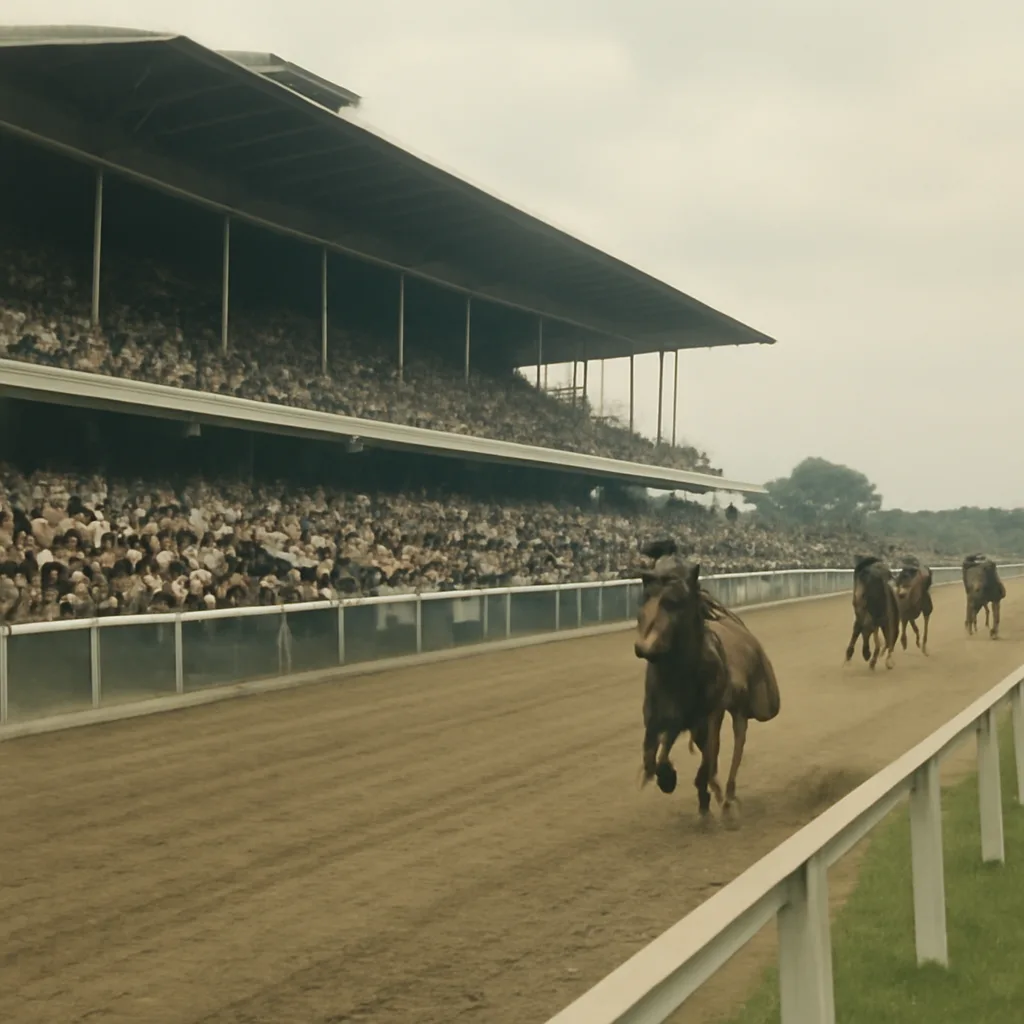
A broad view of Belmont Park grandstand and racetrack in the 1920s, with multiple racehorses running on the dirt track, one horse clearly running without a jockey ahead of others.

On May 6, 1923, a horse that had lost its jockey during the run crossed the finish line first at Belmont Park in New York, a startling and rare outcome that drew immediate attention and later discussion about racing rules and track safety.


On May 6, 1923, at Belmont Park in Elmont, New York, spectators witnessed an extraordinary and widely reported occurrence: a racehorse that had become separated from its rider during the contest continued running and crossed the finish line ahead of the other competitors. Contemporary newspaper accounts described the scene as both dramatic and confusing, as officials, owners and bettors sought to determine the proper result under the racing rules of the day.

The incident began during one of the day’s stakes races when a jockey was unseated—accounts vary on whether the dislodging resulted from the horse stumbling, rider error, or contact with another mount. The mount, still in motion and unrestrained by a rider, maintained sufficient speed and course to reach the finish line before the pack. According to period reports, the riderless horse reached the wire first, prompting immediate debate among track stewards and onlookers about whether the horse should be declared the official winner.

Horse racing rules historically differentiate between a mounted horse and one that finishes without its rider. In many jurisdictions and eras, the requirement that a horse be ridden by its registered jockey to be eligible for purse money and official victory has been explicit; in other circumstances, stewards have applied discretion based on whether the riderless animal completed the race in a manner consistent with fair competition. In 1923, stewards at Belmont and racing authorities had to interpret the rules as they stood, consider precedents and factor in betting and contractual implications for owners and trainers.

Newspaper coverage from the time emphasized both the spectacle and the practical consequences. Owners and trainers whose horses had been beaten by the riderless mount protested; bookmakers and bettors faced questions about payouts when a horse without a jockey crossed first. The event prompted discussion in the racing community about safety protocols, equipment checks, and ways to reduce the chance of unseating riders—issues that were already part of an evolving conversation about race-day regulation.

While sensational accounts sometimes implied miraculous intelligence or intent on the part of the horse, contemporary reporting generally treated the episode as an unusual but explainable outcome of the unpredictable dynamics of racing. Modern historians and racing scholars note that riderless horses occasionally finish prominently in races, particularly when they are high-strung, inclined to run on after losing a rider, or temporarily joined by the momentum of the field.

The May 6, 1923 incident at Belmont Park remains a cited example in discussions of racing anomalies. It illustrates how sporting events can force immediate application of rulebooks and how such moments can accelerate debates about safety and regulatory clarity. Sources from the period—newspaper dispatches, track records and later racing histories—document the occurrence, though specific details such as the horse’s registered name, the jockey’s identity, and the stewards’ official ruling vary across accounts or are incompletely preserved in the public record.

Because reporting at the time was uneven and archival records may be incomplete, some elements of the episode are subject to differing recollection in later retellings. What is consistent across sources is the core fact: on May 6, 1923, at Belmont Park, a riderless horse crossed the finish line first, creating immediate controversy and contributing to ongoing conversations about racing governance and safety.

Share this

Email Share on X Facebook Reddit

Did this surprise you?