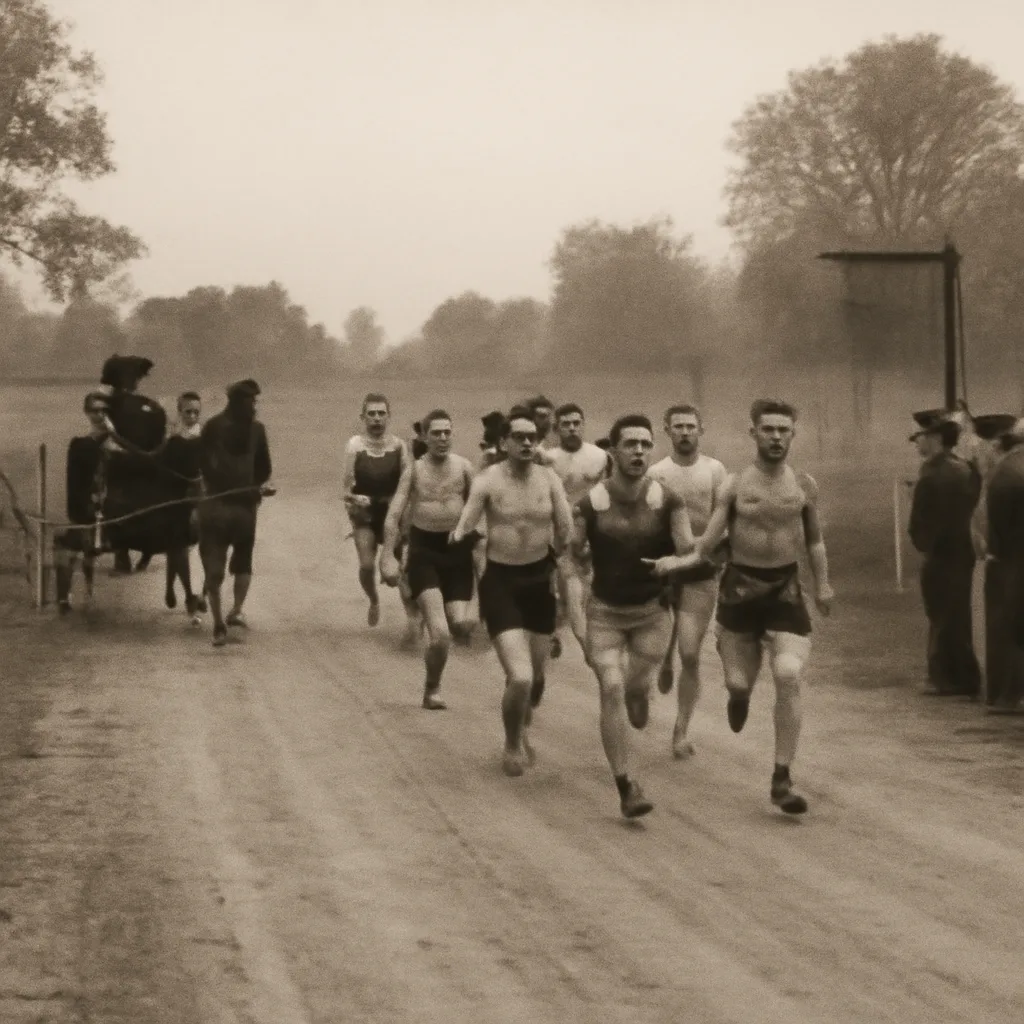
On May 25, 1906, a marathon event became one of the earliest recorded long-distance running tragedies when multiple participants collapsed and died during or shortly after the race, highlighting the era’s limited understanding of endurance medicine and race safety.
On May 25, 1906, a marathon race—staged during a period of rapidly growing public interest in long-distance running—was marked by multiple deaths among participants. Such incidents in the early 20th century exposed the limits of contemporary medical knowledge about exertional heat illness, hydration, and cardiovascular risk, and they helped prompt gradual changes in how endurance events were organized and overseen.
Context
Long-distance road racing in the first decades of the 1900s was inspired by the modern Olympic revival and by famous races such as the 1896 Olympic marathon and the 1904 St. Louis marathon, the latter of which had already demonstrated how harsh conditions, poor course management, and inadequate medical provision could imperil runners. Race organization was often improvised: courses used public roads, aid stations were sparse, and scientific understanding of exertional collapse, heat stroke, and cardiac events was limited.
The 1906 incident
On May 25, 1906, during a marathon held amid these conditions, several runners collapsed during the race and were later reported to have died. Contemporary newspaper accounts from various races of the era show a pattern of severe collapses and occasional fatalities during long races; precise contemporary medical diagnoses were often lacking or inconsistent. In many cases, witnesses and physicians at the time attributed deaths to heat exhaustion, dehydration, or cardiac events, but definitive clinical conclusions were rarely possible without modern postmortem methods.
Medical and organizational factors
Medical science in 1906 lacked the detailed understanding of exertion-related physiology available today. There were no standardized protocols for cooling, fluid replacement, pacing, or cardiovascular screening of athletes. Additionally, race-day conditions—such as warm weather, dusty roads, and lack of immediate ambulance services—contributed to higher risk. Early race organizers did not consistently provide frequent water stations, shaded rest areas, or trained medical personnel along the route.
Aftermath and legacy
Fatalities and serious collapses in early marathons gradually prompted reforms. Over the following decades, race organizers implemented more frequent aid stations, better crowd and traffic control, clearer course markings, and closer coordination with local medical services. Throughout the 20th century, advances in sports medicine, emergency care, and public-health understanding continued to reduce but not eliminate the risks associated with endurance events.
Historical caution
Records from 1906 and surrounding years can be fragmentary or conflicting. Contemporary reportage sometimes sensationalized or misstated medical causes, and medical certification of cause of death was not always available. Where specific names, exact numbers, or precise medical findings are reported in period newspapers, they should be treated cautiously unless corroborated by reliable archival records or death certificates.
Conclusion
The deaths associated with the May 25, 1906 marathon reflect the hazards of early long-distance road racing and the era’s limited medical preparedness. Those tragedies contributed, incrementally and unevenly, to evolving practices in race safety and the development of sports medicine that would make modern marathons far safer for the vast majority of participants.