
08/30/1904 • 7 views
1904 Olympic Marathon Winner Nearly Killed by Rat Poison
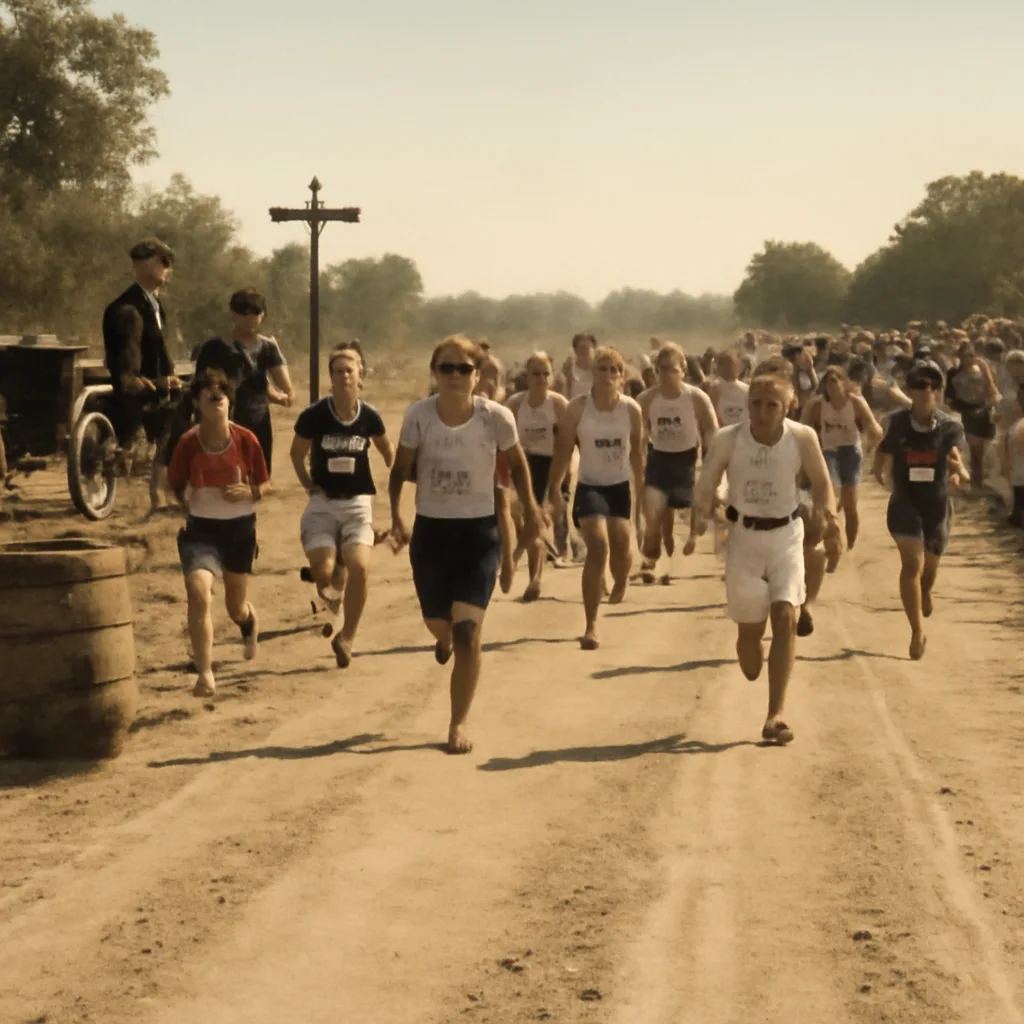
In the chaotic 1904 St. Louis Olympic marathon, winner Thomas Hicks was given a toxic stimulant—likely strychnine mixed with brandy—by his handlers, an intervention that left him delirious and near death after the race.
The course ran on dusty, unpaved roads under high heat and humidity. Race organizers provided minimal water; reports from the time say water stations were scarce and that organizers feared competitors would drink too much and vomit. Dust from following vehicles and crowds added to runners’ distress. The field suffered from dehydration, heat exhaustion, and delirium.
Thomas Hicks, an experienced runner and member of the British-based Amateur Athletic Association before emigrating to the U.S., struggled in the late stages. According to contemporary accounts, his handlers administered small doses of strychnine mixed with brandy and egg to revive him. Strychnine was historically used in minute doses as a stimulant; however, it is also a potent poison. Hicks received repeated doses and was reportedly barely conscious as he was guided toward the finish by his trainers, who even helped him physically by supporting him and encouraging him to continue. Officials allowed this assistance at the time.
Hicks crossed the finish line in 3 hours, 28 minutes, and 53 seconds. Immediately after the race he was in a dire state—delirious, eyes glazed, and reportedly close to death. Contemporary medical observers and later historians have concluded that the combination of heat, dehydration, and the stimulants likely brought him to the brink of fatal collapse. He was treated by doctors after the race and ultimately recovered, but the episode highlighted the dangers of unregulated stimulant use and the inadequate medical and logistical preparation for endurance events.
Other incidents in the same marathon underscored the disorder: Fred Lorz, who was initially announced as winner, had actually ridden in a car for part of the course and was disqualified when this was exposed; Cuban runner Félix Carbajal reportedly collapsed multiple times and was aided by local farmers; and Italian runner Giovanni “Griffin” (Giovanni Brunero is sometimes conflated in erroneous retellings) suffered profoundly and cobbled-together reports from the era vary on many competitors’ experiences. The overall conditions and these episodes have made the 1904 marathon a frequent example in discussions about athlete safety and the evolution of rules regarding assistance and doping.
Historical records show that strychnine was used by some athletes and trainers in the late 19th and early 20th centuries as a stimulant, often in tiny amounts. By modern toxicology standards, the doses given to Hicks—repeatedly and combined with alcohol—were risky and could have caused severe poisoning. The episode contributed to later debates about the use of stimulants in sport and the need for clearer regulations and medical oversight.
Although the 1904 marathon is often recounted in colorful and exaggerated terms, the core facts are verifiable: Thomas Hicks won the race on August 30, 1904; he received stimulants from his handlers during the race; and he was in a life-threatening condition immediately afterward. Where accounts diverge is mainly in the precise amounts and combinations of substances administered and in some anecdotal details about other competitors—areas where contemporary reporting was uneven and later retellings have sometimes introduced inaccuracies.
The event remains a cautionary episode in Olympic history—a reminder of how early sporting contests sometimes proceeded without adequate concern for athlete safety, and how practices now considered dangerous or illegal were once tolerated or unregulated.