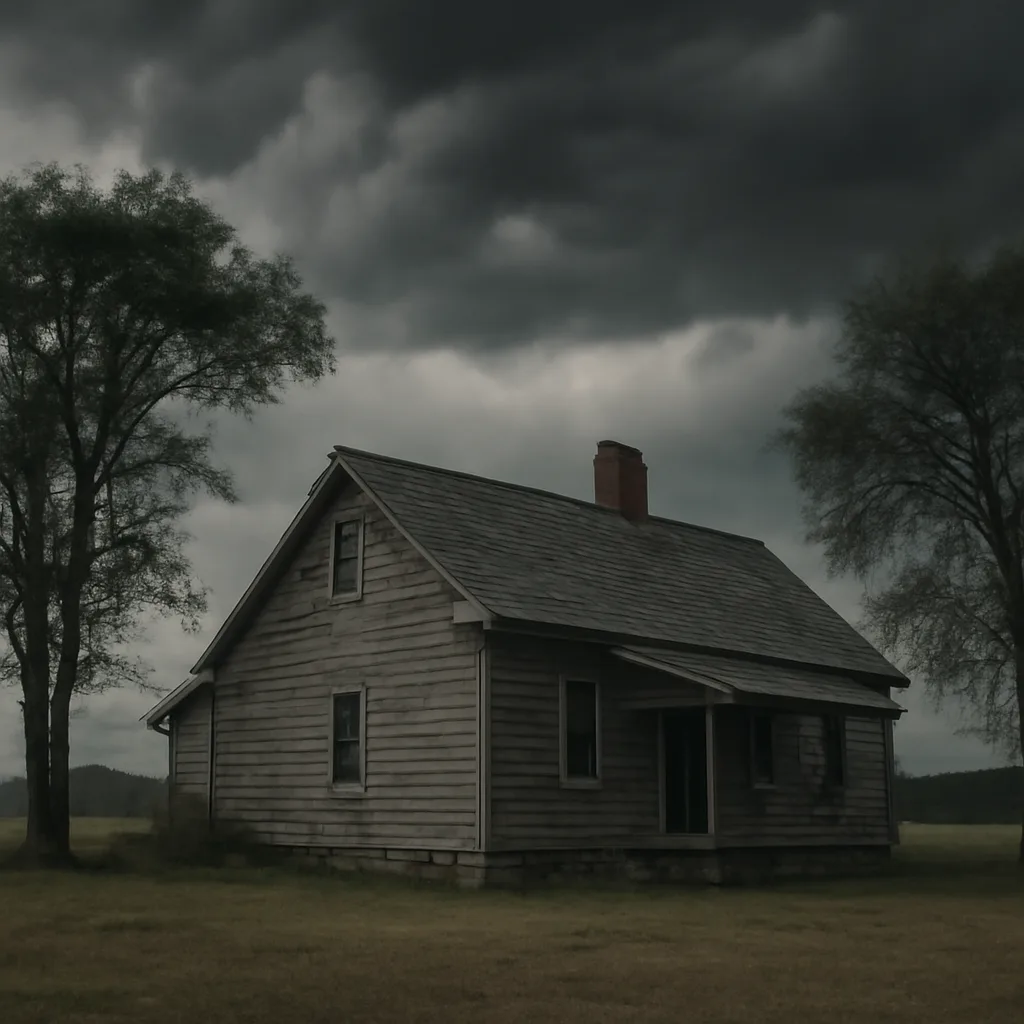
House Struck by Lightning Repeatedly Over Decades, Family and Neighbors Recall
A rural house first documented as struck by lightning on August 30, 1942, became known locally for repeated strikes in subsequent years. Reports and local memory describe recurrent damage to the same structure, a phenomenon that drew attention from residents, insurers and later storm researchers.
On August 30, 1942, local records show a lightning strike at a private residence that would later be cited in accounts of repeated lightning impacts on the same dwelling. Over subsequent decades, neighbors and family members recounted additional strikes affecting the same house, producing a local reputation for being repeatedly hit during storms. Contemporary newspaper clippings, insurance records and oral histories from small communities in storm-prone regions document a handful of similar cases in which a single structure was reported struck multiple times over years.
How often lightning hits the exact same structure depends on several factors. Tall, isolated features—such as chimneys, tall trees near a rooftop, or metal spires—create preferred paths for lightning to ground. Buildings on elevated ground or situated in open fields have a higher exposure during thunderstorms. Repeated strikes at one house can therefore reflect its local prominence as a preferred lightning target rather than a mystical anomaly.
Historical reporting of repeated strikes tends to mix verifiable records with folklore. Insurance claims and local newspaper reports provide the strongest documentary evidence: dates of strikes, descriptions of damage and estimates of repair costs. Oral recollections, collected decades after events, are valuable for context but can sometimes conflate separate incidents or exaggerate frequency. Researchers who study lightning frequency caution that human memory and sensational headlines can inflate perceptions of repetition.
Technically, lightning does not "seek" any particular house for nonphysical reasons; it follows the path of least electrical resistance between cloud charge and ground. Structures that repeatedly attract strikes typically offer conductive paths (metal roofing, lightning rods, plumbing) or protrude above surrounding terrain. The installation of a properly designed lightning protection system—air terminals (rods), bonding conductors and a low-resistance connection to a grounding electrode—reduces the chance of destructive strikes by providing a controlled path for discharge. Such systems were known by the mid-20th century and became more widely applied in the decades after World War II, though adoption varied by region and building type.
Documented cases of recurring strikes have influenced local building decisions and insurance practices. In some communities, repeated lightning damage prompted homeowners to retrofit lightning protection or to remove tall trees that funneled strikes to the roof. Insurers historically adjusted premiums or required mitigation steps in situations with noted repeat losses. At the same time, sensational newspaper headlines—common in local reporting—could turn a string of weather events into a long-running human-interest story, amplifying the perception that a single house was uniquely targeted.
Scientific study of long-term lightning patterns emphasizes geography and climatology. Areas with frequent summer thunderstorms, such as parts of the U.S. Midwest and Southeast, naturally have higher overall lightning rates; within those areas, some structures will inevitably be struck multiple times over many years. Researchers use lightning-mapping arrays and satellite observations to quantify strike density across landscapes; such data, available only in later decades, help differentiate between genuinely anomalous locations and places whose repeat strikes reflect broader regional activity.
In sum, accounts that a house was struck repeatedly after an initial documented strike on August 30, 1942, fit within known physical and historical patterns: certain structures are more likely to be struck multiple times, and local reporting can magnify the story. Verifiable details appear in contemporaneous records (newspaper clippings and insurance files) and in later meteorological analyses; oral histories contribute additional context but should be corroborated when possible. Where repeated damage occurred, practical responses—retrofitting protection or altering the local landscape—were the typical remedies pursued by owners and insurers.