
06/11/1909 • 4 views
1909 Baseball Slide Leaves Player Fatally Injured by Spike
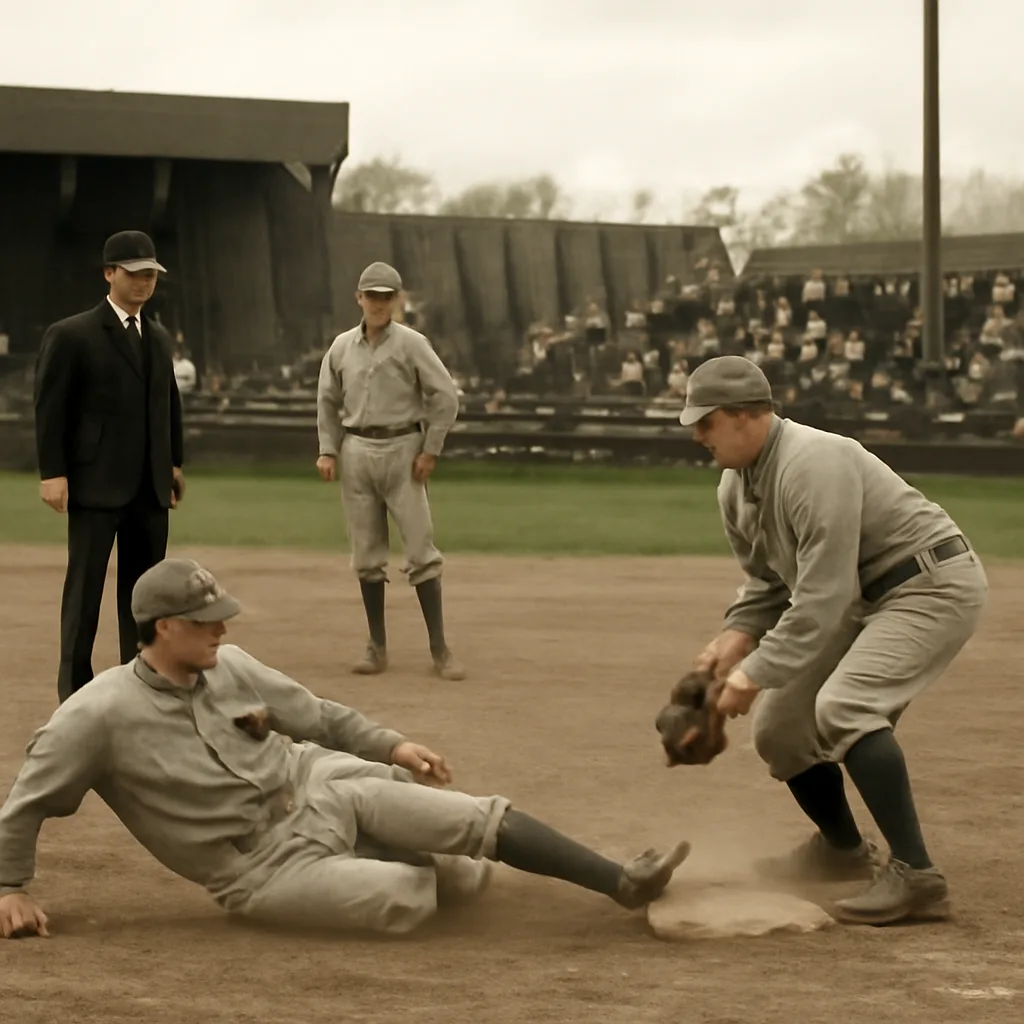
On June 11, 1909, during a minor-league game, a baserunner’s slide resulted in a severe impalement on an opposing player’s spike, causing a fatal abdominal wound—an incident that highlighted the era’s hazardous equipment and limited medical options.
Baseball in the early 20th century featured metal-tipped spikes or sharply pointed cleats designed to grip dirt and grass. Protective measures then were rudimentary compared with modern standards: uniforms offered little padding, sliding techniques were less regulated, and there were no mandatory protective cups or standardized medical protocols at many ballparks. When a spike penetrated soft tissue, the risks of internal injury, infection, and hemorrhage were high. Sterile surgical practices were improving by 1909, but rapid transport, blood transfusion, and antibiotics were not widely available; penicillin would not be in clinical use for decades. These limitations affected survival even when a player reached a hospital promptly.
Reports of the incident varied in detail, as was common with early sports journalism. Some newspapers emphasized the gruesome nature of the wound and the immediate attention given on the field; others focused on the player’s prior condition, the response of teammates and spectators, or the ensuing investigations by club officials and local authorities. There was occasional speculation about whether the slide was reckless or whether the defensive player had positioned himself dangerously, but formal legal or league sanctions were not universally documented.
The fatality contributed to a broader conversation in baseball circles about equipment and safety. Over subsequent decades, the sport gradually introduced safer cleat designs, enforced rules about slide techniques and interference, and expanded on-field medical assistance. The incident also forms part of the historical record demonstrating how early professional sports carried greater risks from equipment and medical limits than fans today generally recognize.
Because contemporary reports sometimes conflict on precise details—such as the names of the players, the league level, or exact timeline of death—historians rely on multiple newspaper excerpts, club records, and coroner reports where available to reconstruct the event. Those primary sources consistently indicate that the injury entailed a spike-puncture to the abdomen sustained during a slide and that the wound led to the player’s death. Exact ancillary facts (minute-by-minute timeline, medical interventions performed, or precise legal outcomes) are either variably reported or not preserved in surviving records.
This 1909 case is one of several tragic incidents in baseball history that prompted gradual safety reforms. It is remembered today less for sensational detail than as a sobering example of the sport’s earlier hazards and the limits of turn-of-the-century medical care.